
A standard shower drain size for a dedicated residential shower is 2 inches, while a tub or tub-shower combo may use 1.5 inches. In a real Massachusetts bathroom remodel, that simple answer is only the starting point, because the drain size affects code compliance, shower pan selection, framing, rough plumbing, and how well the shower performs once you start using it.
In Brookline, Cambridge, and Newton, we regularly meet homeowners who are deep into tile samples and fixture finishes before anyone has looked closely at the drain. That's where problems start. A shower that looks great but drains poorly is a failed remodel, and in older Greater Boston homes, existing plumbing conditions often don't match what a new shower needs.
A lot of the confusion comes from one basic issue. People use the phrase standard shower drain size to mean different things. Sometimes they mean the pipe below the floor. Sometimes they mean the visible strainer on the shower floor. Those are not the same measurement, and mixing them up can lead to the wrong materials being ordered or the wrong assumptions being made before permits and inspections.
Table of Contents
- That Small Detail in Your Brookline Bathroom Remodel
- Pipe vs. Cover The Two Parts of a Shower Drain
- Why 2-Inch is the Standard for Massachusetts Showers
- How to Measure Your Existing Shower Drain
- When an Upgrade is Essential for Your Bathroom Remodel
- Our Process for Permits and Code-Compliant Installation
- Common Questions About Bathroom Renovations in MA
That Small Detail in Your Brookline Bathroom Remodel
In Brookline MA, this usually comes up the same way. A homeowner wants to replace an old tub with a walk-in shower, picks out a sleek new pan, and assumes the drain location and pipe below can stay as-is. Then the wall opens, the floor comes up, revealing that the old setup was built around a different fixture category.
That small detail affects more than drainage. It can change the shower base you can use, the way the floor has to be framed, and whether the plumbing plan will pass inspection without revision. In older homes around Arlington, Belmont, and Somerville, we see this especially often because bathrooms have been modified over time, sometimes more than once.
Practical rule: If you're changing the type of fixture, don't assume the old drain setup is still correct for the new one.
For homeowners planning a bathroom remodel, this is one of those behind-the-walls decisions that has to be right before the finish work starts. Tile can hide a lot. Water problems won't stay hidden for long.
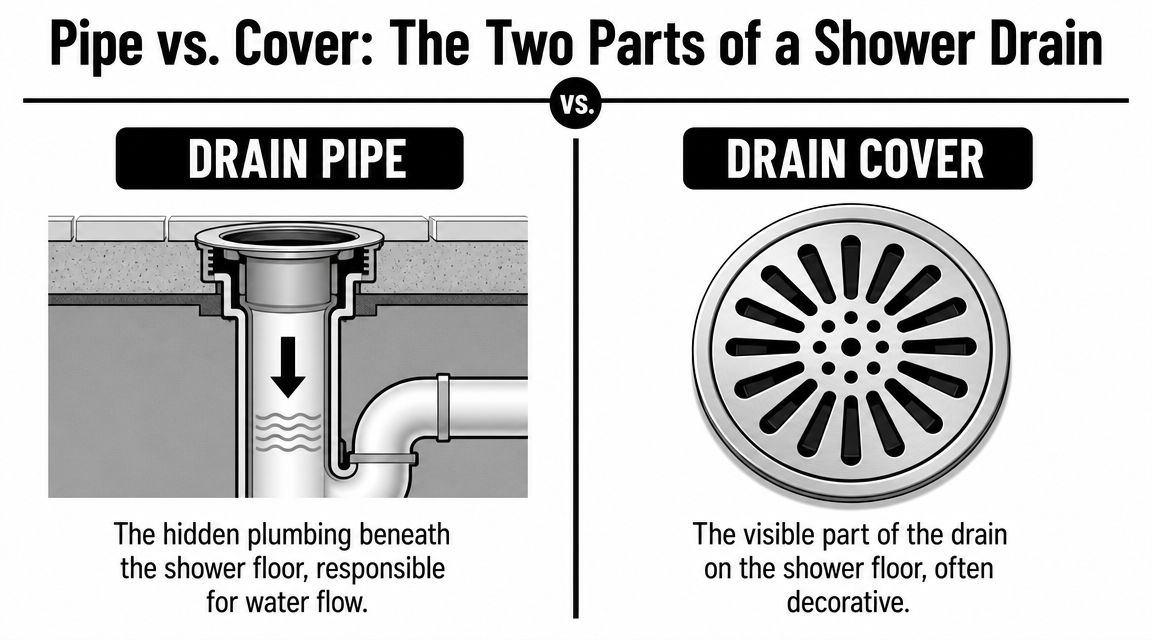
Pipe vs. Cover The Two Parts of a Shower Drain
When someone asks about standard shower drain size, we first separate pipe size from cover size. They serve different jobs.
The part that matters most
The drain pipe is the plumbing below the shower floor. That's the part that carries water away and determines whether the shower clears fast enough during use. In rough-in guidance aimed at residential plumbing work, a shower drain line is commonly treated as 2 inches, while a shower-tub combo can be 1.5 inches according to Home Depot's bathroom plumbing rough-in guide.
Think of the pipe as the highway. If the highway is undersized, traffic backs up no matter how good the entrance looks.
The part you actually see
The drain cover or strainer is the visible trim piece in the shower floor. Product catalogs commonly show 4-inch round covers as prevalent in many residential showers, while 3-1/4 inch round covers are often used in standard shower installations, as explained in this designer drains sizing overview.
That's why a homeowner can measure the top and still not know the pipe size below.
A simple way to think about it:
- Pipe below the floor: controls water flow and rough-in compatibility
- Drain body: connects the waterproofing system to the plumbing
- Cover on top: affects appearance and cleaning access more than capacity
If you're trying to clean or remove an older top assembly before a remodel, this helpful guide for Las Vegas homeowners gives a decent visual sense of how these visible pieces come apart. The method still depends on the exact drain body you have.
The visible grate can look standard and still sit on top of a drain assembly that isn't right for your new shower base.
Why 2-Inch is the Standard for Massachusetts Showers
For a conventional residential shower, the standard drain size is 2 inches, while a bathtub drain is 1.5 inches. The larger size is used because a shower has to keep up with continuous discharge rather than hold water in a basin, as noted in this tub-to-shower conversion explanation.
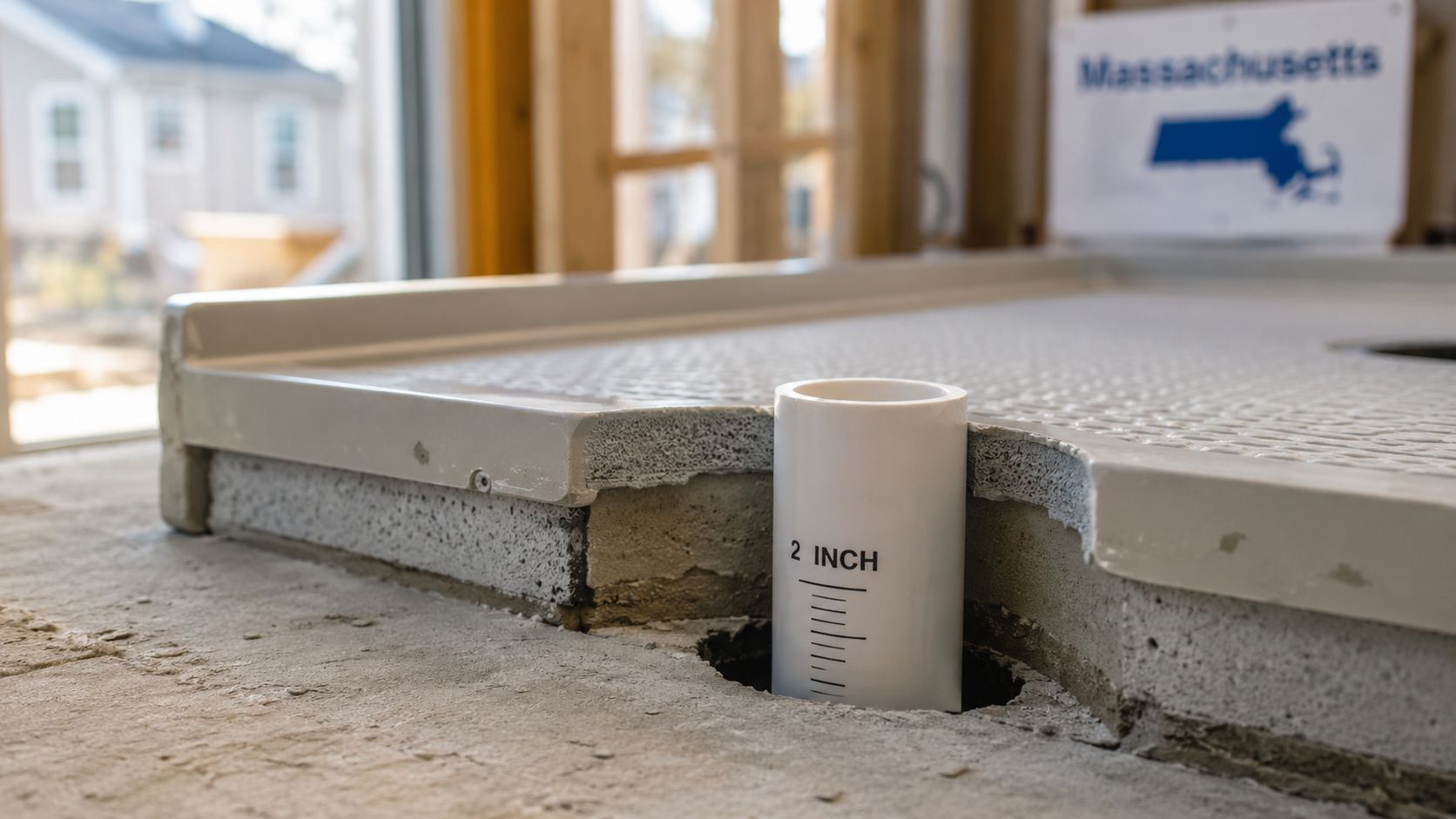
In Massachusetts, this matters because once you open walls and floors as part of a permitted bathroom renovation, the work has to be reviewed against current code expectations and inspected accordingly. We coordinate that under the MA State Building Code framework, including 780 CMR, along with the required plumbing permit and inspection process through the local building department.
What works in practice
A dedicated shower with a proper 2-inch line gives you the baseline most modern shower systems are designed around. It also lines up better with common shower pans and drain bodies used in current remodels.
In practical terms, this is what tends to work well in Greater Boston bathrooms:
- New shower-only installation: build around the proper drain size from the start
- Tub-to-shower conversion: verify the existing line before ordering finish materials
- Older home renovation: expect existing plumbing to drive some layout decisions
What usually goes wrong
The most common failure point is keeping an old drain arrangement because it seems easier. It usually isn't. Once the project reaches rough plumbing, the old line size, trap, or location can force rework.
If the shower is new, the plumbing below it should be planned as a shower from day one, not treated like a leftover tub detail.
This video gives a useful look at the rough plumbing side homeowners rarely see:
A 1.5-inch line may exist in older conditions, but for a new dedicated shower, relying on it is usually where performance and inspection issues begin.
How to Measure Your Existing Shower Drain
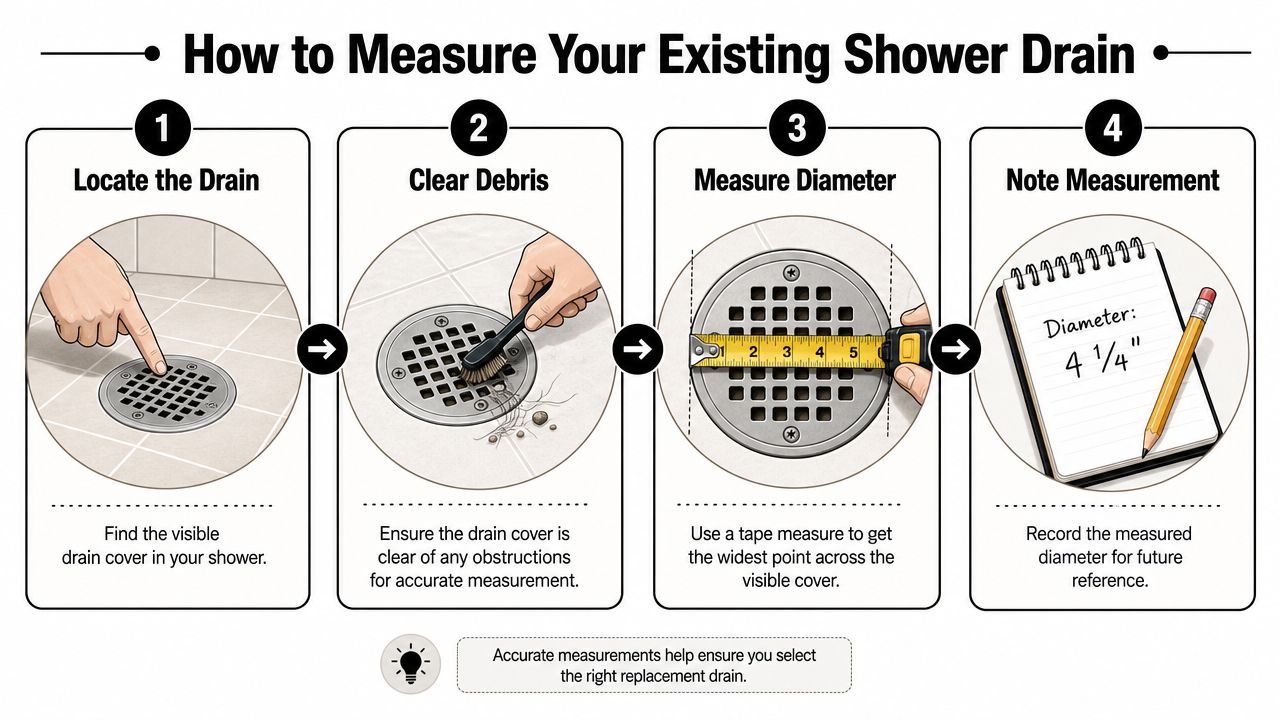
If you're standing in your Newton or Lexington bathroom trying to figure out what you have, measure the cover, not the pipe. That won't confirm the rough plumbing below, but it will help you talk more clearly with your contractor or plumber.
What to measure
Use a tape measure and go straight across the center of the visible drain cover from edge to edge.
A simple checklist:
- Clean the cover first so soap residue or debris doesn't throw off the reading.
- Measure across the widest point of the round or square trim.
- Write the number down and take a photo.
- Check the shower type because a tub-shower combo and a dedicated shower are different starting points.
If the visible trim looks small or dated, that can be a clue that the plumbing below may also be older, but it's still only a clue. The drain body, trap, and waste line need to be verified during demolition or inspection access.
A measured cover size is useful for planning. It's not enough to order a new shower pan or assume your existing plumbing will work unchanged.
When an Upgrade is Essential for Your Bathroom Remodel
Some drain upgrades are elective. Others aren't. In bathroom renovations around Cambridge, Somerville, and Wellesley, the drain often becomes a required part of the scope once the fixture type or water volume changes.
The remodels that trigger drain work
A few situations come up over and over:
- Tub-to-shower conversion: If the old bathroom was built around a tub drain, the new shower usually can't just inherit that setup and call it done.
- Curbless shower design: Without a threshold holding water back, the drainage system has less room for error.
- Linear drain installation: These systems need careful matching between the drain body, slope, waterproofing method, and waste line.
- High-flow fixture package: Once a shower includes body sprays, larger rain heads, or similar features, generic assumptions stop working.
For higher-flow designs, one manufacturer's technical guide states that a typical U.S. residential 2-inch waste line has an average capacity of about 9 GPM, while a 3-inch waste line can raise that to about 21 GPM, according to Infinity Drain's linear drain guide. That doesn't mean every shower needs a 3-inch line. It means some modern shower designs need more review than “standard shower drain size” alone can provide.
Bigger shower areas and higher-flow fixtures reduce your margin for error. That's where drain planning stops being a line item and becomes part of the design.
If you're troubleshooting an existing leak around a shower drain before a full remodel, this Bulls Eye Repair shower guide gives a helpful homeowner-level overview of where failures can show up. In renovation work, though, we usually find that patching symptoms is no substitute for correcting the underlying assembly.
A related detail many homeowners miss is wall-board selection around the wet area. If you're comparing substrates during planning, this guide on greenboard vs cementboard is worth reviewing because drain performance and waterproofing only last when the full shower assembly is built correctly.
A practical budget note for Greater Boston
Bathroom pricing in Greater Boston depends on size, access, finish level, and how much plumbing has to move. A drain upgrade is rarely the biggest cost in the room, but it can change demolition, framing, plumbing rough-in, pan selection, waterproofing, and inspection sequencing. That's why we treat it as an early design decision, not a late plumbing fix.
Our Process for Permits and Code-Compliant Installation
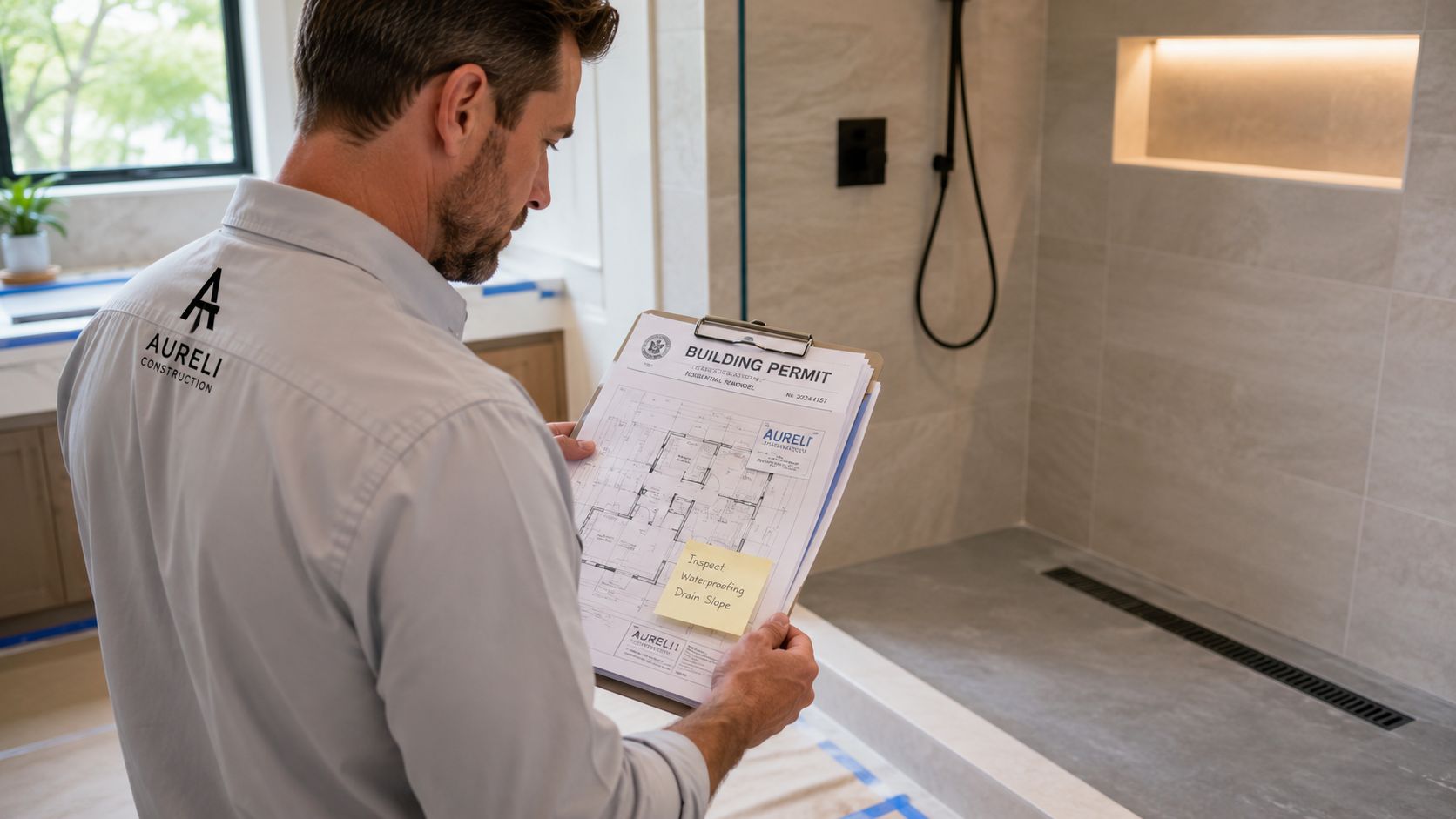
A shower drain isn't just a pipe in the floor. It's part of a permitted system. In Massachusetts, once a bathroom renovation involves plumbing changes, you should expect permit requirements, trade coordination, and inspections before the project is closed out.
How the process usually unfolds
In towns like Belmont, Stoneham, Reading, and Wakefield, the exact filing path varies by municipality, but the core process is familiar.
- Plan review: We document the scope so the town can see what plumbing is being altered and how the new shower is being built.
- Permit coordination: Building and plumbing permits need to line up with the actual work, not with assumptions from the old bathroom.
- Licensed trade work: The rough plumbing has to be installed in a way that supports the selected drain body, waterproofing system, and shower layout.
- Inspection scheduling: Rough inspections happen before finishes cover the work. Final inspections happen at project closeout.
For homeowners trying to understand the bigger picture, our page on the permitting process in Massachusetts explains how local review typically affects renovation timelines.
A useful comparison is site drainage. The principles aren't identical, but proper slope, water direction, and system compatibility matter there too. This overview of installing property drainage systems is a good reminder that drainage failures usually come from design and installation mismatches, not from the visible finish piece.
A clean-looking drain cover doesn't tell you whether the assembly below passed inspection, matches the pan, or was installed for the amount of water the shower will actually produce.
Common Questions About Bathroom Renovations in MA
Homeowners usually start with the drain question and then realize the bigger concern is the remodel itself. That's the right instinct. The drain matters because it connects directly to budget, schedule, and what has to happen behind the tile before the shower can be trusted.
FAQ Bathroom Remodeling
| Question | Answer |
|---|---|
| Do bathroom renovations in Massachusetts require permits? | If the project changes plumbing, electrical, framing, or other regulated work, you should expect permits and inspections through the local building department. In most shower remodels that involve moving or replacing plumbing, permit coordination is part of doing the job correctly. |
| Can we keep using the bathroom while the work is happening? | Sometimes, but it depends on how many bathrooms the house has and how invasive the scope is. If the only full bath is under construction, most families need a temporary plan. In older Greater Boston homes, even a compact bath remodel can affect water shutoffs, access paths, and daily routines. |
| What usually causes change orders in a bathroom remodel? | Hidden conditions. Once demolition starts, we may find old plumbing, framing changes, subfloor damage, or prior work that doesn't match current requirements. The more detailed the pre-construction review, the fewer surprises, but older homes in Cambridge, Medford, and Arlington can still reveal issues once finishes are removed. |
| How should homeowners compare contractors for a bathroom renovation? | Ask how they handle permits, who performs the plumbing work, how waterproofing is specified, and what happens if existing conditions don't support the new layout. A good proposal should address rough work, not just finishes. If you're also weighing broader home updates, it helps to compare related scopes like home additions, basement finishing Cambridge MA, or an ADU builder Massachusetts project through the same planning lens. |
| What should we expect during the planning phase? | Expect measurements, existing-condition review, product coordination, permit planning, and decisions about what stays versus what gets rebuilt. In many cases, homeowners start by asking one narrow question about the shower and end up making better decisions about the full bathroom layout, fixture package, ventilation, and finish durability. |
Homeowners searching for bathroom renovation Arlington MA, bathroom remodeling contractor Medford, or bathroom renovation Newton are usually trying to answer the same core question. Will this project be built right the first time? The drain is one of the clearest places where good planning shows up in the final result.
If you're also comparing full-service remodeling options in nearby towns, it's smart to look at connected work such as kitchen remodeling Burlington or kitchen remodeling Newton, especially when a larger renovation affects plumbing, electrical, and permit sequencing across more than one room.
Ready to get started? Contact Aureli Construction for a free estimate.