What if the secret to gaining that much-needed extra bedroom isn’t browsing Zillow, but looking at the untapped potential of your current backyard? You’ve likely spent years building a life in a community like Medford or Belmont, only to find that your home’s footprint no longer matches your family’s daily reality. It’s frustrating to feel cramped in a house you love, especially when you worry that a new wing might look like an awkward afterthought rather than a natural extension of your property.
At Aureli Construction, we specialize in custom additions that respect the architectural integrity of Greater Boston’s historic neighborhoods while providing modern functionality. According to recent 2024 regional real estate data, a well-executed suite addition in the Boston area can recover over 50% of its cost in immediate equity. In this 2026 guide, you’ll learn how our turnkey design-build process handles everything from complex permit filings in Arlington to the final structural details in Lexington. We’ll show you how a seamless expansion can increase your property’s resale value and provide the peace of mind that comes with a professionally managed project.
Key Takeaways
- Discover why tailored structural expansions are the preferred alternative to moving, allowing you to stay in your neighborhood while gaining the functional space you need.
- Learn how the design-build model eliminates the stress of fragmented contracting by providing a single point of contact from the initial sketch to the final coat of paint.
- Compare the cost-to-value ratios of building up versus building out to determine which custom additions will best maximize your property value in the 2026 Greater Boston market.
- Understand how to navigate complex local zoning laws and historic district requirements in towns like Medford and Brookline to ensure your project remains compliant.
- Explore the benefits of a turnkey service that handles everything from architectural planning to permit acquisition, ensuring a seamless experience for your home expansion.
What are Custom Additions? Defining High-Value Home Expansion
A custom addition is a tailored structural expansion designed to integrate seamlessly with your existing residence. Unlike generic renovations, What are Custom Additions? represents a precision-engineered extension of your home’s unique architecture and foundation. These projects aren’t just extra rooms. They’re sophisticated solutions to a lack of space. A custom addition is a strategic investment in both your daily lifestyle and your long-term property equity.
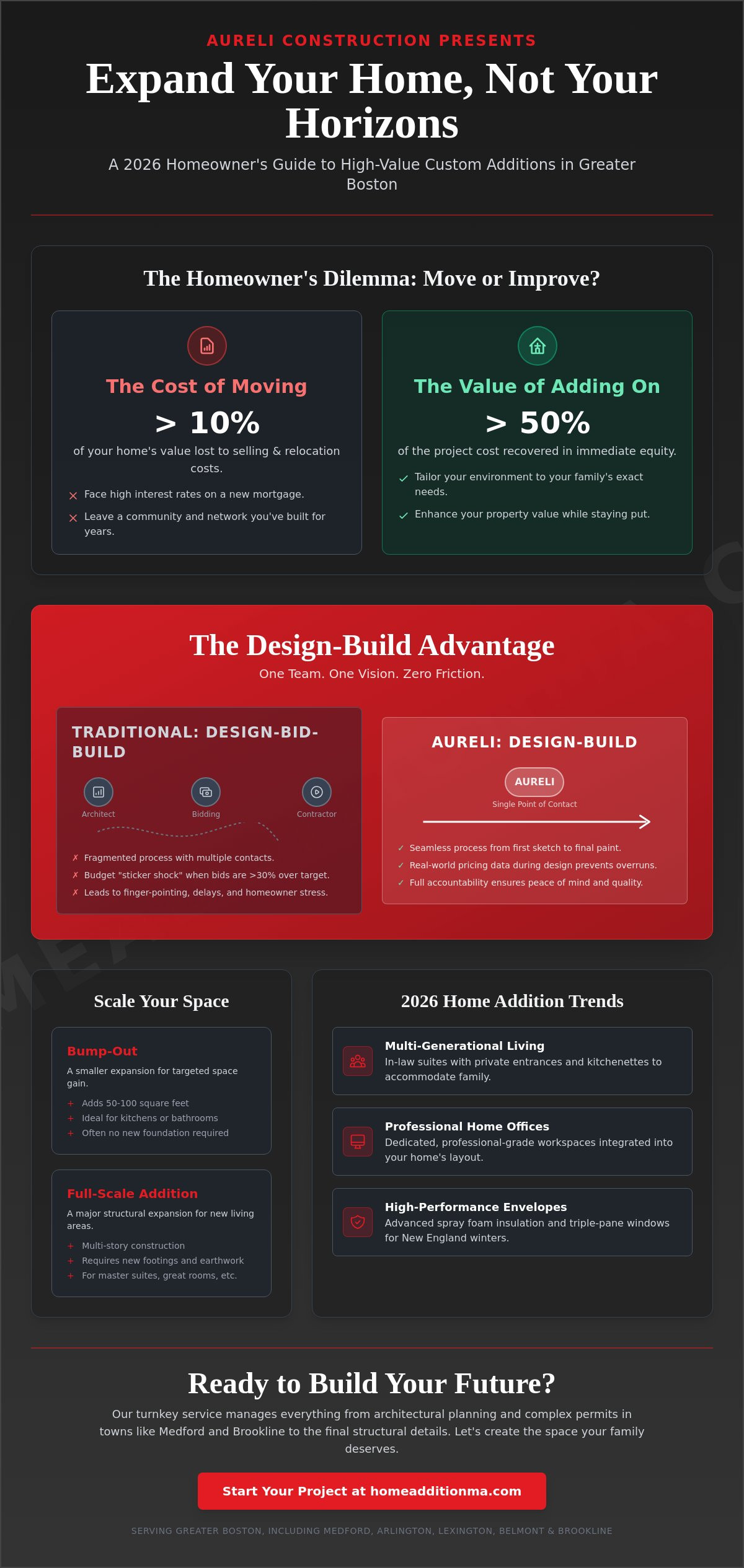
Homeowners in Medford and Arlington increasingly choose custom additions over buying new properties. Current 2026 market data shows that the costs associated with selling and relocating in Greater Boston can exceed 10% of a home’s total value. By expanding your current footprint, you avoid high interest rates on a new mortgage while tailoring your environment to your exact needs. We find that staying in a beloved neighborhood while modernizing the layout is the most stable path to long-term satisfaction.
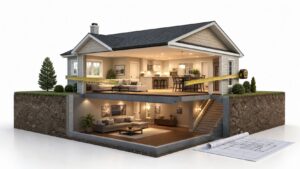
Understanding the technical scale of your project is the first step in the planning process. A “bump-out” is a smaller expansion, often adding 50 to 100 square feet to a kitchen or bathroom without requiring a full new foundation. A full-scale structural addition involves significant earthwork, new footings, and multi-story construction. Whether you’re looking for simple room additions or a massive footprint change, we manage the entire process from the first permit to the final coat of paint.
The Evolution of Home Additions in 2026
The design trends of 2026 emphasize multi-generational living and professional-grade home offices. Many families now require “in-law” suites with private entrances and kitchenettes to accommodate aging parents. We also prioritize high-performance building envelopes. Using advanced spray foam insulation and triple-pane windows helps your new space withstand harsh New England winters. In historic areas like Winchester, we integrate sustainable materials that replicate the look of 19th-century cedar while offering 21st-century durability.
Custom vs. Modular: Why Bespoke Design Matters
Modular or pre-fab units often struggle to meet the strict aesthetic and structural requirements of Massachusetts neighborhoods. These units can’t easily match the specific roof pitches or intricate trim work found on a 1920s Colonial. Custom design ensures perfect structural continuity between your original home and the new expansion. This is especially vital in dense areas like Somerville or Cambridge. Small, irregular lot shapes require site-specific engineering that only a bespoke approach can provide. We focus on maximizing every inch of your property while respecting local zoning setbacks and historic guidelines.
The Design-Build Advantage for Custom Additions
The traditional construction model often creates a frustrating gap between a homeowner’s vision and their actual budget. In the old “design-bid-build” system, you hire an architect to create plans, only to discover months later that the builder’s quotes are 30% higher than your financial target. This fragmentation leads to finger-pointing, delays, and unexpected costs. Our design-build approach eliminates this friction by housing architectural design and construction under one roof. We take full responsibility for the project from day one, ensuring that the creative phase and the logistical phase work in total harmony.
For busy professionals in Newton and Brookline, time is a finite resource. You don’t have the bandwidth to act as a mediator between a designer and a contractor. We serve as your single point of contact, managing every detail of your custom additions so you can focus on your career and family. This model allows for early-stage cost estimating, where we provide real-world pricing data while the drawings are still in progress. It’s a proactive way to keep your project grounded in financial reality, preventing the “sticker shock” that often halts traditional renovations. We address construction stress by assigning dedicated project managers who oversee daily operations, ensuring your home remains a sanctuary even during active builds.
Phase 1: Architectural Planning and Conceptual Design
Success begins with a design that respects the history of your home. Whether you’re expanding one of the classic Lexington Colonials or adding a modern wing to a mid-century property, our designers understand the local architectural vernacular. We use advanced 3D rendering technology to help you visualize the addition before any soil is moved. This visual clarity allows you to walk through your new space virtually, making adjustments to layouts or window placements before they become costly field changes. If you’re considering a similar project nearby, you can learn more about our process for Design-Build Remodeling in Cambridge, MA.
Phase 2: Seamless Pre-Construction and Permitting
The technical side of custom additions involves more than just hammers and nails. It requires navigating a complex web of local regulations. Our team handles the heavy lifting of town hall meetings and zoning board appeals, ensuring your project meets all Massachusetts building codes without unnecessary delays. We coordinate all engineering requirements, from calculating structural loads for a second-story expansion to assessing soil conditions for a new foundation. By involving our building team during the design phase, we prevent the creation of “unbuildable” plans that look good on paper but fail in the field. This integrated oversight ensures that when we break ground, every permit is in hand and every structural detail is vetted. It’s how we build long-term value into every square foot of your home. If you’re ready to see how a professional team can transform your living space, we invite you to reach out for a consultation today.
High-ROI Custom Addition Types for MA Homeowners
Greater Boston real estate remains one of the most competitive markets in the country as we move through 2026. You want a home that grows with you, but you also want to ensure your investment is sound. We see that the most successful custom additions focus on filling a specific void in the local inventory. Your ROI is highest when the addition solves a universal neighborhood pain point, such as adding a fourth bedroom to a street dominated by three-bedroom homes.
Deciding whether to build up or build out is a primary concern for many families. Building up by adding a second story is often the most cost-effective choice in densely populated areas like Somerville or Cambridge because it preserves your yard and utilizes the existing foundation footprint. Building out is typically preferred for homeowners in Lexington who have larger lots and want to prioritize single-floor accessibility. We help you navigate these complex decisions using The Design-Build Advantage, which integrates architectural planning with construction costs to prevent budget overruns early in the process.
Second-Story Additions and Master Suites
Many homeowners are transforming a modest ranch or bungalow into a full-sized family home in Stoneham or Melrose to stay in the neighborhoods they love. A vertical expansion allows you to create a dedicated floor for bedrooms while keeping the main level for entertaining. In towns like Wellesley, we are seeing a massive trend toward luxury master retreats. These spaces often rival high-end hotels, featuring spa-like wet rooms and expansive walk-in closets. If you need more space for a growing family, explore our expertise as room addition contractors to see how we handle these structural transformations.
Kitchen Expansions and Sunrooms
The kitchen is the heart of the home, and an open-concept expansion is a top priority for buyers in 2026. In Belmont, we frequently design kitchen bumps-outs that create enough space for oversized islands and professional-grade appliances. These custom additions often flow into four-season sunrooms. Given our long New England winters, a sunroom provides essential natural light and a much-needed vitamin D boost during the colder months. You can learn more about our approach to these high-traffic areas by visiting our page on kitchen remodeling in Greater Boston.
Accessory Dwelling Units (ADUs) and In-Law Suites
The 2024 Massachusetts Affordable Homes Act has revolutionized how homeowners view their property. This legislation makes it significantly easier to build Accessory Dwelling Units (ADUs) by right, meaning you have more flexibility to add value to your lot. Whether you are building a detached cottage in Arlington or a converted garage in Winchester, these units provide perfect solutions for multi-generational living. We focus on designing for accessibility and independence, ensuring senior living additions feel like private residences rather than just extra rooms. If you are ready to explore this flexible housing option, check out our guide on how to build an ADU.
Ready to increase your home’s value and functionality? Contact Aureli Construction today for a free on-site consultation and a detailed estimate for your project.
Navigating Local Zoning and Historic Constraints
Building custom additions in Greater Boston requires more than just a blueprint; it requires a deep understanding of local bylaws. Towns like Melrose and Winchester have strict rules regarding how much of your lot you can cover. You might hear neighbors say it’s impossible to build in your town. That’s rarely true. Most of the time, the challenge is simply navigating the specific setback requirements or lot coverage ratios defined by Middlesex County regulations. In 2024, Massachusetts saw a 12% increase in residential permit applications as homeowners opted to expand rather than move. We know how to work within these boundaries to maximize your square footage.
Many older homes in Arlington or Belmont are “grandfathered.” This means they exist legally even if they don’t meet current zoning codes. When you plan an addition, we ensure the new work complies without losing those grandfathered rights. Regarding taxes, a well-executed addition will increase your property value. In Massachusetts, property taxes are adjusted based on the new assessed value. However, the long-term equity gain typically far outweighs the annual tax adjustment.
Historical Commission Approvals
Historic districts in Newburyport or Salem demand a specific architectural vocabulary. You can’t just add a modern box onto a Federal-style home. We design additions that satisfy strict preservation guidelines while providing 21st-century comfort. This often involves sourcing specific wood siding profiles or custom-milled trim that matches the original 18th-century charm. In Cambridge and Lexington, historical boards look for “compatibility without mimicry.” We focus on materials that bridge the gap, such as high-performance windows that maintain traditional sightlines.
Zoning Board of Appeals (ZBA) Success Strategies
Sometimes your vision exceeds the standard “by-right” dimensions. This is when you need a variance. Preparing for a public hearing in Somerville or Newton requires clear data and a plan that respects the community impact. We manage neighbor relations early to prevent friction during the planning phase. Having an experienced home additions contractor is your best advocate at Town Hall. We speak the language of the ZBA. We present professional renderings and structural reports that show how your project benefits the neighborhood.
Our team handles every permit and hearing, so you don’t have to spend your Tuesday nights at the municipal building. We prioritize a turnkey experience that takes the stress out of the approval process.
Contact us today to discuss your project’s local zoning requirements.
Planning Your Custom Addition with Aureli Construction
Aureli Construction brings a 30-year legacy of excellence to every project we undertake in the Greater Boston area. We’ve spent decades refining our process to ensure that your home remains a sanctuary, even during significant construction. Our turnkey promise means you have a single point of contact from the initial conceptual sketch until the final coat of paint is dry. You won’t have to juggle separate architects and contractors; we manage the entire workflow to maintain high standards of structural integrity and design.
We understand that many families choose to live in their homes during custom additions. This requires a specialized approach to site management. We implement rigorous cleanliness protocols, including dust barriers and daily site sweeps, to protect your family’s health and safety. Whether we are working on a second-story addition in Winchester or a new master suite in Melrose, our team treats your property with the same respect we would give our own homes. You can see the results of this meticulous attention to detail by visiting our Project Gallery for inspiration.
What to Expect During Your On-Site Consultation
The process begins with a detailed feasibility assessment. We examine your home’s existing structure and lot dimensions to ensure your vision aligns with local Massachusetts building codes and zoning bylaws. During this meeting, we’ll discuss your specific goals, your desired timeline, and your preliminary budget. Our “No-Surprises” approach to project estimating is designed to provide clarity. We use current material costs and labor data to create an honest, transparent roadmap for your investment, ensuring you feel confident before any ground is broken.
Start Your Transformation Today
2026 represents a strategic time to invest in your current property. With the local real estate market remaining competitive in towns like Lexington and Belmont, expanding your footprint is often more cost-effective than moving. You don’t have to leave the neighborhood you love or the school district your children attend to get the space you need. A well-executed addition provides immediate functional benefits and builds long-term equity. If you’re ready to stop compromising on your living space, take the first step toward a home that truly fits your lifestyle. Schedule your free on-site consultation with Aureli Construction today to begin your home’s transformation.
Start Your Greater Boston Home Transformation Today
Expanding your living space is a significant milestone that requires a partner who understands the unique architectural fabric of Massachusetts. For over 30 years, our team has navigated the complexities of local zoning laws and historic district compliance in towns like Lexington, Cambridge, and Winchester. By choosing a design-build approach, you eliminate the stress of managing separate architects and builders. We provide turnkey management that covers every detail from the initial planning stages to the final structural inspection. High-quality custom additions don’t just solve your immediate need for more room; they represent a strategic investment that increases your property’s long-term market value. Whether you’re envisioning a spacious second-story expansion in Medford or a modern ADU in Arlington, we ensure the entire process remains seamless and professional. We’re ready to help you build a home that perfectly suits your lifestyle for years to come.
Contact Aureli Construction for a free on-site consultation and detailed estimate
Frequently Asked Questions
How much does a custom home addition typically cost in Massachusetts?
Costs for custom additions depend on your specific goals and the structural requirements of your property. According to the 2024 Remodeling Cost vs. Value Report for the Boston area, a mid-range primary suite addition averages $191,250. This figure serves as a baseline, but your final investment will vary based on material choices and site conditions. We provide a detailed estimate during our initial consultation to ensure your budget aligns with our high standards of craftsmanship.
How long does the design-build process take for a room addition?
A typical design-build project for a custom addition requires 6 to 10 months from the first meeting to the final walkthrough. The design and permitting phase often takes 3 to 4 months, especially in towns like Lexington or Belmont where local boards perform thorough reviews. Actual construction usually spans another 4 to 6 months. Our turnkey approach ensures we manage every milestone to keep your project moving toward completion without unnecessary delays.
Do I need to move out during the construction of my home addition?
You often don’t need to move out during construction, though your daily routine will certainly change. We prioritize your comfort by installing dust barriers and maintaining a clean job site in your Medford or Arlington home. If the project involves major utility shut-offs or affects your only kitchen, we might recommend a temporary stay elsewhere for 2 to 4 weeks. We’ll discuss these logistics during our planning phase so you feel prepared and relaxed.
What is the most valuable type of home addition for resale value in Boston?
Adding a primary suite or a second bathroom offers the highest return on investment for homeowners in the Greater Boston market. Data from the National Association of Realtors indicates that a new primary suite can recover up to 63 percent of its cost at resale. These custom additions address the high demand for modern amenities in historic areas like Cambridge and Somerville. We focus on designs that blend with your existing architecture to maximize both functionality and curb appeal.
How do I know if my foundation can support a second-story addition?
A licensed structural engineer must evaluate your home’s footings and soil conditions to determine if they can support a second story. Many older foundations in towns like Winchester or Melrose were designed for single-story loads and may require underpinning or reinforcement. We handle this technical assessment during the design phase to ensure your home’s structural integrity. This professional evaluation is a vital step in our start-to-finish service that guarantees your family’s safety.
What are the current ADU regulations in Middlesex County for 2026?
The Massachusetts Affordable Homes Act, passed in August 2024, allows ADUs under 900 square feet by right in single-family zones across the state. This means you can build an accessory dwelling unit in Middlesex County towns like Reading or Stoneham without a special permit. We stay updated on these 2026 regulations to ensure your project meets all local size and setback requirements. This law makes it much easier for you to add value and living space for your family.
Will a custom addition significantly increase my property taxes?
A custom addition will increase your property taxes because it raises your home’s assessed value. Assessors in towns like Newton or Brookline review new building permits to update their records once the project is finished. While your annual bill will rise, the equity you build through a professional renovation remains a powerful long-term financial asset. We help you understand how this strategic investment impacts your overall property value during our consultation.
How do I choose between building up or building out on my lot?
Your choice depends on your lot’s size, local zoning setbacks, and your specific space needs. Building out is often more accessible but consumes yard space, which is limited in densely populated areas like Brighton or Wellesley. Building up adds a second story without changing the footprint, but it requires a robust foundation and more complex structural work. We analyze your site plan and local ordinances to recommend the most efficient path for your custom addition.
If you’re ready to transform your living space, contact Aureli Construction today for a free on-site consultation and a detailed estimate.