A home addition shouldn’t look like an afterthought; it should look like it was part of the original blueprints when your house was first constructed. When you’re planning a home addition pembroke ma, the goal is to create more space without sacrificing the architectural integrity of your neighborhood. You’ve likely spent years building memories in your current home, and it’s natural to feel protective of its character even as your family outgrows the floor plan. We believe that a successful expansion should feel like a natural evolution of your property rather than a disjointed attachment.
This guide provides the roadmap for a high-quality expansion that balances design, local regulations, and long-term value. You’ll learn how to navigate Pembroke’s specific 2026 zoning setbacks and the local permitting process to avoid costly delays. We’ll outline how a well-executed project can increase your equity by over 20% while delivering a seamless look that matches your existing siding and roofline. By the end of this article, you’ll have a clear understanding of the construction timeline and the steps required to turn your vision into a structural reality.
Key Takeaways
- Understand why expanding your current footprint is the most strategic way to gain square footage while preserving your favorable mortgage rate in the 2026 market.
- Navigate the complexities of a home addition pembroke ma by following a proven roadmap that covers site analysis, architectural design, and local permitting.
- Determine the most efficient path for growth by comparing the logistical requirements of building outward versus adding a second story to your existing structure.
- Protect your investment by learning how to spot structural red flags, such as foundation integrity and electrical service limits, during the early planning stages.
- Ensure long-term value by selecting materials and finishes that blend seamlessly with the South Shore aesthetic while maximizing your property’s resale potential.
Why Pembroke, MA Homeowners are Choosing Additions Over Moving
Finding a new home in the South Shore market of 2026 remains a significant challenge for growing families. Inventory levels in Plymouth County are currently 18% lower than the ten-year average, which has created a highly competitive environment for buyers. This scarcity makes a home addition pembroke ma the most practical path for residents who need more square footage but don’t want to leave their established neighborhoods. Many local families are currently sitting on mortgage rates below 4% secured during the early 2020s. Selling a home today means trading that favorable rate for a 2026 market average that sits much higher; this often adds $1,100 or more to a monthly payment for a comparable property elsewhere.
Beyond the financial logic, the emotional connection to the town is a powerful motivator. Pembroke is a community where neighbors know each other and the school system remains a top draw. Staying put allows children to remain in high-performing schools like Bryantville Elementary or Pembroke High School without the disruption of a move. Traditional New England architecture often features small, segmented rooms that don’t suit the needs of modern life. Professional additions solve this legacy issue by removing restrictive walls and creating the expansive, light-filled spaces that current lifestyles require.
The “Move vs. Add” Financial Breakdown
Moving is an expensive endeavor that offers no tangible return. Between real estate commissions, closing costs, and professional moving crews, a homeowner in the $700,000 price bracket can easily spend $55,000 before they even set foot in a new house. Investing that same capital into a home addition pembroke ma builds direct equity in a market where Plymouth County property values rose 5.1% in 2025 alone. A professionally designed primary suite addition in Pembroke yields an average 65% return on investment at resale while providing immediate relief from cramped living conditions.
Common Pembroke Home Styles Ripe for Expansion
Our local neighborhoods are defined by specific architectural styles that respond well to strategic expansion. We focus on maintaining the structural integrity of these homes while modernizing their footprints.
- Pembroke Ranches: These are ideal candidates for rear extensions that create the open-concept kitchen and Great Room layouts that families crave.
- Cape Cods: Adding full rear dormers is a cost-effective way to double the second-floor square footage for new bedrooms or a home office.
- Traditional Colonials: Side-loaded family room additions or “bump-outs” integrate perfectly with existing formal layouts to add much-needed casual living space.
We treat every project as a strategic investment in your future. Our team ensures that every new square foot feels like it was always part of the original design. If you’re ready to explore how your current house can become your dream home, it’s time to start a conversation about your vision.
The Pembroke Home Addition Process: From Design to Permit
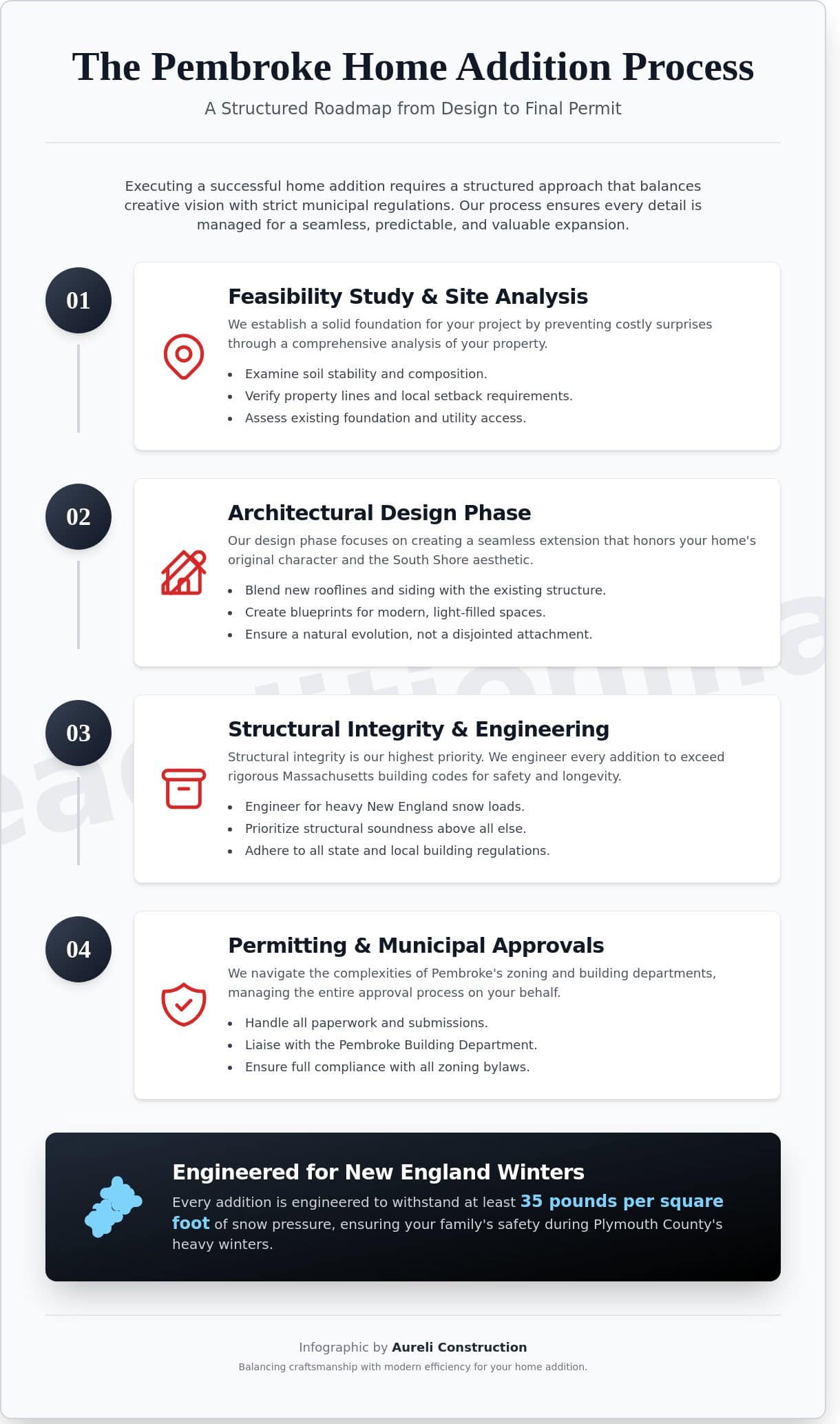
Executing a successful home addition pembroke ma requires a structured approach that balances creative vision with strict municipal regulations. The process begins with a comprehensive feasibility study of your lot. We examine soil stability and property lines to determine exactly where your footprint can expand. This initial site analysis prevents costly mid-construction surprises and ensures your investment is built on a solid foundation. Our architectural phase focuses on the timeless South Shore aesthetic, ensuring new rooflines and siding materials blend perfectly with your existing structure.
Structural integrity is our highest priority. Massachusetts building codes are rigorous, particularly regarding snow loads. We engineer every home addition pembroke ma to withstand at least 35 pounds per square foot of snow pressure, which is vital for the heavy, wet winters common in Plymouth County. Once the blueprints are finalized, we manage the entire approval process with the Pembroke Building Department. Our turnkey delivery model means we handle the logistics from the first sketch to the final inspection, providing you with a predictable timeline and a fixed budget.
Navigating Pembroke Zoning and Setback Requirements
Pembroke’s zoning bylaws are designed to maintain the town’s residential character, but they can be complex for homeowners to navigate alone. Most residential districts in town have a maximum lot coverage limit of 25 percent. If your project exceeds this threshold, we must secure a special permit from the Pembroke Planning Board. Additionally, Title 5 septic regulations are a major factor for local expansions. If you’re adding a bedroom, your septic system must be rated for the increased flow, which is typically calculated at 110 gallons per day per bedroom. If you’re unsure about your current system’s capacity, you can request a site evaluation to determine your options.
The Design-Build Advantage for Local Projects
The traditional method of hiring an independent architect and then bidding the project to multiple contractors often leads to budget creep and communication gaps. Choosing Aureli Construction provides a single point of contact for the entire duration of the project. This integrated approach ensures that the person designing your space understands the real-world costs of labor and materials in 2026. We utilize advanced 3D rendering technology during the planning phase. This allows you to visualize the interior flow and exterior massing of your new space before a single nail is driven, ensuring the final result matches your expectations exactly. This streamlined transition from digital blueprints to physical framing keeps the project on schedule and reduces stress for your family.
Comparing Expansion Directions: Building Up vs. Building Out
Choosing the right direction for your home addition pembroke ma requires a careful balance of site constraints and long-term goals. If your property features a sprawling backyard, building out offers a seamless transition to the outdoors. However, homeowners in denser Pembroke neighborhoods often find that yard space is their most valuable asset. Building out requires new foundation work and roofing, which typically accounts for 25 to 30 percent of the total project cost. In contrast, building up preserves your outdoor living space but demands a rigorous structural assessment of your existing home.
Local zoning bylaws in Pembroke generally restrict residential structures to a height of 35 feet. This regulation ensures that new vertical expansions don’t disrupt the character of the neighborhood or the privacy of nearby residents. Our team evaluates these height limits during the initial planning phase to ensure your design remains compliant while maximizing your new living area. We prioritize craftsmanship that respects both your vision and the local regulatory landscape.
Ground-Level Additions: Kitchens and Family Rooms
Expanding your footprint is often the most practical choice for high-traffic areas. A bump-out strategy is an excellent solution for minor kitchen upgrades. By extending a wall just 3 to 5 feet, you gain enough space for a center island or a walk-in pantry without the expense of a full-scale addition. For larger family rooms, you must choose between a slab-on-grade foundation or a full basement extension. While a full basement adds roughly $40,000 to $65,000 to the budget, it provides essential storage and protects your home’s mechanical systems from the New England frost line. Homeowners who want to maximize the value of that lower level should also explore basement finishing in Greater Boston to transform raw square footage into legal, livable space.
Second-Story Additions: The Ultimate Space Maker
A second story addition is the most effective way to double your square footage on a small lot. To ensure the new level looks like part of the original design, we match existing roof pitches and siding materials with precision. Structural integrity is the primary concern here. Many older homes in the South Shore were built with footings designed to support only one level. We look for red flags like undersized 2×8 floor joists or cracked foundation walls. If the current structure can’t handle the load, we implement steel reinforcement or helical piles to provide the necessary stability for your home addition pembroke ma. This technical focus ensures your investment is as safe as it is beautiful.
Structural Red Flags to Check Before Planning Your Addition
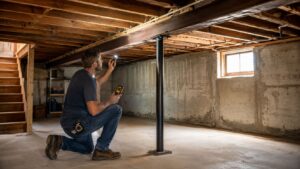
Before you break ground on your home addition pembroke ma, you must evaluate the existing skeleton of your house. Many South Shore homes built between 1950 and 1990 harbor hidden limitations that stay concealed until demolition begins. Foundation integrity is your first priority. While New England homes naturally settle over decades, cracks wider than 1/4 inch or those that run horizontally often indicate active soil movement rather than simple aging. Addressing these issues early prevents your new investment from shifting or cracking within its first five years.
Your utility infrastructure also requires a rigorous audit. Most older Pembroke residences operate on 100-amp electrical panels. Modern building codes and the power demands of a 2026 home require a 200-amp service upgrade to support new HVAC zones, lighting, and appliances. Similarly, your current boiler or furnace has a specific BTU capacity. If you add 600 square feet to a system already running at 90% capacity, it will fail to maintain comfortable temperatures during a Massachusetts winter. Roofing transitions are the final technical hurdle. Data shows that 85% of post-construction leaks occur at the junction where the new roofline meets the original structure. We use specialized flashing and ice and water shields at these transitions to ensure a watertight seal.
The “Invisible” Costs of Older Home Additions
Homes built before 1978 frequently contain lead paint or asbestos insulation. Safe removal of these materials is mandatory and can add $3,500 to $7,000 to your initial budget. If your project involves a bathroom expansion, we often find original galvanized plumbing that has corroded internally. Replacing these lines with modern PEX or copper ensures your new fixtures have adequate water pressure. During the design phase, we identify every structural load-bearing wall; these are the vertical components of your home’s frame that carry the weight of the floors and roof above them down to the foundation. Moving these walls requires heavy structural steel beams to maintain your home’s safety.
Site Conditions Specific to Pembroke
Pembroke’s geography presents unique challenges for heavy structural expansions. Many properties near Silver Lake or the North River contend with high water tables. This requires our team to design specialized drainage systems or reinforced footings to prevent hydrostatic pressure from damaging your new basement. Mature trees also impact your plans. A 50-year-old oak tree has a root system that can extend 1.5 times the height of the tree, which may interfere with excavation. We perform soil bearing capacity tests for any home addition pembroke ma that exceeds 500 square feet to confirm the ground can support the new structural load without excessive sinking.
Ensure your home is ready for a seamless expansion by scheduling a professional structural evaluation. Contact our expert team today to start your project with total confidence.
Maximizing Your Investment: ROI and Final Considerations
Investing in a home addition pembroke ma is a strategic move to build equity while tailoring your living space to your current needs. In the South Shore real estate market, specific additions yield higher returns than others. Primary suite extensions and kitchen expansions currently offer an average return on investment of 72% according to 2024 regional housing data. These projects succeed because they solve the common footprint limitations found in older Pembroke neighborhoods. Choosing the right project ensures your capital works as hard as your physical space does.
Achieving a high resale value requires meticulous attention to architectural continuity. Your addition shouldn’t look like an afterthought; it must appear as part of the original structure. We prioritize matching materials such as cedar shingles, specific roof pitches, and custom trim profiles to ensure a seamless transition. This visual consistency preserves the home’s integrity and prevents the “tacked on” appearance that can deter future buyers. Beyond aesthetics, your project must adhere to the MA Stretch Energy Code. These 2023 updates require specific R-values for insulation and high-performance windows, ensuring your new space is energy-efficient and comfortable year-round.
The South Shore landscape presents unique building challenges, from rocky soil to coastal weather patterns. You need a contractor who understands these local variables. A professional who knows Pembroke’s specific zoning bylaws and building permit processes will keep your project on schedule and within budget. While Pembroke offers excellent opportunities for expansion, homeowners in nearby communities face different regulatory challenges, particularly in areas like home addition newton ma projects where strict Floor Area Ratio limits and historical commission oversight require specialized expertise.
Adding Value Beyond Square Footage
Modern buyers in Pembroke prioritize functional, flexible floor plans over simple room counts. Creating an open flow between your new addition and the existing kitchen often increases property desirability more than adding a small, isolated room. Curb appeal also plays a vital role in valuation; high-quality landscaping and exterior finishes can boost a home’s market price by up to 7%. We recommend incorporating smart home technology, such as integrated climate controls and automated lighting, during the framing stage. It’s far more cost-effective to install these systems during construction than to retrofit them later.
Starting Your Pembroke Journey with Aureli Construction
Aureli Construction brings a 30-year legacy of craftsmanship to every home addition pembroke ma we build. We understand that your home is your most significant asset, and we treat every project with the gravity it deserves. Our turnkey approach means we manage the entire process, from the initial architectural drawings to the final inspection. This start-to-finish service is designed for busy families who want a stress-free experience without managing multiple subcontractors. We invite you to contact us today to request your initial site consultation and feasibility study. Let’s work together to transform your vision into a lasting reality.
Start Planning Your Pembroke Property Transformation
Your home is a significant asset, and expanding its footprint is often the smartest financial move you can make in 2026. By choosing a home addition pembroke ma rather than relocating, you preserve your community ties while increasing your property’s market value. Our team brings over 30 years of Massachusetts construction expertise to every project, ensuring your new space respects the South Shore architectural styles that define our region. We manage the entire A+ rated design-build process, from the initial structural assessment to the final permit inspection. This turnkey approach eliminates the stress of coordinating multiple contractors and keeps your project on schedule. You deserve a space that evolves with your family’s needs without compromising on craftsmanship. We’re ready to help you navigate the complexities of local zoning and structural requirements with confidence. Let’s build something lasting together in the heart of the South Shore.
Schedule Your Pembroke Home Addition Consultation Today
Frequently Asked Questions
Do I need a permit for a home addition in Pembroke, MA?
Yes, you must obtain a building permit from the Pembroke Inspectional Services Department for any structural expansion. The town currently charges a permit fee of approximately $15 per $1,000 of estimated construction value. You’ll need to submit certified plot plans and structural drawings to ensure your project meets the 780 CMR Massachusetts State Building Code.
How much does a typical home addition cost in the South Shore area?
Average costs for a high-quality addition in the South Shore region range from $350 to $550 per square foot in 2026. A standard 400-square-foot family room addition typically requires an investment starting at $160,000. These figures fluctuate based on your choice of finishes and the complexity of integrating new plumbing or HVAC systems into your existing structure.
How long does the average home addition project take from start to finish?
A professional home addition pembroke ma typically requires 4 to 7 months to move from the initial design phase to the final walkthrough. The first 8 weeks focus on architectural drawings and securing town approvals. Once we break ground, the physical construction phase generally lasts 12 to 18 weeks depending on the weather and material availability.
Can I stay in my home during a second-story addition construction?
We recommend that families relocate for 8 to 12 weeks during the primary structural phase of a second-story addition. Removing the existing roof creates significant exposure to the elements and generates noise levels that often exceed 90 decibels. Moving out ensures your family stays safe and avoids the stress of living in a major construction zone.
What are the zoning setback requirements for residential properties in Pembroke?
Most residential properties in Pembroke’s Residence District A require a 40-foot front yard setback and 20-foot setbacks for side and rear yards. These regulations dictate exactly where you can place your new structure on the lot. If your design encroaches on these limits, you’ll need to apply for a variance through the Zoning Board of Appeals, which adds 90 days to your schedule.
Will a home addition significantly increase my property taxes in Pembroke?
Your property taxes will increase based on the new assessed value of your home, calculated using Pembroke’s current tax rate of $13.42 per $1,000 of valuation. If your new addition adds $200,000 in assessed value, you should budget for an annual tax increase of roughly $2,684. The town assessor typically reviews new construction within 12 months of the final occupancy permit.
How does a home addition impact my septic system capacity (Title 5)?
Massachusetts Title 5 regulations require your septic system to be sized specifically for the total number of bedrooms in your home. If your home addition pembroke ma includes a new bedroom, your existing system must be rated for that increased flow. A standard three-bedroom home requires a system designed for 330 gallons per day; adding a fourth bedroom necessitates a 440-gallon capacity.
What is the difference between a bump-out and a full-scale home addition?
A bump-out is a minor expansion of 2 to 10 feet that often hangs off the side of the house without a full foundation. These smaller projects are perfect for expanding a kitchen or adding a walk-in closet. Full-scale additions involve pouring a new concrete foundation and creating entirely new living suites, providing more space but requiring a larger investment in structural engineering. For homeowners who want to maximize every level of their home, a professional basement finishing project can complement a ground-level addition by converting underutilized lower-level space into fully functional living areas.