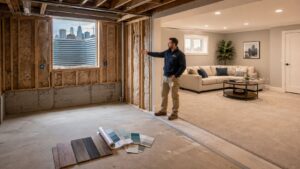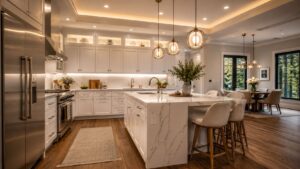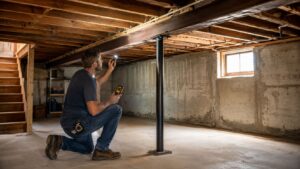
The easiest way to find your dream home in Newton isn’t by browsing new listings; it’s by looking at the lot you already own. With local median sale prices reaching $1.6 million in late 2024, the financial friction of moving often makes a high-end home addition newton ma a far more strategic investment. You’ve likely spent years falling in love with your neighborhood, yet you feel the daily pressure of a floor plan that no longer serves your family’s needs.
We understand that the path to more square footage is paved with regulatory hurdles like strict Floor Area Ratio (FAR) limits and the specific standards of the Newton Historical Commission. This guide provides the clarity you need to master these complexities while ensuring your expansion increases your property’s long-term resale value. We’ll walk you through the essential stages of a professional design-build project, from initial structural planning to the final delivery of a seamless, turnkey living space that feels like it was always part of the original architecture.
Key Takeaways
- Discover why expanding your current footprint is a strategic financial investment that often outperforms buying in the 2026 Newton real estate market.
- Learn how to navigate complex Floor Area Ratio (FAR) and setback requirements for a home addition newton ma to ensure a smooth permitting process.
- Explore design strategies for achieving a “seamless transition” that preserves the historic architectural integrity of Newton’s Colonial and Victorian homes.
- Understand the essential steps of the design-build sequence, from initial feasibility studies to managing construction logistics in tight neighborhoods.
- Gain peace of mind by mastering a turnkey approach that manages everything from architectural planning to final finish carpentry.
Expanding Your Newton, MA Home: Why a Strategic Addition Makes Sense in 2026
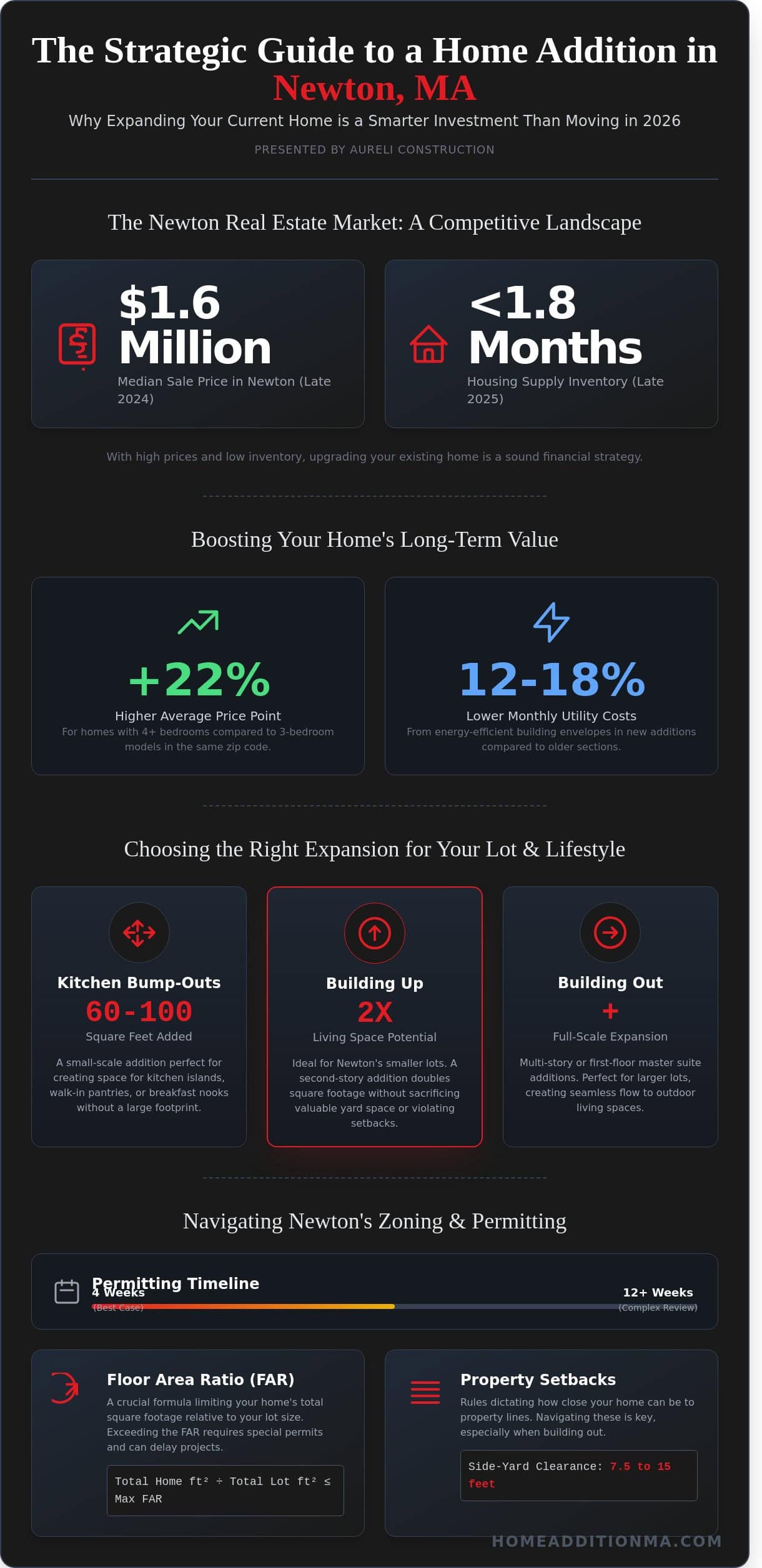
A home addition is a strategic structural expansion designed to increase both a property’s total square footage and its long-term market valuation. In 2026, the decision to invest in a home addition newton ma has become the preferred path for residents who love their specific neighborhood but have outgrown their current floor plan. With Newton’s housing inventory remaining below a 1.8-month supply as of late 2025, building onto an existing structure is often more practical and cost-effective than attempting to navigate the competitive local buying market. These projects allow families to stay rooted in their community while tailoring their environment to modern needs.
Common drivers for Newton additions include the rise of multi-generational living, the necessity for high-end home offices, and the desire for luxury master suites that offer a private retreat. A well-executed design respects the historic “village feel” of Newton’s thirteen distinct neighborhoods. By carefully matching exterior materials and rooflines, a home addition newton ma preserves the home’s character while introducing an open, modern interior flow that works for contemporary life. It’s about blending the charm of a 1920s Colonial with the functional requirements of a 2026 lifestyle.
The Long-Term Value of Newton Real Estate
Newton remains one of the most resilient investment markets in the Greater Boston area. Adding a fourth bedroom or a second full bath in Middlesex County significantly boosts equity, as these features are high-priority requirements for local buyers. Data from 2025 regional real estate reports indicate that homes with four or more bedrooms command a 22% higher price point on average than three-bedroom models in the same zip code. Beyond simple square footage, modern additions incorporate energy-efficient building envelopes. These high-performance upgrades can lower monthly utility costs by 12% to 18% compared to the older, uninsulated sections of the original home.
Identifying Your Space Needs
Homeowners must determine which method of expanding your space best suits their specific lot and lifestyle. Choosing the right scale is essential for maintaining a balanced property:
- Kitchen Bump-outs: These small-scale additions might only add 60 to 100 square feet, but they allow for the installation of islands and walk-in pantries.
- Building Up: Second-story additions are ideal for Newton’s smaller lot sizes, as they double the living space without encroaching on the backyard or violating side-yard setback requirements.
- Building Out: Full-scale multi-story expansions or first-floor master suites are perfect for larger lots, providing seamless access to outdoor living spaces.
Navigating Newton Zoning and Historic District Regulations for Seamless Approvals
Expanding your living space in Newton requires more than just architectural vision. It demands a rigorous understanding of local governance. The Newton Inspectional Services Department serves as the gatekeeper for all construction, ensuring every home addition newton ma adheres to safety and density standards. For a typical project in 2026, the permitting timeline can range from 4 to 12 weeks. This duration depends heavily on whether your plans meet “by-right” requirements or necessitate deeper municipal review.
Zoning in Newton is governed by two primary factors: Floor Area Ratio (FAR) and setbacks. FAR is a mathematical formula that limits the total square footage of your home relative to the size of your lot. If your proposed home addition newton ma pushes your home beyond the allowed FAR, the project cannot proceed without a variance or special permit. Additionally, setbacks dictate how close your structure can sit to property lines. In many Newton neighborhoods, these side-yard setbacks require a minimum of 7.5 to 15 feet of clearance. We handle these calculations during the design phase to prevent costly revisions later.
Newton Zoning Board of Appeals (ZBA) & Special Permits
You’ll likely need a Special Permit if your property is “pre-existing non-conforming.” This status is common in older villages like Nonantum, where homes were built before modern zoning laws existed. We use precision site surveys and updated plot plans to present your case to the ZBA. Accuracy is vital. A discrepancy of even a few inches on a plot plan can stall a project for months. Our design-build approach ensures that technical drawings are compliant before they ever reach a city official’s desk.
Newton Historic Commission & Local Districts
Newton protects its architectural heritage through strict historic preservation rules. If your home is older than 50 years, it’s subject to the “Demolition Delay” ordinance. This can trigger a review process that lasts up to 12 months if the commission finds the structure historically significant. In local districts like Chestnut Hill, Newtonville, or Auburndale, every exterior change is scrutinized. You must balance 2026 energy codes with 19th-century aesthetics. This often involves using specific wood siding profiles or historically accurate window divided lites instead of standard vinyl options.
The regulatory landscape in Massachusetts is complex, but it’s manageable with the right partner. We act as your single point of contact, managing the “paperwork headache” and representing your interests at public hearings. This turnkey service transforms a potentially stressful legal process into a structured path toward your new space. If you’re ready to see what’s possible on your lot, schedule a zoning consultation with our expert team today.
Popular Addition Styles: Matching Newton’s Unique Architectural Heritage
Newton’s architectural landscape is a rich tapestry of Colonial, Victorian, Tudor, and Cape Cod styles. When planning a home addition newton ma, your primary goal is a seamless transition. This design philosophy ensures the new structure doesn’t look like an afterthought. We match historic millwork, custom window proportions, and specific masonry patterns found in neighborhoods like Auburndale or Chestnut Hill. While the exterior remains traditional, the interior often features the open floor plans today’s families demand. We’ve seen a 15% increase in homeowners requesting Passive House standards for their 2026 expansions. These builds use advanced air sealing, high-performance insulation, and triple-pane windows to create a footprint that is as efficient as it is beautiful.
Successful expansions in this region typically respect the following architectural markers:
- Georgian and Federal Colonials: These require symmetrical facades and precise dental molding.
- Ornate Victorians: These often involve complex rooflines and matching wrap-around porches.
- Tudor Revivals: These need decorative half-timbering and steep gables to maintain their character.
- Classic Cape Cods: These offer a sturdy, compact foundation that is ideal for vertical expansion.
Second-Story Additions for Newton Colonials
Adding a level is the smartest way to gain square footage on Newton’s smaller, 6,000-square-foot lots. When you plan this type of home addition newton ma, the focus is on vertical growth rather than encroaching on your yard. Most 1920s-era homes weren’t built to support the load of a full second story. Our structural assessment involves checking the integrity of the basement joists and the load-bearing capacity of the soil. This technical rigor prevents settling or cracking in the years following construction. For a detailed breakdown of the engineering involved, consult our Second Story Addition Guide.
Newton ADUs and In-Law Suites
Newton’s 2024-2026 Accessory Dwelling Unit (ADU) ordinances have simplified the process for homeowners looking to add flexible living space. You can now build accessory units to house aging parents or generate consistent rental income. To start this process, homeowners must coordinate with the City of Newton Inspectional Services Department to secure the necessary permits and ensure zoning compliance. Detached ADUs offer maximum privacy for tenants; attached units often cost less because they share existing utility lines. We use built-in storage and vaulted ceilings to make a 600-square-foot ADU feel twice its actual size, ensuring every inch provides value. Homeowners seeking to maximize every level of their property may also want to explore basement finishing as a cost-effective way to add legal living space without expanding the home’s footprint.
The Design-Build Process: Managing Construction in Newton’s Tight Neighborhoods
Executing a home addition newton ma requires more than a simple set of blueprints. It demands a localized strategy that accounts for the city’s unique zoning laws and dense residential layouts. Our design-build approach provides a single point of contact, ensuring that your vision remains consistent from the first sketch to the final coat of paint.
- Step 1: Initial Feasibility Study – We assess your lot’s Floor Area Ratio (FAR) and structural integrity. This determines if your land can legally support the expansion and if the current foundation is strong enough for vertical growth.
- Step 2: Architectural Design & Budgeting – We align your aesthetic goals with 2026 construction costs. This prevents “sticker shock” by ensuring the design stays within your financial comfort zone.
- Step 3: Permitting & Approvals – We manage the heavy lifting with the Newton Zoning Board of Appeals (ZBA) and the Historic Commission. Securing these nods is vital in neighborhoods like Chestnut Hill or Newtonville.
- Step 4: Construction Phase – This is where the physical work happens. We manage every subcontractor and material delivery to keep the project on its 12 to 24-week timeline.
- Step 5: Final Inspection & Walkthrough – We conduct a rigorous internal review to ensure every detail meets Aureli standards before the city inspector provides the final occupancy sign-off.
Pre-Construction and Architectural Planning
The design-build model is the most efficient way to manage a home addition newton ma. By keeping architects and builders on the same team, we eliminate the communication gaps that often lead to delays. We use high-definition 3D rendering to show you exactly how the new structure impacts your curb appeal. This allows you to finalize material selections, like custom siding or window trim, before the first shovel hits the ground.
Logistics and Neighbor Relations
Managing equipment on the narrow streets of Waban or Newton Centre requires precision. We coordinate deliveries to ensure we don’t block traffic or disrupt the neighborhood’s daily rhythm. We strictly follow Newton’s noise ordinances, which limit construction activity to the hours of 7:00 AM to 7:00 PM on weekdays. Proactive communication with your neighbors is a priority for us. It keeps the project conflict-free and ensures your reputation in the community remains intact while we work.
Start your Newton design-build consultation today.
Choosing Aureli Construction: Your Local Partner for Newton Home Expansions
Investing in a home addition newton ma requires more than just a builder. You need a partner who understands the local architectural fabric and the technical demands of modern construction. Aureli Construction has spent over three decades perfecting the art of the home expansion. We provide a comprehensive, turnkey service that removes the stress of managing multiple vendors. From the initial architectural drawings to the final brush of paint on the finish carpentry, our team handles every detail in-house.
Newton homeowners often face the challenge of blending modern living spaces with historic aesthetics. Whether your home is a 19th-century Victorian or a mid-century colonial, we ensure the new structure respects the original design while meeting 2026 energy-efficient building standards. You can explore our previous work and see the quality of our builds by viewing our portfolio of home addition contractors massachusetts projects.
Over 30 Years of Greater Boston Expertise
Our roots are firmly planted in the local community. Headquartered in Medford, we have spent the last 31 years navigating the specific zoning laws and building codes of Middlesex County. This regional focus allows us to anticipate challenges before they arise, ensuring your project stays on track. Our team has successfully completed major expansions in nearby towns like Hingham, Pembroke, and Dover, bringing the same level of dedication to every job site. We are committed to delivering superior craftsmanship using durable, locally sourced materials that stand the test of time.
Start-to-Finish Management
Project delays and budget overruns are the primary fears for any homeowner. We address this by using fixed-price contracts. This approach protects your investment from budget creep, ensuring the price we agree upon is the price you pay. Every home addition newton ma project is assigned a dedicated project manager. This professional serves as your single point of contact, coordinating architects, engineers, and tradespeople so you don’t have to. Our streamlined process includes:
- Detailed feasibility studies and site assessments to determine the best expansion path.
- In-house architectural design tailored to Newton’s specific aesthetic requirements.
- Precise scheduling to minimize disruption to your daily life during construction.
- Rigorous quality control inspections at every milestone of the build.
Ready to expand your living space with a team you can trust? Contact Aureli Construction today for a professional Newton consultation.
Invest in Your Newton Future
Starting a professional home addition newton ma project ensures your property evolves alongside your family’s needs while respecting the city’s architectural legacy. You’ve seen how navigating the Newton Historic District regulations and tight neighborhood setbacks can be the difference between a stalled project and a successful expansion. By choosing a design-build approach, you ensure your home’s character remains intact while gaining the modern square footage you require.
Aureli Construction brings over 30 years of local Massachusetts experience to your project. We specialize in the specific demands of Newton zoning. Our team provides a full turnkey service that manages every detail from initial sketches to final inspections. This high level of professional oversight turns a complex construction process into a predictable, value-adding investment. We take pride in being your neighborly experts, ensuring your home remains a source of comfort and stability for years to come.
Start Your Newton Home Addition Consultation Today and take the first step toward transforming your living space. We’re ready to help you build a home that grows with you.
Frequently Asked Questions
Do I need a special permit for a home addition in Newton?
You need a special permit if your project exceeds the specific lot coverage or setback requirements defined by Newton’s zoning ordinances. Most substantial additions require a Special Permit from the City Council or the Zoning Board of Appeals. We review your specific plot plan against the 2024 Newton Zoning Ordinance to determine if your design triggers these requirements. This ensures your home addition newton ma project remains compliant from the start.
How much does a home addition cost per square foot in Newton, MA?
Construction costs in the Greater Boston area typically range from $400 to $600 per square foot depending on the complexity of the build and material selections. High-end finishes or structural challenges like ledge removal can push these figures higher. We provide detailed, line-item estimates based on current market data from the 2025 Massachusetts Construction Cost Index. This transparency helps you view your project as a strategic investment in your property’s long-term value.
Can I add a second story to my Newton ranch-style house?
You can add a second story to a ranch, provided the existing foundation and framing can support the additional structural load. Our team conducts a thorough structural analysis to verify the integrity of your footings before drafting any blueprints. If the foundation requires reinforcement, we implement localized underpinning. This vertical expansion is a popular way to double your living space without decreasing your available yard area.
What is the Newton Historical Commission’s role in my remodel?
The Newton Historical Commission reviews any proposed changes to properties that are over 50 years old or located within one of the city’s four local historic districts. They evaluate whether your addition preserves the architectural integrity of the original structure and the surrounding neighborhood. We manage the submission of your plans to the commission to ensure your design meets their specific preservation standards. This prevents delays and ensures a seamless aesthetic transition.
How long does the permitting process take in Newton?
A standard building permit in Newton typically takes 4 to 6 weeks for review, while projects requiring a Special Permit can take 4 to 8 months. The timeline depends heavily on the complexity of the zoning relief required and the current backlog at the Inspectional Services Department. We handle the entire filing process to keep your project on schedule. Our experience with local officials helps streamline these administrative hurdles for a more efficient start date.
Are Accessory Dwelling Units (ADUs) allowed in Newton?
Newton updated its zoning laws in 2017 to allow for both internal and detached Accessory Dwelling Units on most residential lots. These units must meet specific size limitations, generally capped at 900 square feet or 50 percent of the main dwelling’s size. Building an ADU is an excellent way to add value to your property while providing space for family or rental income. We ensure your home addition newton ma project adheres to these specific ADU guidelines.
How do I maintain my home’s historic character during an expansion?
Maintaining historic character requires matching original materials like cedar clapboards, slate roofing, or custom window casings used in traditional Newton architecture. We source specific wood species and profiles that mirror your home’s existing craftsmanship. By replicating the original rooflines and trim details, we create a custom addition that looks like it was part of the initial 1920s construction. This attention to detail protects the aesthetic and financial value of your historic home.
Does Aureli Construction handle the Newton ZBA process for me?
Aureli Construction provides a turnkey service that includes managing the entire Zoning Board of Appeals process on your behalf. We prepare the necessary documentation, coordinate with architects, and represent your interests at public hearings. This start-to-finish approach removes the stress of navigating local bureaucracy. We invite you to start a conversation with our team today to discuss how we can guide your project through these complex regulatory requirements.