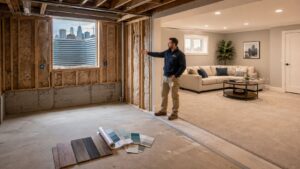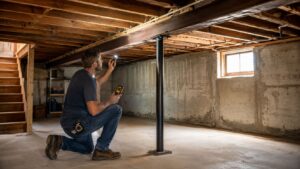
What if the most valuable square footage in your home is currently hidden behind a stack of storage bins and a damp concrete wall? For many homeowners in Newton and Arlington, the idea of basement finishing often feels more like a liability than a living space opportunity. You likely worry that moisture might compromise your investment, or you feel overwhelmed by the strict MA 780 CMR building codes required for a legal living level. It’s common to feel stuck between the need for more room and the headache of managing unreliable subcontractors.
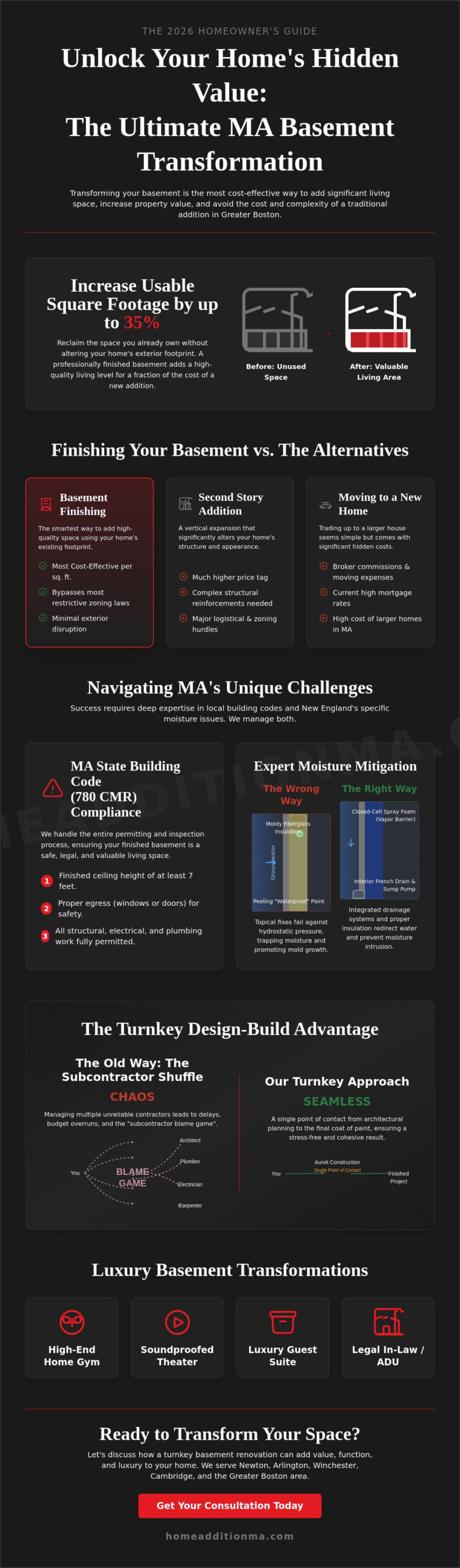
We’ve designed this 2026 guide to show you how a professional renovation can be a stress-free, turnkey experience. Recent market trends in towns like Winchester suggest that adding a high-quality living level can increase usable square footage by 35% without the footprint of a traditional addition. You’ll discover the technical requirements for moisture control and the design secrets that make a lower level feel warm and inviting. We’ll walk you through everything from securing permits in Cambridge to choosing high-end finishes in Medford, providing a clear path to a dry, energy-efficient space that serves your family for decades.
Key Takeaways
- Learn why transforming your existing lower level is often the most cost-effective way to add significant square footage compared to a vertical addition in towns like Cambridge.
- Understand the critical role of the Massachusetts State Building Code and how to effectively manage moisture challenges unique to New England foundations.
- Discover how a turnkey design-build approach eliminates the “subcontractor blame game” by providing a single point of contact from architectural planning to completion.
- Explore high-value options for basement finishing, including legal in-law suites and Accessory Dwelling Units (ADUs) that comply with specific zoning laws in Lexington and Salem.
- Gain insights on selecting a local contractor who understands the specific soil conditions and architectural heritage of Greater Boston communities like Medford and Newton.
Why Basement Finishing is the Smartest Investment for MA Homeowners in 2026
Basement finishing is a complete structural and interior transformation of your home’s below-grade space. It’s not a simple cosmetic fix. It requires a deep understanding of moisture management, thermal barriers, and architectural integration. In high-density areas like Cambridge, a second story addition often carries a much higher price tag and necessitates complex structural reinforcements that basement projects avoid. By reclaiming the space you already own, you maximize your property’s potential without the logistical hurdles of a vertical expansion.
You can add a high-end home gym, a soundproofed theater, or a luxury guest suite without altering your home’s exterior footprint. This lifestyle ROI provides immediate benefits for growing families or remote professionals. For Greater Boston properties, especially those featuring walk-out access or ceilings exceeding eight feet, the financial return is substantial. Professional Basement design and construction ensures these lower levels feel as bright and inviting as any other room in the house.
Basement Finishing vs. Moving: The 128 Corridor Perspective
Median home prices in Wellesley and Brookline have remained remarkably resilient, making the cost of trading up to a larger house significantly more expensive than a premium renovation in 2026. When you factor in broker commissions, moving expenses, and current mortgage rates, staying put and renovating is the logical choice. Choosing basement finishing also bypasses restrictive lot-coverage zoning laws that often prevent horizontal additions in towns like Belmont or Arlington. Per Massachusetts appraisal standards, finished square footage is defined as an enclosed area that is heated, permitted, and finished with a ceiling height of at least seven feet.
The ‘Turnkey’ Difference in High-End Remodeling
We provide a full-service management experience that stands in stark contrast to the uncoordinated handyman approach found on community boards or Reddit. Busy professionals in Lexington and Winchester value their time and need a partner who manages every detail. Our turnkey process handles everything from the initial architectural drawings and local permits to the final custom millwork. We focus on creating a seamless transition where the flooring, lighting, and trim in your basement level mirror the elegance of your main living area. This holistic approach ensures your project is a strategic investment rather than a stressful chore.
Navigating Massachusetts Building Codes and Basement Moisture Challenges
The Massachusetts State Building Code (780 CMR) serves as the definitive rulebook for converting a dark storage area into a safe, legal living space. For a successful basement finishing project in Greater Boston, you must address technical requirements that go far beyond simple aesthetics. We specialize in managing the entire permitting process with local building departments in Medford, Arlington, and Somerville. Our team handles the paperwork and inspections, ensuring every structural, electrical, and plumbing detail meets state mandates before we begin the transformation.
Moisture Mitigation for Historic MA Foundations
New England’s heavy clay soil and high water table create significant hydrostatic pressure against your foundation. This pressure pushes groundwater through porous concrete, leading to the common Basement moisture challenges many local homeowners face. We don’t rely on topical “waterproofing” paints that eventually peel. Instead, we implement integrated drainage systems, including internal French drains and high-capacity sump pumps, to redirect water before it ever reaches your flooring.
Traditional fiberglass insulation is a major risk in Massachusetts basements because it absorbs moisture and promotes mold growth behind the drywall. We utilize closed-cell spray foam or rigid foam board. These materials provide a superior R-value while acting as a permanent vapor barrier. This approach protects your investment and ensures the air quality in your new family room or home office remains healthy for years.
Egress and Ceiling Height: The ‘Make or Break’ Factors
Ceiling height and emergency exits are the primary factors that determine if your basement can legally be called a habitable space. According to 780 CMR, habitable rooms generally require a minimum ceiling height of 7 feet. If your current basement in Cambridge or Newton feels too low, we can often perform structural modifications. This might include “benching” the foundation or “digging out” the concrete floor to gain the necessary clearance without compromising the home’s structural integrity.
Safety is our absolute priority. Any basement finishing plan that includes a bedroom must feature an “emergency escape and rescue opening.” This usually means installing a code-compliant egress window with a dedicated window well. We also coordinate the installation of interconnected smoke and carbon monoxide detectors, which are strictly enforced in towns like Medford and Winchester. These safety features are not just about passing inspection; they provide essential peace of mind for your family. If you are ready to see what is possible in your home, contact us for a detailed estimate and an on-site evaluation of your foundation.
The Design-Build Advantage: Why the ‘Order of Operations’ Matters
Successful basement finishing requires more than just hanging drywall and laying carpet. It demands a precise sequence of events. Many homeowners in Lexington or Belmont make the mistake of rushing into aesthetic choices before addressing the bones of the structure. We call this the “order of operations” error. Finishing a space before fixing a hairline foundation crack or upgrading a 40-year-old electrical panel leads to expensive repairs later. Our team prioritizes the structural envelope first to ensure your investment is protected for decades.
Aureli Construction uses a design-build model to prevent the “subcontractor blame game.” In traditional remodeling, the plumber might blame the framer for a poorly placed wall; this leaves you to mediate the conflict. With us, you have a single point of contact. We manage the entire lifecycle, from initial architectural planning to the final coat of paint. You can see the results of this integrated approach in our Aureli Project Gallery. Our process ensures that every structural detail is vetted before the first stud is nailed into place, providing a seamless transition from a damp storage area to a refined living space.
Integrated Mechanicals: HVAC, Plumbing, and Electrical
Maximizing ceiling height is a primary goal for any project in older homes across Cambridge or Somerville, where 7-foot clearances are common. We often find main waste lines or bulky HVAC ducts that cut through the center of the room. Our team strategically relocates these mechanicals to the perimeter. For luxury bathrooms, we frequently install “up-flush” plumbing systems. These systems allow for high-end fixtures without the need to jackhammer through a concrete slab. Additionally, we install dedicated 20-amp circuits to support the high power demands of modern home theaters and commercial-grade home gyms, ensuring your electrical system meets 2026 safety standards.
Custom Cabinetry and High-End Finishes
Material selection is where many DIY projects fail. Hardwood flooring often buckles in below-grade environments due to moisture fluctuations. We recommend Luxury Vinyl Plank (LVP) for its durability and waterproof properties. If you’re planning a wet bar or a secondary kitchenette, our selection of kitchen cabinets offers the same quality found in main-floor renovations. To eliminate the “dungeon” feel common in older Reading or Wakefield homes, we utilize layered lighting. This includes recessed cans for general illumination, under-cabinet task lighting, and dimmable accent lights to create a warm, inviting atmosphere. This approach transforms a dark storage area into a vibrant living space that adds measurable equity to your property.
Luxury Basement Transformations: From In-Law Suites to ADUs
Your home’s lower level offers some of the most versatile square footage in your property. We’ve seen a massive shift toward high-value basement finishing projects that function as independent living quarters. These aren’t just carpeted playrooms. They are sophisticated, climate-controlled environments that rival the quality of your primary living floors. A basement isn’t just a cellar; it’s a strategic investment that can increase your home’s usable square footage by 30% or more without changing the building’s footprint.
Building an In-Law Suite or ADU in your Basement
In towns like Lexington and Salem, the 2024 Massachusetts Affordable Homes Act has streamlined the creation of Accessory Dwelling Units (ADUs). It’s vital to recognize the legal distinction between a standard finished room and a legal apartment. A legal ADU in Middlesex County must include permanent provisions for living, sleeping, eating, cooking, and sanitation. We manage the complex requirements for separate entrances and fire-rated assemblies, ensuring your project is fully compliant with local zoning bylaws. You can learn more about the technical steps in our guide on how to build an ADU. Most legal suites require a minimum ceiling height of 7 feet and specific egress window sizes to meet life-safety codes. We handle all the permitting and inspections so you don’t have to worry about the red tape.
The Ultimate Entertainment Hub
For many families in Newton, the basement becomes a vital secondary living space as children grow and needs change. We design these areas with the same level of craftsmanship found in our room additions. If you’re in Belmont or Melrose, a custom wet bar often serves as the centerpiece for social gatherings. We integrate professional-grade acoustic treatments and smart home technology to create soundproofed home cinemas that won’t disturb the rest of the house.
High-end finishes are what truly separate a luxury transformation from a basic remodel. We recommend these specialized features for maximum impact:
- Climate-Controlled Wine Cellars: Custom racking and dedicated cooling systems for serious collectors.
- Professional Home Gyms: Reinforced flooring and integrated ventilation for a high-performance workout space.
- Smart Lighting: Automated systems that transition from bright utility light to dim cinema settings with one touch.
We choose materials that withstand the unique environment of a lower level while maintaining an upscale aesthetic. This includes luxury vinyl plank flooring that mimics hardwood but handles moisture perfectly. We ensure every detail reflects your lifestyle and increases your property’s long-term value.
Choosing a Basement Finishing Contractor in Medford, Newton, and Beyond
Selecting a contractor for your basement finishing project requires more than just checking a license. You need a partner who understands the specific challenges of Massachusetts geography. From the dense clay found in parts of Medford to the rocky, uneven terrain of Winchester, local soil conditions directly impact foundation stability and moisture management. We focus on structural integrity before we discuss paint colors or flooring. Our team serves communities throughout the region, including Arlington, Belmont, Lexington, Melrose, Wakefield, Stoneham, Burlington, Cambridge, Somerville, and Reading. We also specialize in high-end projects in Newton, Wellesley, Brookline, Brighton, and as far north as Newburyport. When you review a contractor’s portfolio, look for a balance of technical precision and aesthetic design. If you’re considering expanding your home’s footprint beyond the lower level, explore our Home Addition Newton MA guide for broader expansion ideas.
What to Expect During Your Free Consultation
During your free on-site assessment, we evaluate the critical infrastructure of your home. We inspect the foundation for signs of seepage, measure ceiling heights to ensure they meet 2026 building codes, and review the capacity of your existing mechanical systems. This includes checking if your HVAC system can handle the additional square footage or if your electrical panel requires an upgrade for new lighting and appliances. You’ll receive a detailed, fixed-price estimate that eliminates the risk of unexpected costs during construction. This phase is collaborative. We listen to your vision for the space and provide professional guidance to ensure the final result matches your lifestyle and adds measurable value to your property.
The Aureli Commitment to Quality and Community
The Aureli family has served the Massachusetts region for over 30 years. We treat every project with a neighbor-centric mentality. This means we maintain clean, organized job sites and prioritize respectful communication with you and your neighbors. We understand that a major renovation can be disruptive. Our crews adhere to strict schedules to minimize the impact on your daily routine. We manage the entire process, including all local permits and inspections, so you don’t have to deal with the logistical headaches. Our goal is to provide a seamless transition from a dark storage area to a vibrant, functional part of your home. We take the responsibility of altering your living space seriously, ensuring every joint and finish meets our high standards for craftsmanship.
Start Planning Your 2026 Home Transformation
Maximizing your property’s footprint is one of the most effective ways to increase both utility and market value in the Greater Boston area. We’ve discussed the importance of adhering to the 2026 Massachusetts building codes and why the design-build model is essential for managing complex moisture and structural requirements. By choosing a turnkey solution, you eliminate the stress of coordinating multiple vendors and navigating the strict zoning regulations in towns like Newton, Medford, and Somerville.
Aureli Construction leverages 30 years of local experience to deliver high-end, structural renovations that stand the test of time. Our team manages every detail of your basement finishing project, from the first permit application to the final walkthrough. We focus on creating seamless extensions of your living space that feel like a natural part of your home’s original design. It’s our priority to ensure you’re satisfied with the results for decades to come.
Schedule your free on-site basement consultation with Aureli Construction to receive a detailed estimate for your project. We look forward to helping you turn your current house into the perfect home for your family’s future.
Frequently Asked Questions
How much does it cost to finish a basement in the Boston area?
Professional basement finishing costs vary based on your specific square footage and the complexity of your design. According to the 2024 Remodeling Cost vs. Value Report, a midrange basement remodel in the New England region typically requires an investment between $100,000 and $150,000. Your final price depends on whether you add a bathroom, wet bar, or custom built-in features. We provide a detailed estimate during our design phase to ensure your project stays on budget.
Do I need a permit to finish my basement in Massachusetts?
Yes, you must obtain a building permit from your local municipality before starting any basement finishing project. The Massachusetts State Building Code requires permits for structural changes, electrical wiring, and plumbing installations to ensure the safety of your family. We manage the entire permitting process for our clients in towns like Medford and Somerville. This turnkey service handles all the paperwork and inspections so you don’t have to worry about compliance.
What is the minimum ceiling height for a finished basement in MA?
The Massachusetts State Building Code generally requires a minimum ceiling height of 7 feet for any habitable basement space. There are specific exceptions for beams or ducts, which can sometimes drop to 6 feet 4 inches if they’re spaced correctly. If your basement in Arlington or Belmont has low clearances, we evaluate structural solutions to meet these legal requirements. Proper planning during the design phase prevents costly compliance issues during your final inspection.
Can I add a bedroom to my basement legally?
You can legally add a basement bedroom if the space includes a dedicated emergency escape and rescue opening. Massachusetts code requires an egress window or door that meets specific height and width dimensions for fire safety. We also ensure the room has a proper closet and meets all ventilation standards. Adding a legal bedroom to your home in Winchester or Reading significantly increases your property’s market value and long-term functionality.
How do I prevent mold and moisture in my finished basement?
We prevent mold by installing high-quality vapor barriers and using moisture-resistant materials like inorganic wall panels. Traditional fiberglass insulation and paper-faced drywall often fail in damp environments because they provide a food source for mold growth. We prioritize proper drainage and high-capacity dehumidification systems to protect your investment. This proactive approach ensures your new living space in Newton or Brookline remains healthy and dry for decades.
Will finishing my basement increase my property taxes in towns like Lexington?
Finishing your basement typically increases your property taxes because it adds finished square footage to your home’s total assessment. In Lexington, the 2024 residential tax rate is $13.04 per $1,000 of assessed value. While your annual bill will rise, the project also boosts your home’s equity and resale appeal. Most homeowners find the increased comfort and utility far outweigh the incremental tax adjustment that comes with a higher valuation.
How long does a typical basement finishing project take from start to finish?
A comprehensive basement finishing project usually takes between 10 and 16 weeks to complete. This timeline includes the initial design phase, permit acquisition from your local town hall, and the actual construction process. Factors like custom cabinetry or complex plumbing for a new bathroom can extend the schedule. We provide a clear project roadmap so you know exactly what to expect at every stage of your renovation in Melrose or Wakefield.
Ready to transform your unused space into a beautiful new living area? Contact Aureli Construction today for a free on-site consultation and a detailed estimate for your basement finishing project.