In 2024, Greater Boston property values rose by 7.2%, making vertical expansion a more profitable investment than a traditional relocation. For many homeowners in Newton and surrounding towns, the decision to build up rather than out is a strategic move to preserve yard space while doubling square footage. However, the success of such a project depends entirely on the expertise of your second story addition contractors. You likely love your neighborhood but feel the walls closing in as your family grows. It’s natural to feel anxious about whether a 1920s foundation can support a new level or if strict local FAR limits will halt your plans before construction begins.
We understand these concerns because we’ve managed these exact variables for decades across Massachusetts. This guide provides the clarity you need to move forward, offering expert insight into structural integrity, zoning laws, and realistic 2026 budgeting. You’ll learn how to achieve a seamless vertical expansion that looks like it was part of the original design while significantly increasing your home’s market value. We’ll walk you through the essential engineering phases and the permitting process to ensure your project stays on track and your peace of mind remains intact.
Key Takeaways
- Determine if a vertical expansion is the right strategic move for your property, especially when navigating the narrow lot constraints common in Somerville and Cambridge.
- Learn how to conduct a “Foundation First” assessment to ensure your home’s existing frame and footings can safely support the structural load of a new floor.
- Compare the benefits of a turnkey design-build approach against traditional methods to find the right second story addition contractors for your specific project needs.
- Identify the primary cost drivers and ROI factors for 2026, helping you treat your home expansion as a high-value investment rather than just an expense.
- Understand the logistical timeline of a major addition, from navigating local Massachusetts zoning laws to achieving a seamless, master-crafted aesthetic finish.
Understanding Vertical Expansion: What is a Second Story Addition?
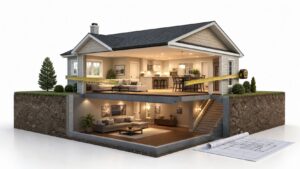
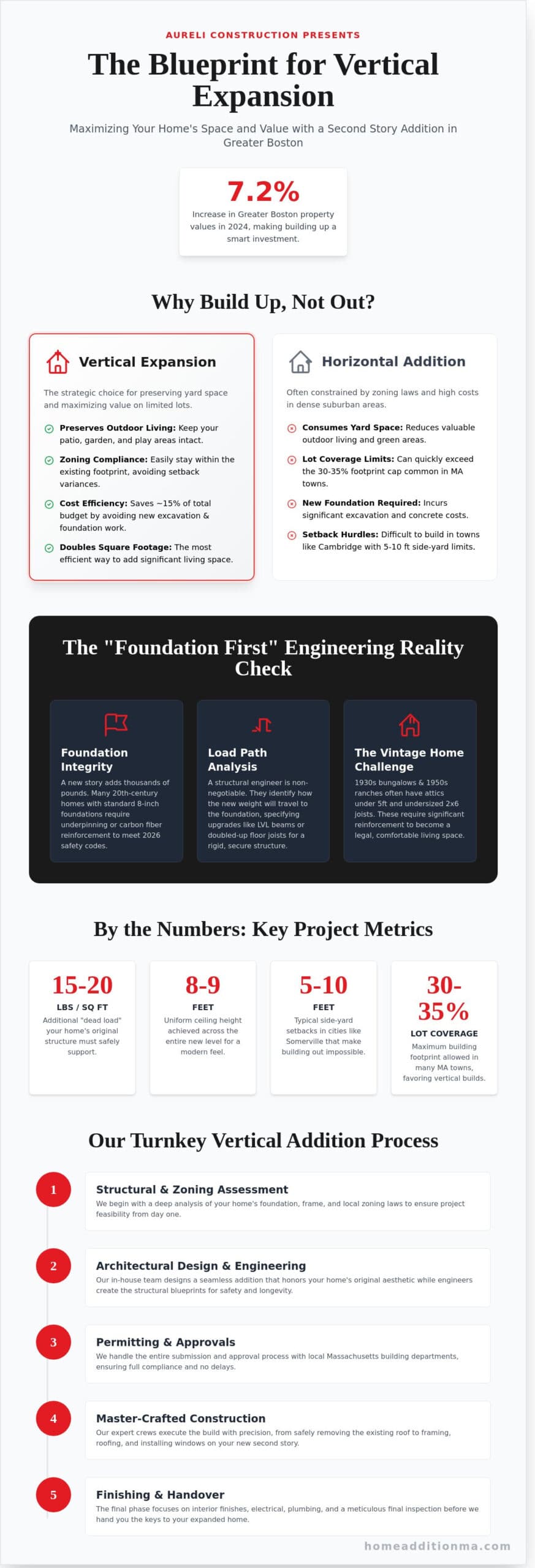
A second story addition is a full structural vertical expansion. It’s not just a minor renovation or a simple attic conversion; it’s the process of removing your home’s existing roof and constructing an entirely new living level above the current footprint. When understanding home improvement options for a growing family, it’s vital to distinguish between a dormer and a full-scale addition. A dormer merely expands a portion of your existing roofline to create a small nook or bathroom. In contrast, a full second floor provides uniform 8-foot or 9-foot ceiling heights across the entire upper level, maximizing every square inch of your home’s footprint. Professional second story addition contractors prioritize structural integrity from day one, ensuring the foundation and first-floor walls are reinforced to support the new 15 to 20 pounds per square foot of dead load.
Building up makes more sense than building out when your property is located in high-density areas like Somerville or Cambridge. In these cities, side-yard setbacks often restrict construction to within 5 to 10 feet of the property line. If your home already sits near those limits, a horizontal addition is legally impossible. Vertical expansion allows you to bypass these footprint constraints while doubling your living area without moving a single blade of grass in your yard. Homeowners in Cambridge navigating these dense urban constraints can benefit from understanding how design build remodeling in Cambridge, MA integrates architectural planning and construction to streamline the entire process.
The 1930s Bungalow Challenge
New England’s 1930s bungalows and 1950s ranches in Medford and Melrose present unique structural puzzles. Many of these historic homes have original attic heights under 5 feet, which makes them unsuitable for simple conversions. We assess existing roof pitches and floor joist spacing; if your home uses 2×6 joists, they won’t meet the 2026 building codes for a living floor and will require reinforcement. Maintaining the architectural integrity of these neighborhoods is a priority. We match existing shingle patterns and window rhythms so the new level looks like a natural part of the original design rather than an afterthought.
Vertical vs. Horizontal Additions
Densely populated Massachusetts towns often enforce strict lot coverage limits, sometimes capping the total building footprint at 30% or 35% of the total land area. A horizontal addition can quickly exceed these limits and eat into your precious backyard space. Vertical expansion is the most efficient way to double square footage on limited MA lots. This approach offers several benefits:
- Preserves Outdoor Living: You keep your patio, garden, and play areas intact.
- Zoning Compliance: It’s often easier to stay within the existing footprint than to seek variances for new setbacks.
- Cost Efficiency: You don’t need to pay for new excavation or foundation work, which can account for 15% of a project’s total budget.
Experienced second story addition contractors handle the entire permitting and engineering process, ensuring your home grows upward safely and legally.
Is Your Home Structurally Ready? The Engineering Reality Check
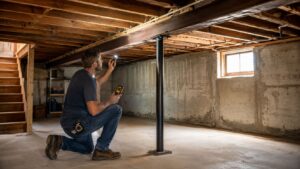
Your home’s foundation is its most critical asset. Adding a second level increases the weight on your existing footings by thousands of pounds. Professional second story addition contractors start with a “Foundation First” philosophy. We examine the width and depth of your concrete footings to ensure they can handle the intensified downward pressure. Many 20th-century Massachusetts homes were built with standard 8-inch foundation walls. These often require underpinning or carbon fiber reinforcement to meet 2026 safety margins.
A structural engineer is non-negotiable during the planning phase. They analyze how the existing frame distributes weight and identify where the new load path will travel. According to the 2023 Cost vs. Value Report, high-quality structural investments maintain a home’s long-term equity by preventing future settling cracks. Common upgrades include doubling up floor joists or installing LVL (Laminated Veneer Lumber) beams. These components create a rigid platform that prevents the bouncy feel often found in budget additions. Experienced second story addition contractors prioritize these reinforcements to ensure the new floor feels as stable as the original ground level.
Massachusetts Building Codes & 2026 Energy Standards
The Massachusetts “Stretch Code” dictates strict energy efficiency for 2026. This means your new vertical envelope needs superior R-value insulation and airtight sealing. Your existing furnace or boiler might not have the capacity to heat an extra 1,000 square feet. We evaluate your mechanical systems early to prevent mid-project surprises. This ensures your new level stays comfortable without overtaxing your current infrastructure.
Structural Red Flags to Watch For
Coastal areas like the North Shore often deal with sandy soil or high water tables. These conditions lead to foundation settling that must be corrected before building upward. If your original framing uses undersized 2×6 studs, Aureli Construction remediates this by sistering new studs or adding steel plates. We focus on creating a structure that feels solid underfoot. If you’re unsure about your home’s capacity, you can schedule a structural assessment with our team to get a definitive answer.
Choosing Your Partner: Design-Build vs. Traditional Contractors
Building upward is a complex structural puzzle. The traditional construction model separates the architect from the builder; you hire an architect to design the plans, then you bid those plans out to various companies. This often creates a disconnect where the design exceeds your budget or the builder discovers structural impossibilities halfway through the project. When problems arise, the architect blames the builder’s execution while the builder blames the architect’s drawings. You are left caught in the middle.
When researching potential partners, it’s helpful to review the work of established firms to understand what high-quality construction looks like. For a look at a portfolio of professional residential projects, you can visit Swiss Build Ltd.
Aureli Construction eliminates this friction through a unified design-build model. We provide a single point of contact from the initial sketch to the final walkthrough. As specialized second story addition contractors, we understand that structural integrity and aesthetic flow must be planned simultaneously. Our turnkey approach ensures that the person who draws the beam is the same person responsible for installing it. This accountability prevents the “blame game” and keeps your project moving forward without unnecessary pauses.
Streamlining the Permit Process in Greater Boston
The regulatory landscape in 2026 is more stringent than ever. Navigating the zoning boards in Newton and Arlington requires a deep understanding of local ordinances. We focus heavily on Floor Area Ratio (FAR) calculations during the preliminary design phase. Because Newton has specific limits on how much square footage a lot can support, we calculate these metrics immediately to ensure your addition is legally viable. Our team has spent years working with local building inspectors; we know their specific requirements and how they prefer documentation to be submitted. This local rapport often saves weeks of back-and-forth communication with the city. For those specifically dealing with Cambridge’s Inspectional Services Department, our comprehensive guide to design build remodeling in Cambridge, MA explains how an integrated approach can bypass the typical administrative bottlenecks and keep your project on schedule.
Cost Predictability and Transparency
Traditional bidding is a primary cause of “change order” sticker shock. When a builder bids on plans they didn’t create, they often find hidden costs once the walls are opened. We solve this by using fixed-price contracts. We lock in your budget during the design phase because our builders have already vetted the architectural plans for technical accuracy.
- Design-build reduces project timelines by an average of 20% by overlapping design and permitting phases.
- Fixed-price contracts eliminate 95% of the surprise costs common in traditional bidding.
- In-house project management ensures that materials are ordered 4 weeks in advance to prevent site delays.
Choosing second story addition contractors who manage both the creative and technical aspects of the build protects your investment. We prioritize structural honesty and clear communication, ensuring your new level feels like a natural part of the original home rather than an afterthought. If you’re ready to discuss the specific requirements for your neighborhood, we’re here to start that conversation.
Calculating the Cost & ROI of a Second Story Addition
In 2026, luxury vertical expansions in the Boston suburbs reflect a shift toward high-performance building envelopes and integrated smart home technology. Homeowners in Newton and Brookline are currently seeing average project costs range from $450 to $700 per square foot for high-end finishes. Total investment varies based on square footage, the complexity of new plumbing lines, and your choice of material finishes. While a basement remodel offers extra space, a vertical addition provides a significantly higher appraisal boost because it adds above-grade living area. This distinction is vital for long-term wealth building in the Massachusetts real estate market.
Financing these projects often involves a combination of Home Equity Lines of Credit (HELOCs) or specialized construction loans. Current 2026 lending rates in the Greater Boston area remain competitive for homeowners with substantial equity. Experienced second story addition contractors will provide the detailed documentation your lender requires to secure these funds, ensuring the financial side of your project is as sturdy as the construction itself.
The 5 Steps to an Accurate Budget
- Feasibility Study: We begin with a Rough Order of Magnitude (ROM) pricing model to align your vision with realistic market costs.
- Design Fees: Architectural and engineering services typically account for 10% to 15% of your total project investment.
- Structural Reinforcement: Older homes often require foundation or first-floor wall strengthening to support the weight of a new level.
- The Selection Phase: High-end cabinetry, hardwood flooring, and custom tile choices can swing the final budget by 20% or more.
- Contingency Fund: We recommend a 10% reserve for “behind-the-wall” surprises common in historic Massachusetts properties.
Long-term Value in the Massachusetts Market
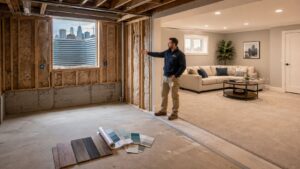
Adding a master suite or a fourth bedroom fundamentally changes your home’s market position. In towns like Lexington or Belmont, the cost of moving to a larger home often exceeds $120,000 when you calculate real estate commissions, taxes, and moving fees. Adding a level allows you to gain that space without the upheaval of relocation. Beyond the numbers, the emotional ROI is immense. You keep your children in their preferred school districts and remain in the neighborhood you love. Professional second story addition contractors help you capture this value by ensuring the new floor blends perfectly with your home’s original character. Homeowners who want to maximize every square foot of their property often pair a vertical addition with basement finishing in Greater Boston to unlock additional living space at a lower cost per square foot.
The Aureli Construction Process: Your Turnkey Vertical Addition
Aureli Construction manages every phase of your build through a comprehensive turnkey model. We’ve spent 30 years perfecting our “Master Craftsman” approach across Medford and Winchester. Our team prioritizes structural integrity by reinforcing existing foundations before the first new stud is placed. We ensure the aesthetic detail of your new level matches the original architecture of your home, whether it’s a 1920s Colonial or a mid-century ranch. This dedication to detail ensures your addition looks like an original part of the structure rather than an afterthought. Many homeowners also choose to modernize their main living areas during this process, and our expertise extends to comprehensive kitchen remodeling in Greater Boston that maintains the same architectural integrity and design-build approach.
The “roof-off” phase is the most critical part of the construction timeline. We use advanced weather-shielding systems and tight scheduling to minimize family disruption. Most of our vertical builds reach a weather-tight state within 10 to 14 days of the initial demolition. As experienced second story addition contractors, we coordinate every trade partner to maintain this strict pace and keep your interior dry and secure throughout the transition.
A Local Partner You Can Trust
Our commitment to Middlesex and Suffolk County goes beyond simple construction. We provide a project manager who remains on-site daily to oversee quality control and safety. In 2024, we completed a 1,200-square-foot addition in Newton that preserved the home’s historic charm while adding three functional bedrooms. In 2025, a Somerville project involved a modern master suite that increased the total property value by 32 percent. Finding reliable second story addition contractors who understand these specific local neighborhoods is essential for a stress-free build.
Start Your Transformation Today
Successful projects require early planning. You should contact us 6 to 12 months before you want to begin building. This lead time is necessary to secure structural engineering reports and navigate the local permitting process. Your first meeting with an Aureli specialist involves a 60-minute walk-through to assess your home’s current load-bearing capacity and roofline. We provide a clear roadmap from this initial site visit to the moment you walk up your new staircase. Your path to a more spacious home begins with a single conversation about what’s possible for your property.
Schedule your structural feasibility consultation with Aureli Construction today.
Elevate Your Greater Boston Home Today
Expanding your home vertically is a significant decision that requires a balance of engineering precision and architectural vision. You’ve learned that a successful project begins with a rigorous structural reality check and ends with a seamless integration that respects your neighborhood’s character. Whether you’re preserving a 100 year old Victorian in Newton or modernizing a classic Colonial, the right partnership makes the difference between a stressful renovation and a strategic investment. It’s about more than just space; it’s about protecting the structural integrity of your largest asset.
Aureli Construction brings over 30 years of local Massachusetts experience to every job site. We maintain an A+ rating for structural craftsmanship and specialize in the unique technical demands of historic New England home types. As premier second story addition contractors, we manage every detail through our turnkey process to ensure your peace of mind. You aren’t just adding square footage. You’re enhancing your family’s daily life while building long term equity through a proven design build approach.
We’re ready to help you navigate the complex zoning laws and engineering challenges of 2026. Let’s start a conversation about your home’s potential today.
Request a Quote for Your Second Story Addition
Frequently Asked Questions
Do I have to move out during a second story addition?
You will likely need to move out for the duration of the project to ensure your family’s safety and comfort. While 5% of homeowners attempt to stay, the noise and lack of a roof for several weeks make it impractical for most. Most families relocate for 16 to 24 weeks to ensure their daily routine remains undisrupted while we maintain a safe, efficient job site. This temporary move protects your family from construction dust and the inevitable utility shut-offs required during the structural phase.
How much does a second story addition cost in the Boston area in 2026?
In 2026, a second story addition in the Boston area typically costs between $350 and $550 per square foot. For a standard 800-square-foot project in Newton, you should budget approximately $320,000 to $440,000 depending on your choice of finishes. Professional second story addition contractors provide these estimates to include everything from architectural plans to final paint. This investment often yields a 70% return on value when you eventually sell your Massachusetts home.
Can any house handle a second story addition?
Most houses can handle an addition, but 25% of projects require foundation or wall reinforcement to support the extra weight. Our engineers evaluate your home’s structural integrity to ensure the existing footings meet 2026 building codes. If your foundation was built before 1950, we often install steel l-beams or sistered joists to guarantee stability. We focus on these technical details to ensure your home’s long-term safety and the success of the vertical expansion.
How long does the permitting process take in towns like Cambridge or Newton?
The permitting process in towns like Cambridge and Newton usually takes between 12 and 20 weeks. Newton’s building department requires detailed site plans and structural calculations, which often involve a 3-month review cycle. In Cambridge, historical commission reviews can add another 8 weeks to the timeline. We manage this entire administrative process for you, navigating local zoning bylaws to secure your permits without unnecessary delays or technical errors.
Will a second story addition make my home look out of place in my neighborhood?
Your home won’t look out of place if the design respects the architectural language of your Greater Boston neighborhood. We use 3D rendering technology to match your new roofline and siding to the existing 19th-century or mid-century styles common in MA. By maintaining consistent proportions and using high-quality materials, we ensure the addition looks like an original part of the structure. This careful planning preserves your home’s curb appeal and neighborhood character.
What happens to my existing roof during construction?
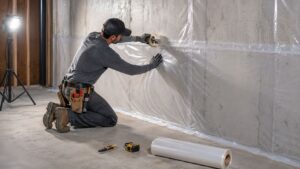
We completely remove your existing roof structure to make way for the new floor joists. This process takes approximately 3 to 5 days, during which we use 20-mil reinforced poly sheeting to keep your home dry and protected. Once the old rafters are gone, we install a new subflooring system to create a stable platform for your second level. Our team coordinates this phase tightly with local weather forecasts to minimize exposure and protect your existing interior finishes.
Is a second story addition cheaper than building an extension into the backyard?
Building up is often 15% more cost-effective than building a backyard extension because it eliminates the need for new foundation work. Since you don’t need to perform extensive excavation, you save significantly on site preparation and concrete costs. Choosing second story addition contractors allows you to double your living space while keeping your entire backyard for recreation. This strategy maximizes your property’s square footage without violating local lot coverage ratios or setbacks in crowded Boston suburbs.
Do I need a new HVAC system for the second floor?
You’ll almost certainly need a dedicated HVAC solution for your new second floor to ensure proper climate control. Existing systems are rarely sized to handle an additional 1,000 square feet of living space, and 90% of our clients opt for a separate zone. We frequently install high-efficiency heat pumps or localized mini-split systems to provide precise temperature management. This setup ensures your new bedrooms stay at a consistent 68 degrees without overtaxing your original downstairs unit.