What if the smartest way to gain 1,000 square feet of living space in Medford isn’t a new mortgage at a 7% interest rate, but simply looking up? You likely love your neighborhood and your local community in towns like Arlington or Belmont, yet your family is feeling the squeeze of a home that no longer fits. We understand that the decision to build up is a major financial commitment, especially when Massachusetts building codes and structural requirements feel like a maze of complexity. Our team at Aureli Construction is here to provide the clarity you need to make an informed decision for your family’s future.
In this guide, we provide a transparent breakdown of the second floor addition cost for 2026, specifically tailored to the unique architectural landscape of Greater Boston. You’ll learn exactly how we manage the design-build process to ensure your new story integrates perfectly with your existing foundation while significantly increasing your property value. We’ll cover everything from structural reinforcements required in older Lexington homes to the specific zoning permits needed in Melrose and Winchester, giving you a complete roadmap for your upcoming renovation.
Key Takeaways
- Learn why the average second floor addition cost in Greater Boston reflects the region’s specialized labor and material standards for the 2026 market.
- Discover how we navigate Massachusetts building codes and structural feasibility studies to ensure your existing foundation can safely support a vertical expansion.
- Compare the long-term investment value of adding space in towns like Wellesley or Newton against the significant hidden costs of moving to a larger home.
- Understand the benefits of our turnkey design-build process, which provides you with a single point of professional contact from initial concept to completion.
- Explore how specific room configurations, from luxury master suites to modern home offices, can be customized to maximize both your daily comfort and your property’s total value.
Understanding Second Floor Addition Costs in Massachusetts
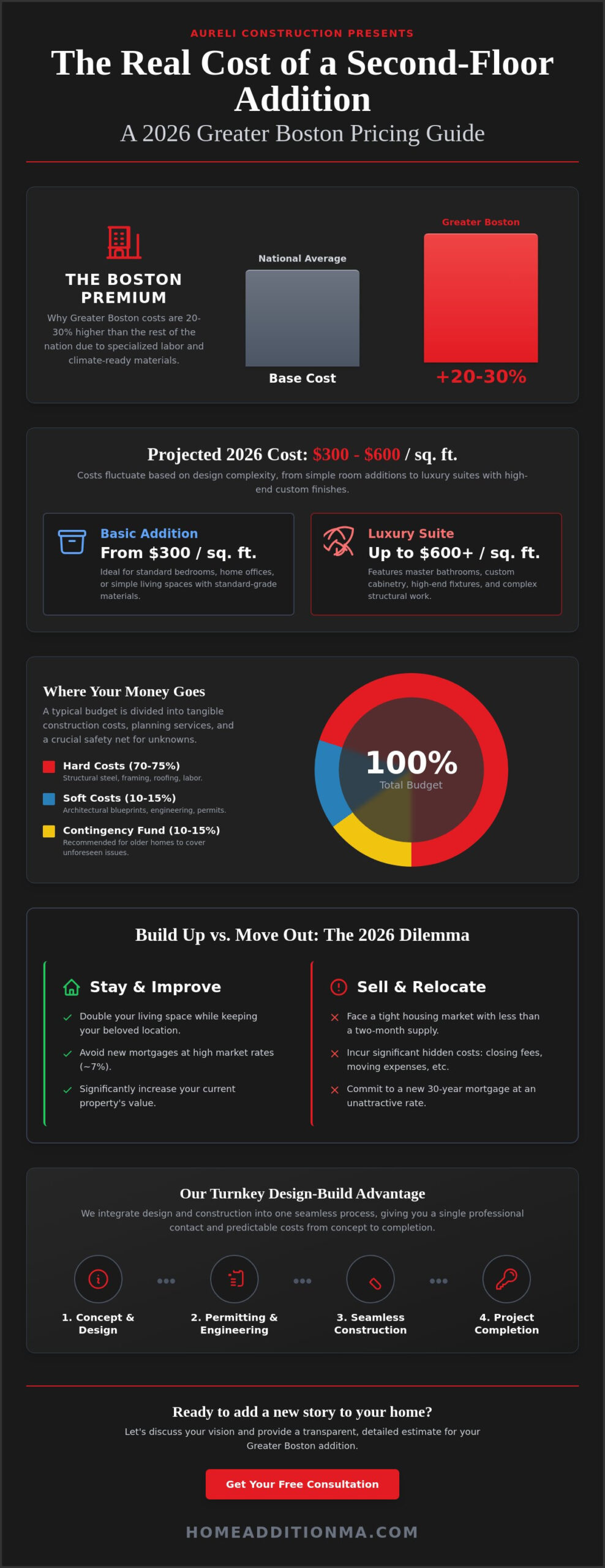
Building up is the most effective way to gain space without sacrificing your backyard. A second story addition allows you to double your living area while maintaining the footprint of your home. In the Greater Boston area, the second floor addition cost typically trends 20% to 30% higher than national averages. This price gap reflects the specialized labor required for historic New England architecture and the high-grade materials needed to withstand our specific coastal climate.
Whether you’re considering a partial addition, like a master suite over an existing garage, or a full-scale vertical expansion, the complexity of these projects requires expert oversight. We focus on a turnkey design-build approach at Aureli Construction. This model integrates the design and construction phases into one seamless process. It helps us control budget volatility from the very first day, ensuring you aren’t surprised by rising costs halfway through the build.
The 2026 Greater Boston Market Context
As we move through 2026, the local real estate market remains incredibly tight. In towns like Arlington and Belmont, housing inventory has stayed below a two-month supply for several years. Current interest rates in 2026 make refinancing a new mortgage less attractive than investing in your current property. We see more homeowners choosing to stay put and build. Our start-to-finish management style protects you from mid-project price hikes that often plague traditional bid-and-build contractors. We handle everything from the initial zoning board meetings in Cambridge to the final structural inspections in Somerville.
Initial Budgeting: Hard Costs vs. Soft Costs
A successful project starts with a clear understanding of where your money goes. We categorize expenses into two main groups to help you track your second floor addition cost accurately. Hard costs include tangible items like structural steel, framing lumber, roofing materials, and professional labor. Soft costs cover the essential behind-the-scenes work such as architectural blueprints, structural engineering reports, and town-specific permit fees. Because many homes in Medford and Winchester are over 80 years old, we always recommend a 10% to 15% contingency fund. This buffer covers unforeseen structural issues that only become visible once we open up the existing walls. Planning for these details early ensures your room additions project stays on track and within your financial comfort zone.
A Detailed Breakdown of Second Story Addition Expenses
Estimating the second floor addition cost in the Greater Boston area requires looking at four primary cost drivers. For 2026, industry projections suggest homeowners in towns like Belmont and Melrose should anticipate a price range between $300 and $600 per square foot for professional construction. This range fluctuates based on the complexity of the design and the specific rooms you plan to build. A simple bedroom addition sits at the lower end of that spectrum, while a luxury master suite with a custom bathroom will push costs higher due to intricate plumbing and high-end tile work. If you’re adding a dedicated home office, the focus shifts to soundproofing and advanced electrical layouts to support modern remote work needs. To get a more tailored figure for your specific property, you can use our second story addition cost calculator.
Luxury finishes significantly impact the final bottom line. Choosing custom-milled cabinetry, premium hardwood flooring, or designer light fixtures can increase the total investment by 20% to 35%. While these choices enhance the aesthetic appeal, they also contribute to the long-term resale value of your home in competitive markets like Brookline or Wellesley. We focus on helping you balance these high-end desires with the structural realities of your project.
Structural Reinforcement: The Foundation of Your Budget
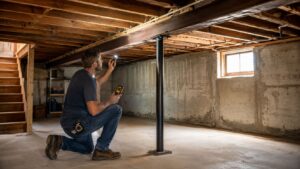
Your current home wasn’t necessarily built to carry the weight of an entire new level. We often find that first-floor walls or foundations in older Newton or Cambridge homes need extra support to handle the increased load safely. This process involves adding structural steel or installing helical piers to ensure the building remains stable for decades. These requirements are determined during the engineering phase, which is a critical step in understanding how much to add a second story without compromising your home’s integrity. Skipping this step isn’t an option if you want to protect your investment and meet local building codes.
Systems Integration: HVAC, Plumbing, and Electrical
Adding a second floor isn’t just about framing and drywall; it’s about extending the life support systems of your home. Approximately 85% of existing electrical panels in Medford or Arlington houses can’t handle the load of three new rooms and a master bath. You’ll likely need a panel upgrade to 200 or 400 amps to ensure safety and reliability. Heating and cooling also present a challenge. Instead of straining your old furnace, we typically recommend a separate HVAC zone or a high-efficiency heat pump system for the new level. For projects in Winchester or Lexington, extending plumbing stacks for new bathrooms requires precision to maintain proper drainage and water pressure throughout the house. If you’re ready to see how these numbers apply to your home, our team is available for room addition consultations throughout the region.
Structural Realities: Why Foundation and Zoning Impact Your Budget
Many homeowners worry their current foundation might buckle under the weight of a new story. It’s a common fear, but structural failure is preventable through rigorous engineering and local expertise. The Massachusetts State Building Code requires a thorough assessment of your existing footings and load-bearing walls before any vertical expansion begins. If your foundation was built in 1920, it likely needs reinforcement to meet modern safety standards. This structural prep work is a necessary component of your total second floor addition cost, ensuring your home remains stable for another century.
Aureli Construction manages these technical details by coordinating with town halls in Medford and Somerville, ensuring your project doesn’t stall at the permit desk. We’ve spent years building relationships with local inspectors who prioritize safety and code compliance. We don’t take shortcuts with your home’s integrity. Every beam we install and every footing we reinforce is designed to provide peace of mind and long-term durability.
Zoning and Permitting in Greater Boston
Permit processes in high-regulation towns like Brookline or Newton are notoriously complex. Many local properties sit on “non-conforming” lots, meaning the existing structure already sits closer to the property line than current laws allow. Building upward on these lots often requires a special variance from the Zoning Board of Appeals. In towns like Cambridge, zoning height restrictions are often the primary driver of architectural design and total project cost. We regularly navigate these hurdles, working directly with local historic commissions to ensure designs respect neighborhood character while meeting all legal requirements.
Staircase Placement and Floor Plan Flow
Adding a level requires a way to get there. A standard staircase consumes about 80 to 100 square feet of your existing first floor. This “lost space” often triggers a domino effect, requiring us to reconfigure your kitchen or living area to maintain a natural flow. Sometimes, standard room additions are combined with vertical builds to offset this lost footprint. Integrating a new staircase into an old layout takes careful planning to avoid awkward hallways or dark corners.
Our team focuses on turnkey solutions, handling the structural engineering and the interior redesign so the transition between floors feels like it was always part of the original plan. Understanding these structural variables helps you set a realistic budget for your second floor addition cost before the first hammer swings. We treat your home with the gravity it deserves, ensuring every design choice adds both functional space and significant property value.
Second Floor Addition vs. Moving: Evaluating Your Investment
Deciding whether to sell your current home or expand upward is a significant financial choice for Greater Boston families. In 2026, the hidden costs of moving often outweigh the sticker price of construction. Selling a home typically incurs a 5% to 6% realtor commission, while closing costs on a new purchase add another 2% to the total. On a $1.2 million home in Newton or Brookline, these transaction fees alone exceed $90,000 before you even hire a moving company or pay for a new inspection.
When you analyze the second floor addition cost, it often functions as a savvy financial hedge. In Wellesley, the price gap between a standard 3-bedroom home and a 5-bedroom property frequently exceeds $400,000. Investing in a vertical expansion allows you to capture that square footage without the stress of a competitive bidding war. According to House Beautiful, adding a master suite or a multi-generational living space ranks among the most valuable home additions for long-term ROI. These projects provide the space you need while keeping your existing mortgage rate intact.
Equity Gains and Neighborhood Value
Expanding your home can shift your property from the median price bracket into the luxury category in towns like Medford or Stoneham. We see many homeowners choose to build up so they can remain in high-performing school districts like Lexington or Winchester. Staying in place preserves your community ties while significantly increasing your home’s equity. You can explore a broader view of how these projects impact property value by reviewing our professional design-build services. Building up is often the only way to double your square footage on smaller lots in Cambridge or Somerville.
Tax Implications and Financing
A second-story addition will likely increase your property tax assessment. Massachusetts municipalities base taxes on the total finished living area and the overall market value of the structure. While your annual bill will rise, the resulting equity gain usually compensates for the higher cost. In 2026, many of our clients utilize HELOCs or specialized construction loans to fund these projects. These financing vehicles allow you to leverage your existing equity to pay for the expansion. Securing a professional estimate is your first step toward obtaining a loan that reflects the true scope of your vision. We handle the technical documentation required by lenders to ensure your financing process remains stress-free.
Planning Your Turnkey Second Story Addition with Aureli Construction
Adding a level to your home is a complex undertaking that requires more than just a hammer and nails. At Aureli Construction, we use a design-build approach to simplify the entire journey for you. This means you have one point of contact from the first sketch to the final walkthrough. You won’t have to mediate between an architect and a builder because our team handles both roles under one roof. We begin every project with a thorough on-site consultation and a structural feasibility study. This essential step ensures your existing foundation and framing can support the new weight, protecting your investment from the very start.
One of the biggest concerns for homeowners in Greater Boston is the final second floor addition cost. To address this, we provide fixed-price contracts after the design phase is complete. This transparency gives you peace of mind, as you’ll know the exact financial commitment before we break ground. Whether you live in Medford, Arlington, or Belmont, we ensure your project stays on budget and on schedule. We believe that professional construction should be predictable and stress-free.
The Aureli Process: From Blueprints to Build
Our architectural phase focuses on maximizing your new square footage while staying within local zoning limits. We understand the specific residential requirements in towns like Lexington and Melrose, ensuring your design fits the neighborhood character while providing the modern space you need. We handle every town permit and all required inspections. You won’t need to spend hours at city hall or worry about complex building codes. With over 30 years of experience in New England craftsmanship, we build structures that withstand our harsh winters and humid summers. We treat your home with the same care we would give our own, focusing on structural integrity and seamless aesthetic integration.
Start Your Consultation Today
If you’re ready to transform your living space, take a look at our gallery for inspiration. You can see how we’ve helped families in Winchester and Stoneham add value and comfort to their properties. We take pride in being a reliable master craftsman. Our reputation is built on honesty, detailed planning, and professional execution. A well-planned project is the best way to manage your second floor addition cost while ensuring high-quality results. Don’t let a lack of space force you to move away from the community you love. Contact Aureli Construction today for a free estimate and a detailed on-site consultation. We’ll show you how a professionally managed addition can turn your current house into your forever home.
Start Planning Your Greater Boston Home Transformation
Deciding to expand upward is a significant step toward creating the home you’ve always wanted without leaving the neighborhood you love. Understanding your second floor addition cost involves more than just square footage. It requires a deep dive into structural requirements and the specific zoning laws of towns like Medford, Arlington, or Cambridge. We know that building a foundation of trust is just as important as the physical foundation of your home. By choosing a strategic addition over the stress of moving, you’re making a long-term investment in both your property’s value and your family’s comfort.
Aureli Construction brings over 30 years of local design-build experience to every project. We provide fixed-price remodeling contracts to give you budget certainty from day one. Our team manages the entire process from initial permits to the final coat of paint, ensuring a seamless experience for homeowners in Winchester and Newton. You don’t have to navigate complex regulations or contractor schedules alone. We’re here to guide you through every technical detail with the expertise of a reliable master craftsman.
We look forward to helping you build a beautiful, functional space that serves your family for years to come.
Frequently Asked Questions
How much does a second floor addition cost in the Boston area in 2026?
The average second floor addition cost in Greater Boston for 2026 typically starts at $250,000 for essential builds, while high-end custom projects often exceed $500,000. These figures reflect industry data from the Remodeling 2024 Cost vs. Value Report adjusted for a 4% annual local inflation rate. Factors like your choice of finishes and structural requirements in towns like Newton or Wellesley will influence your final investment.
Can any house support a second story addition?
Not every home can immediately support the weight of a second story without significant structural reinforcement. Our team evaluates your existing foundation and wall framing to ensure they meet the 2023 Massachusetts State Building Code requirements. If your current structure isn’t sufficient, we implement underpinning or add steel beams to create a stable base for your new living space in Medford or Arlington.
How long does it take to build a second story addition in Massachusetts?
A typical second story addition in Massachusetts takes between 6 and 10 months from the initial design phase to final inspection. The planning and permitting process in municipalities like Cambridge or Brookline often requires 2 to 3 months alone. Once we break ground, the framing and weatherproofing stages move quickly, followed by several months of detailed interior finish work and utility integration.
Do I have to move out during the construction of a second floor?
Most homeowners choose to move out for 4 to 6 months during the most intensive phases of construction. While we maintain a clean job site in Somerville or Belmont, the process involves removing your existing roof, which exposes the home to the elements. Living off-site ensures your family stays safe from dust and noise while allowing our crew to work efficiently to complete your project.
Will a second story addition increase my property taxes significantly?
Your property taxes will increase because your home’s assessed value rises after adding square footage. In towns like Lexington or Winchester, the local assessor typically revaluates the property once the building permit is closed. While your annual tax bill might rise by 15% to 25%, the long-term equity gained from a professional second floor addition cost usually outweighs the incremental tax expense.
Are there specific height restrictions for homes in Cambridge or Somerville?
Cambridge and Somerville enforce strict zoning ordinances that often limit residential building heights to 35 or 40 feet depending on the specific district. We navigate these local Floor Area Ratio requirements to ensure your design remains compliant. If your vision exceeds these limits, we assist you through the Special Permit or Variance process with the local Zoning Board of Appeals to secure approval.
Does a second story addition require a new foundation?
A second story addition doesn’t usually require a completely new foundation, but it often requires reinforcing the existing one. We conduct soil tests and structural calculations to determine if your footings can handle the 20% to 30% increase in weight. In older homes in Melrose or Stoneham, we frequently add concrete piers or widen existing footings to guarantee the structural integrity of the entire building.
What is the average ROI for a second floor addition in Greater Boston?
Homeowners in the Greater Boston area can expect an average Return on Investment of 55% to 65% according to regional real estate data. Beyond the financial recovery at sale, the functional value of adding bedrooms or a primary suite in high-demand markets like Reading or Newburyport is immense. It’s a strategic move that allows you to stay in your preferred neighborhood while doubling your living space.