What if the biggest obstacle to your dream home isn’t the cost of lumber, but the 2023 update to the Massachusetts Stretch Energy Code? Many homeowners in Medford and Arlington feel trapped in beautiful but cramped Cape Cods, wondering exactly how much to add a second story without risking a structural collapse. You want to stay in the community you love, but the thought of a 12 month construction project or massive foundation reinforcements can feel overwhelming. It’s natural to prioritize peace of mind when considering such a significant investment in your family’s future.
This guide provides the clarity you need to navigate the 2026 Greater Boston building landscape with confidence. We’ll break down the real-world costs of structural integrity, explain local regulatory hurdles, and provide a “go/no-go” checklist for your specific property. You’ll finish this article with a realistic understanding of the ROI for your town and a clear roadmap for a stress-free transformation that adds lasting value to your home. We’re here to ensure your vertical expansion is built on a foundation of trust and technical expertise.
Key Takeaways
- Evaluate your home’s structural integrity and soil conditions to determine if your foundation can safely support the load of a vertical expansion.
- Understand how much to add a second story in the Greater Boston market by comparing local labor rates against essential “soft costs” like architectural design and permits.
- Identify critical infrastructure upgrades, including electrical panel capacity and plumbing alignment, that prevent costly delays and ensure modern performance.
- Navigate the specific zoning challenges of towns like Newton and Cambridge, focusing on Floor Area Ratio (FAR) limits and local height restrictions.
- Discover how the design-build model maximizes your property value while preventing the common budget overruns associated with traditional renovation methods.
Is Your Home Ready? The Second-Story Structural Feasibility Checklist
Homeowners often focus on the aesthetic design of a new level, but the bones of the house dictate the reality of the project. Before calculating how much to add a second story, you must verify that your current structure can support a 100% increase in vertical load. Building upward effectively doubles the pressure on your existing footings. This requires a precise calculation of current capacities to ensure the safety of your family and the longevity of your investment.
The Foundation and Footing Inspection
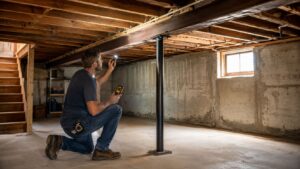
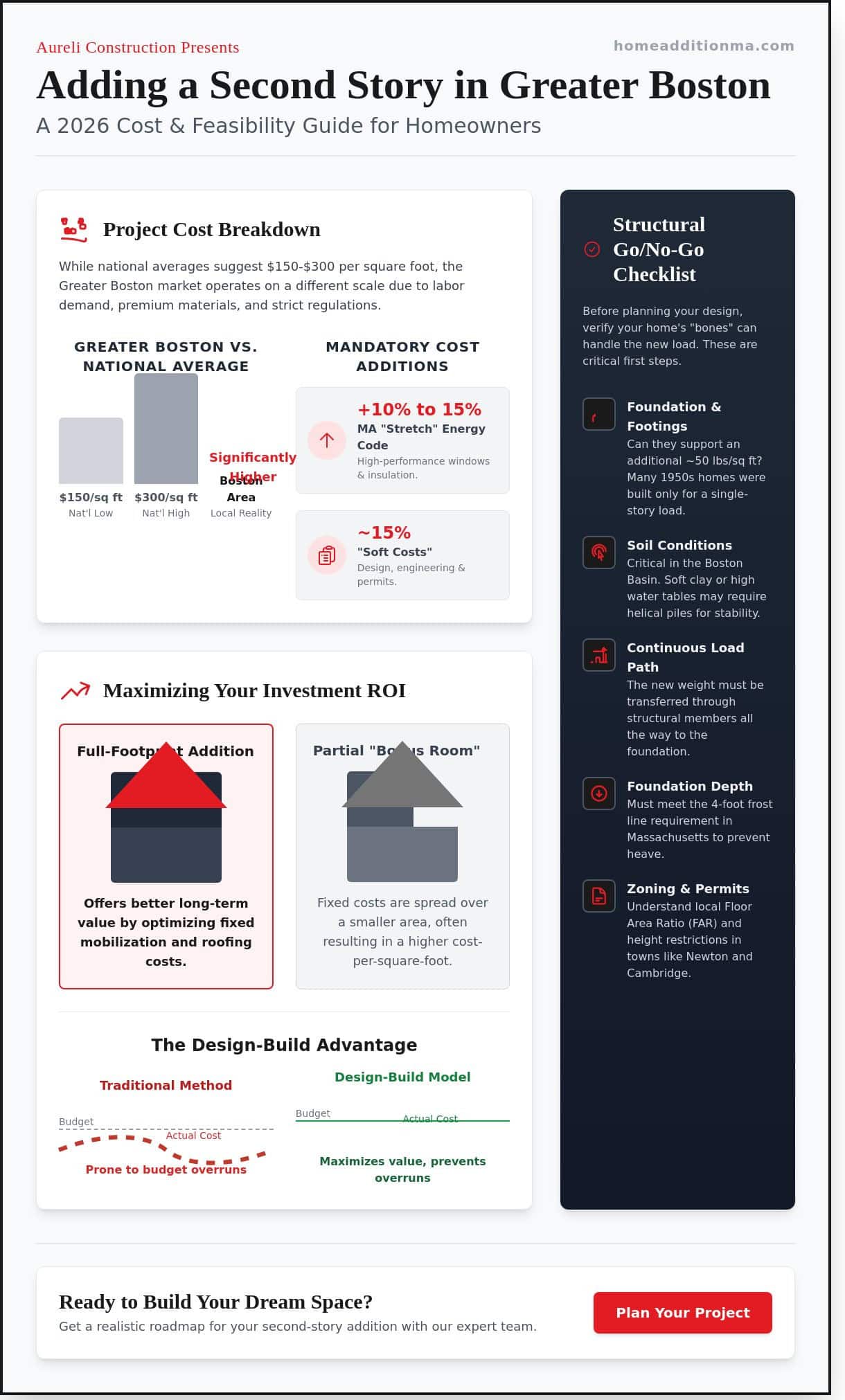
Many 1950s-era ranch-style homes in towns like Arlington or Belmont were built with footings designed specifically for a single-story load. These foundations often lack the width or depth required to handle the 50 pounds per square foot of additional weight a new level introduces. A structural engineer is essential during this phase. They certify that your home is safe for expansion or identify if you need underpinning to strengthen the base. In the Boston Basin, soil conditions vary significantly between neighborhoods. Areas with soft clay or high water tables might require the installation of helical piles to stabilize the structure. Watch for horizontal cracks or significant settling in your basement walls. These signs of stress often disqualify a home for vertical expansion without extensive and costly remediation work.
Load-Bearing Walls and Interior Support
The weight of a second floor does not just sit on the exterior walls. It follows a point load path through interior structural members down to the basement. Identifying which walls are structural versus decorative is a critical first step for all home improvement projects involving vertical growth. In Massachusetts, adding a second story triggers updated shear requirements under the state building code. This means your home must resist lateral forces from high winds or seismic activity more effectively than when it was originally constructed. Structural integrity is the capacity of a building to support its designed weight and resist external forces without experiencing collapse or excessive deformation.
The existing roof pitch also impacts the logistics of your build. A steep 12/12 pitch requires more labor and safety equipment during the tear-off phase than a shallow 4/12 pitch. When planning how much to add a second story, remember that removing the entire roof exposes your home to the elements. This makes the speed of the structural transition vital for protecting your existing first-floor finishes. Our team analyzes these variables early to create a predictable timeline for your project.
- Confirm foundation depth meets the 4-foot frost line requirement in MA.
- Map the continuous load path from the new ridge beam to the basement floor.
- Assess if the current ceiling joists can serve as second-story floor joists.
- Evaluate the proximity of neighboring homes to determine crane access for material lifts.
How Much to Add a Second Story in Greater Boston? 2026 Cost Breakdown
Determining how much to add a second story requires looking beyond national averages. While generic online estimates often suggest a range of $150 to $300 per square foot, the Greater Boston market operates on a different scale. In towns like Newton and Lexington, high demand for specialized labor and premium material costs elevate these figures significantly. By 2026, the updated “Stretch Code” energy requirements add an additional 10% to 15% to total construction budgets. These regulations mandate superior insulation, high-performance windows, and rigorous airtightness to meet state climate goals.
Beyond the physical build, soft costs typically represent about 15% of your total investment. This category includes architectural design, structural engineering, and municipal permit fees. Every vertical expansion must strictly adhere to the Massachusetts State Building Code to ensure the existing foundation can support the new weight. A full-footprint addition often offers better long-term value than a partial “bonus room” addition because mobilization and roofing costs remain relatively constant regardless of the new floor’s size.
Square Foot Pricing vs. Project Complexity
Relying on a flat price per square foot often leads to budget surprises. Complexity drives the final number. For example, adding a primary suite with a custom bathroom requires extensive plumbing stack extensions and HVAC rebalancing. These technical requirements cost more than a simple bedroom expansion. If your design involves moving a kitchen or adding heavy stone finishes upstairs, the structural reinforcement needs will increase. To get a realistic figure based on your specific layout and town, use our second story addition cost calculator for a personalized 2026 estimate.
The “Tear-Off” and Temporary Housing Factors
A vertical addition begins with the demolition of your existing roof. This “tear-off” phase involves significant disposal fees and the structural reinforcement of first-floor load-bearing walls. Most Massachusetts homeowners should budget for at least six months of temporary housing. Living on-site during a roof removal is rarely feasible due to safety risks and exposure to the elements.
The financial landscape for 2026 projects also includes higher financing costs. Current interest rates for construction loans mean your carrying costs will be a notable line item in the project budget. For a comprehensive breakdown of what to expect, review our detailed guide on second floor addition cost in Greater Boston for 2026. We recommend a pre-construction consultation
Infrastructure Checklist: Plumbing, HVAC, and Electrical Upgrades
Adding a level requires more than just framing and roofing. Your home’s internal systems must grow to support the new square footage. In Medford and surrounding areas, older residential electrical panels often provide only 100-amp service. Modern 2026 standards and the demands of a second story require an upgrade to 200-amp service. This ensures your new laundry suite and master bedroom electronics run safely without tripping breakers. Upgrading these systems during the open wall phase is the most cost-effective way to ensure long-term reliability and modern performance.
Plumbing costs fluctuate based on layout. You can save several thousand dollars by aligning new bathrooms directly above existing first-floor wet walls. This strategy minimizes the need for complex pipe rerouting through finished spaces. HVAC needs also shift significantly. A standard furnace designed for a 1,200 square foot ranch cannot effectively heat or cool an additional 1,000 square feet. Massachusetts energy codes now favor high-efficiency heat pumps for these additions. These systems provide zoned climate control, which is essential for maintaining comfort across different levels of the home.
The 2023 Cost vs. Value Report indicates that major renovations yield higher returns when they incorporate energy-efficient upgrades. Integrating smart home technology and modern spray foam insulation helps meet the strict 2026 MA energy standards while lowering monthly utility bills. When homeowners calculate how much to add a second story, they often overlook these critical infrastructure components that ensure the home remains functional for decades.
Modernizing the Electrical and Mechanical Systems
Most second-story projects require a new sub-panel to manage the increased electrical load of the upper floor. This is especially true if you plan to include a dedicated laundry room or a home office with high-performance computing needs. Heat pumps are becoming the standard for Massachusetts additions because they offer both heating and cooling in a compact footprint. These systems are highly efficient and often qualify for local energy rebates, which helps offset the initial investment while providing superior comfort compared to extending old ductwork.
Staircase Integration and First-Floor Impact
The staircase is the most critical architectural element in your planning. You should expect to lose between 80 and 100 square feet of existing first-floor living space to accommodate the new stairs. Massachusetts building codes require specific dimensions for safety. Treads must be at least 10 inches deep, and you need a minimum of 6 feet 8 inches of headroom clearance. The placement of this staircase dictates the entire flow of the second-floor hallway and bedroom access. Deciding where to place the stairs is a primary factor in determining how much to add a second story in terms of both square footage and design complexity.
Navigating Local Permits and Zoning in Newton, Medford, and Beyond
Building up instead of out is a smart way to maximize a small lot. However, your budget depends on more than just materials and labor. When calculating how much to add a second story, you must account for the regulatory landscape of Greater Boston. Each municipality has distinct rules that can alter your design or require expensive structural adjustments before the first nail is driven.
Towns like Cambridge and Somerville utilize Floor Area Ratio (FAR) to manage density. This formula determines the maximum square footage allowed relative to your lot size. If your current home already nears this limit, adding a full second level might require a variance. Height restrictions are equally critical. Many high-grade lots in Newton have caps that prevent a full-height second story, often forcing homeowners to consider dormers or gambrel roof designs to stay within the legal 35-foot limit. Understanding these local nuances is the only way to accurately estimate how much to add a second story without facing mid-project surprises.
If your project exceeds local limits, you’ll face the Zoning Board of Appeals (ZBA). This process adds time and requires a compelling case for why your addition won’t negatively impact the neighborhood. In historic districts like those found in Winchester or Lexington, the Historical Commission will review your plans. They often mandate specific materials or architectural styles to preserve the town’s character, which can influence your final costs.
The Massachusetts State Building Code and Energy Mandates
The 2026 Green Building standards have changed the way we approach vertical additions. You’ll need to meet strict insulation R-values and high-performance window specifications to comply with the Specialized Energy Code. Structural integrity is another priority. Because Massachusetts experiences high coastal winds and occasional seismic activity, multi-story residential structures must include specific tie-downs and reinforced framing. You can find detailed permit navigation tips in our 2026 Homeowner’s Guide.
Working with Your Neighbors and the Town
Density creates friction. In close-proximity neighborhoods, shadowing is a common concern where your new height might block a neighbor’s sunlight. Addressing these privacy issues early prevents delays during the public hearing phase. The permit approval timeline in Greater Boston typically spans 4 to 12 weeks. It’s a complex administrative hurdle that requires patience. A professional home addition contractor should handle all town hall interactions to ensure your application is accurate and complete the first time.
Ready to see if your lot qualifies for a vertical addition? Contact Home Addition MA today for a professional feasibility assessment.
Maximizing Your Investment: ROI and the Design-Build Advantage
A second story addition is a significant financial commitment that requires a clear understanding of long-term value. In high-demand Greater Boston suburbs like Belmont and Melrose, property values often justify the expense. Homeowners frequently ask how much to add a second story because they want to ensure the equity gain outweighs the construction costs. In these specific markets, adding 1,000 square feet of living space can increase a home’s market value by 30% to 50% depending on the quality of finishes and current neighborhood comparables.
To protect this investment, we utilize the design-build model. Traditional projects often suffer from a 20% budget overrun because the architect’s vision does not align with the contractor’s real-world pricing. Our integrated approach eliminates this gap. We manage the design and construction under one roof, ensuring the project stays within your financial parameters from the first sketch to the final inspection. We also prioritize finishes that respect New England’s architectural heritage. Using materials like cedar shingles or traditional crown molding ensures the new level looks original to the house, which is vital for maintaining curb appeal and resale value.
ROI by Town: Where Building Up Pays Off Most
Location dictates your return on investment. In Newton, where median home prices often exceed $1.5 million, a full second-story addition typically recovers a high percentage of its cost immediately upon completion. Medford offers a different dynamic; the lower entry point means an addition can catapult a home into a higher luxury tier, significantly increasing its competitive edge. Regardless of the town, a master suite addition remains the top value-add for any second-story project. It provides the privacy and modern amenities that 85% of local buyers prioritize. Vertical additions represent the most efficient way to capture equity in a Massachusetts market defined by limited inventory and high land costs.
The emotional ROI is equally important. You’ve worked hard to establish roots in a specific school district or neighborhood. Expanding upward allows you to create a “forever home” without the stress of moving or the high interest rates of a new mortgage. It is a strategic way to gain the space your family needs while staying in the community you love.
The Aureli Construction Turnkey Process
Aureli Construction brings 30 years of local experience to every project. We understand the specific zoning requirements and permitting hurdles in towns across Greater Boston. Our turnkey process provides you with a single point of contact for design, permitting, and the actual build. This streamlined communication reduces stress and ensures we maintain the structural integrity of your home throughout the process. We take the responsibility of altering your home seriously, focusing on craftsmanship that lasts for generations. When you’re calculating how much to add a second story, remember that professional management prevents costly delays and ensures a seamless transition between the old and new structures.
Ready to see if your home is a candidate? Schedule your structural feasibility site visit with Aureli Construction.
Start Planning Your Greater Boston Home Transformation
Adding a level to your home is a significant decision that requires a clear understanding of structural integrity and local zoning laws. You’ve seen that success depends on a thorough feasibility study and a strategic look at infrastructure upgrades like HVAC and electrical systems. While determining how much to add a second story involves many variables, focusing on a design-build model ensures your investment adds maximum value to your property. Our team brings over 30 years of experience navigating the specific regulations in Newton and Lexington to every project we touch. We manage every detail. From the initial permit to the final coat of paint, we provide a seamless experience that prioritizes your peace of mind. We’ve helped hundreds of Massachusetts families expand their living space without the stress of managing multiple contractors. This turnkey approach provides the stability and craftsmanship your family deserves for a long-term investment. We’re ready to help you navigate the complexities of 2026 construction with confidence and local expertise.
Ready to see what’s possible for your property? Request Your 2026 Second-Story Feasibility Study today and let’s start the conversation about your home’s potential.
Frequently Asked Questions
Is it cheaper to add a second story or build a ground-level addition?
Building a ground-level addition is typically more cost-effective because it avoids the complex structural reinforcement required to support a new level. Adding a second story requires us to verify the structural integrity of your existing walls and foundation. While a vertical expansion preserves your backyard space, it involves more technical engineering to ensure the home remains stable under the new weight.
How long does it typically take to add a second story in the Boston area?
A full second-story addition in Greater Boston typically takes 6 to 9 months from the start of demolition to the final inspection. This timeline includes a 12 week period for the design and permitting phase through local departments in towns like Newton or Brookline. Once we break ground, the actual construction usually spans 20 to 26 weeks depending on the complexity of your custom finishes.
Can I stay in my home while the second story is being built?
You’ll need to move out during the most intensive phases of the construction process. Since we remove the entire roof to build upward, the interior of your home is exposed to the elements and utilities are temporarily shut off. Most Massachusetts families find it’s safer and more comfortable to secure a short-term rental for the 4 to 6 month duration of the active building phase.
Do I need to reinforce my foundation to add a second floor to my ranch house?
Most ranch foundations require structural reinforcement to support the weight of a second level. Massachusetts building codes require a structural engineer to certify that the existing footings can handle the increased load. This often involves adding steel columns or concrete underpinning to ensure the long-term stability of your home’s footprint.
What is the average cost per square foot for a second-story addition in Newton, MA?
According to the 2024 Remodeling Cost vs. Value Report, major additions in the New England region often exceed $300 per square foot. When you evaluate how much to add a second story, you must account for Newton’s specific building codes and the high standard of craftsmanship required for local architectural styles. Our turnkey service ensures that these costs are managed through a single point of contact for a stress-free experience.
Will adding a second story significantly increase my property taxes in Massachusetts?
Your property taxes will increase based on the new assessed value of your expanded home. In Massachusetts, Proposition 2 1/2 limits total tax increases for a town, but individual assessments rise when a building permit triggers a revaluation by the local Board of Assessors. We view this as a strategic investment that adds significant long-term value to your property asset.
What are the 2026 energy code requirements for new home additions in MA?
The 2026 Massachusetts energy codes mandate that all new residential additions comply with the updated Stretch Code adopted by your specific municipality. These regulations require superior insulation levels and high-efficiency HVAC systems to reduce your home’s carbon footprint. We handle all necessary energy modeling to ensure your new second floor meets every local and state requirement for 2026 and beyond.
How do I know if my zoning allows for a vertical expansion?
You can determine your expansion rights by reviewing the dimensional requirements in your local zoning ordinance. Every town in Massachusetts maintains a Table of Dimensional Requirements that lists maximum height limits and floor area ratio (FAR) limits. We recommend a professional zoning analysis early in the planning stage to confirm your project adheres to these local laws before you begin the design process.