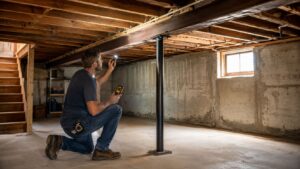
In Brookline, Newton, and Cambridge, we get the same call all the time. A homeowner notices a new crack over a doorway, a basement wall looks damp, or an old door suddenly starts rubbing, and the first question is always the same. Is this just an old Greater Boston house doing what old houses do, or is there a real foundation problem underneath it?
That's the right question. Around Greater Boston, a lot of homes have lived through decades of seasonal moisture swings, freeze-thaw cycles, patchwork renovations, and drainage changes from driveways, patios, and neighboring lots. In towns like Arlington, Belmont, Somerville, Lexington, Medford, Melrose, Wakefield, Wellesley, and Brookline, older housing stock can hide movement for years before it shows up in obvious ways. If you're planning a remodel, basement work, or a home addition contractor Boston MA project, getting the foundation right first isn't optional.
Table of Contents
- What Is a Foundation Assessment and Why It Matters for Your Boston-Area Home
- Warning Signs of Foundation Problems in Massachusetts Homes
- Your DIY Foundation Inspection Checklist
- What to Expect From a Professional Foundation Assessment in Newton MA
- Foundation Assessment and Repair Costs in Greater Boston
- Common Foundation Repair Options for Arlington Homes
- FAQ About Foundation Assessments in Massachusetts
What Is a Foundation Assessment and Why It Matters for Your Boston-Area Home
A typical Brookline call starts with one visible symptom. A crack in plaster. A sloped kitchen floor. A damp basement corner after heavy rain. Homeowners often assume the assessment is just someone coming out to look at the crack and give an opinion.
A real foundation assessment is more than that. It's a practical diagnosis of the house's structural base, the surrounding site conditions, and the pattern behind the symptoms. In plain English, it's the difference between patching what you can see and understanding why it happened.
For Boston-area homes, that distinction matters. Older foundations, mixed construction methods, and shifting moisture conditions can produce signs that look alarming but turn out to be cosmetic. The reverse is also true. A “small” issue can point to bigger movement, especially when drainage, soil change, or previous repairs are part of the picture.
Practical rule: Don't judge a foundation by one crack. Judge it by the pattern.
A good assessment also matters before major remodeling. If you're planning basement finishing Cambridge MA work, an addition, or structural changes to the first floor, the foundation has to be able to support what comes next. That's why we always tell homeowners to solve water and movement questions early, not after finishes are in.
Drainage is often part of the story in Massachusetts homes, which is why rainwater management for Massachusetts homeowners belongs in the same conversation as cracks and settlement.
If storm damage or sudden water entry is involved, documentation matters too. Homeowners dealing with a possible claim can learn from a clear successful insurance claim process so the condition of the property is recorded the right way from the start.
Warning Signs of Foundation Problems in Massachusetts Homes
Some signs are harmless. Some aren't. The hard part is that they often start the same way.
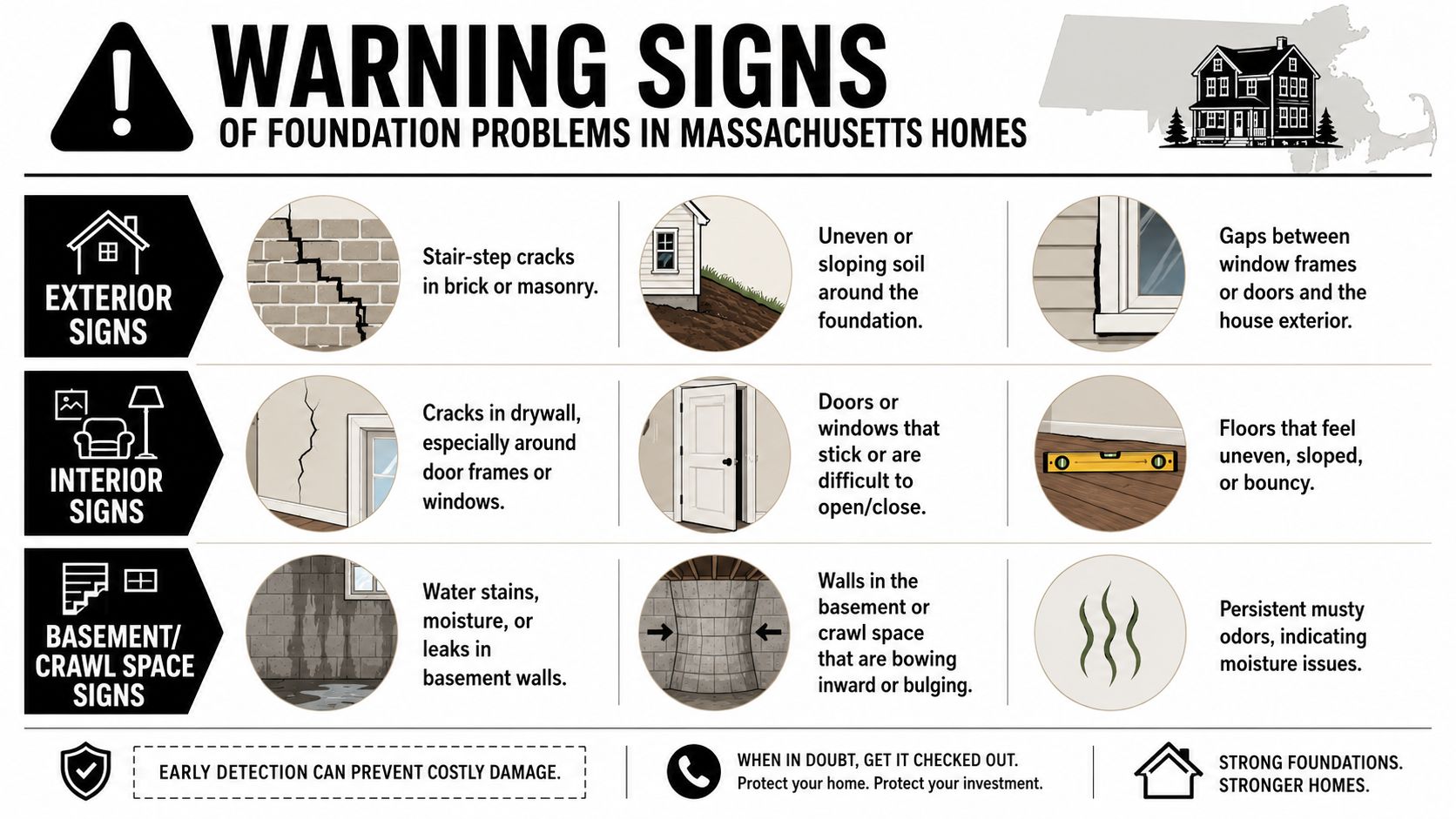
Exterior Clues Around the House
Start outside. The ground and the walls usually tell part of the story.
- Stair-step cracks in brick or masonry often suggest movement along joints rather than a random surface blemish.
- Soil sloping toward the house can send water to the foundation instead of away from it.
- Gaps around windows and exterior doors may mean part of the structure has shifted enough to change alignment.
- Cracked or crumbling exposed foundation surfaces can point to moisture exposure, age, or deeper deterioration.
If you see one exterior crack that hasn't changed in years, that may not mean much by itself. If you see several signs together, especially with water issues, pay attention.
A short visual overview can help homeowners know what they're looking at before they make that call.
Interior Symptoms Homeowners Notice First
Inside the house, movement shows up in finishes and operation before it shows up in framing.
- Cracks over doors and windows are common stress points. They deserve a closer look when they're new or expanding.
- Doors that stick or won't latch can mean seasonal swelling, but they can also reflect structural movement.
- Windows that suddenly become hard to open belong in the same category.
- Uneven or sloped floors may be old-house character, or they may be active movement. The difference is whether the condition is stable or changing.
If several symptoms appear in different rooms at the same time, don't treat them as isolated cosmetic issues.
Basement and Crawl Space Red Flags
Homeowners usually find the most direct evidence here.
- Water stains, dampness, or active leaks tell you moisture is entering somewhere.
- Bowing or bulging walls deserve prompt review because soil pressure can push inward over time.
- Persistent musty smells usually mean moisture has been present long enough to affect the space.
- Visible wall cracks need context. Their location, direction, and surrounding conditions matter.
When homeowners compare notes with family in other regions, local conditions matter. For example, someone dealing with major moisture issues elsewhere might look for help like find San Diego water damage repair, but here in Massachusetts the same principle applies. Water around a house should never be dismissed as separate from the foundation.
Your DIY Foundation Inspection Checklist
You don't need special equipment to do a useful first pass. You do need to slow down and document what you find.
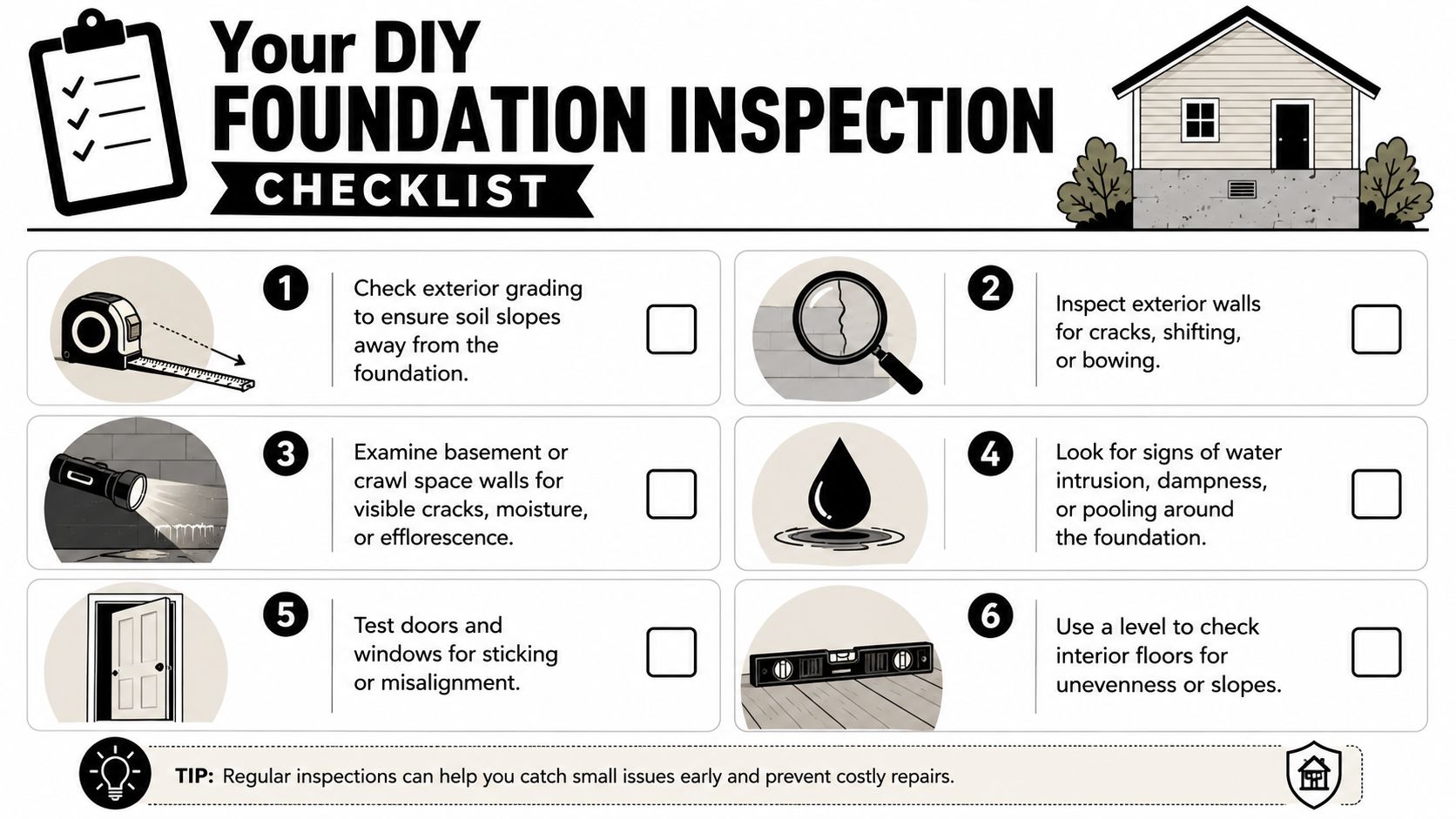
What to Bring With You
Use simple tools:
- A flashlight for basement corners and rim areas
- Your phone camera to record cracks and dates
- A short level for floors and window sills
- A tape measure if you want to note crack length or gap size
- A notepad or notes app so you can compare what you see later
This isn't a substitute for engineering or contractor review. It is a way to decide whether the problem looks isolated, moisture-driven, or urgent.
Six Things to Check in Order
Walk the exterior after rain if possible
Look for standing water, downspouts dumping near the foundation, eroded soil, and hard surfaces that pitch back toward the house.Scan the exposed foundation walls
Check for cracks, patched areas, surface spalling, and places where one section looks different from the rest.Test doors and windows inside
Open and close them normally. Don't force anything. You're checking whether they bind, rack, or suddenly feel out of square.Walk the floors slowly
Use the level in a few suspect spots. Old homes in Cambridge and Somerville can have uneven floors that have been there for years, so the key is whether the slope appears localized or new.Inspect the basement with good light
Look for stains, active moisture, musty air, white residue on masonry, and any wall that looks pushed inward.Document patterns, not just defects
A single crack means less than a cluster of cracks plus sticking doors plus moisture in one part of the house.
Here's the mistake we see most often. Homeowners spot one symptom, patch that symptom, and stop there. They repaint the crack, plane the door, or run a dehumidifier, but they never ask why the symptom appeared.
That's especially risky if you're thinking about finishing lower-level space. Before taking on a remodel, read about basement moisture control so water management is treated as part of the structure, not just a comfort issue.
What to Expect From a Professional Foundation Assessment in Newton MA
In Newton, we see a lot of houses where a quick glance leads people in the wrong direction. The plaster crack gets all the attention, while the underlying issue is outside at the grading line, or under the slab, or in a wall that has moved just enough to change load paths.
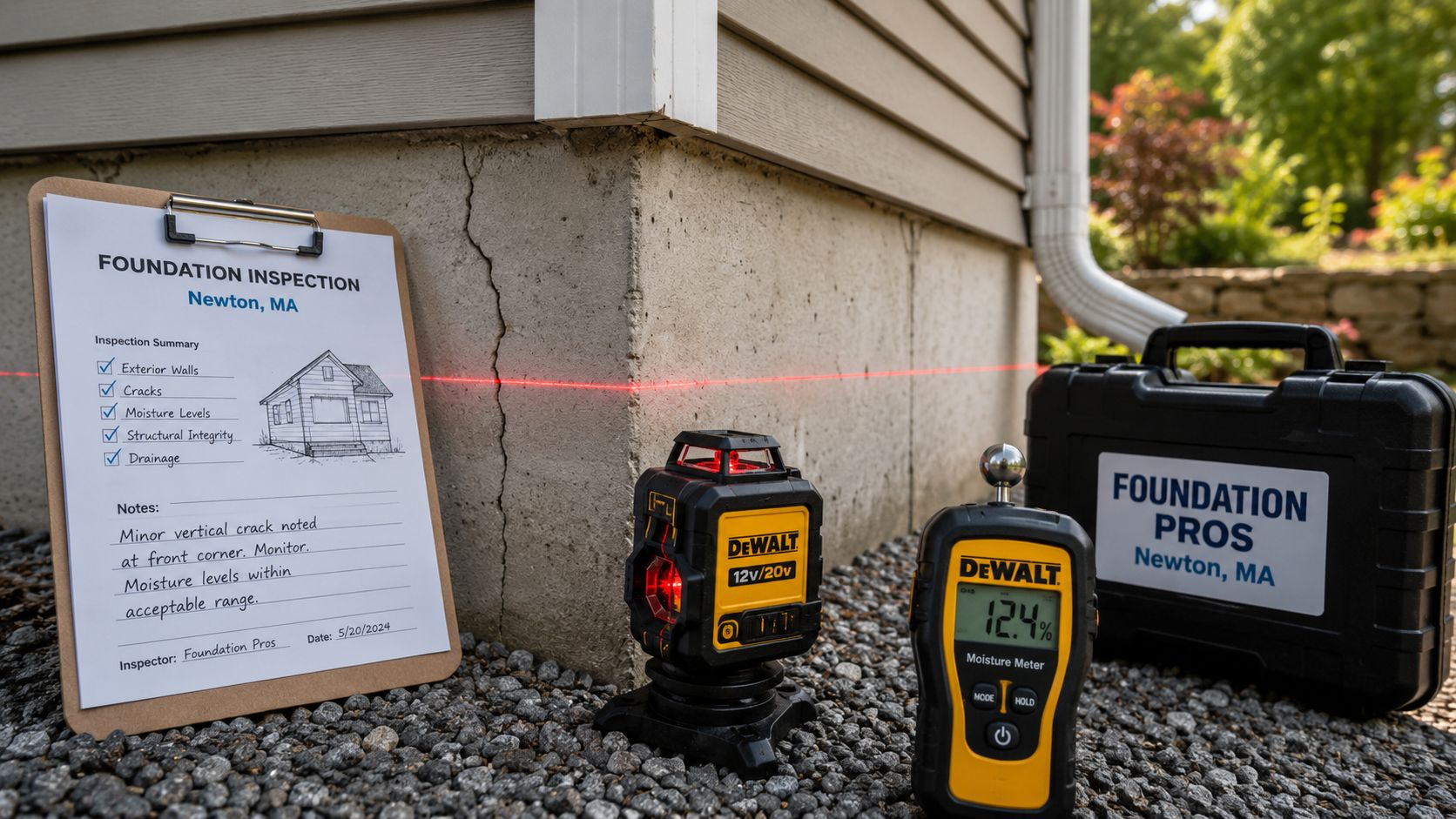
What a Serious Inspection Includes
A technically sound review doesn't rely on visual cracking alone. It should combine site history, drainage conditions, architectural or construction documents, distress observations, and a quantified survey of relative foundation elevations so the evaluator can separate cosmetic issues from settlement or heave, as described in this foundation evaluation guidance.
That matters because numbers without context can mislead. An elevation reading only becomes useful when someone compares it to the structure layout, prior repairs, site drainage, and the way the house is performing.
Modern assessment work also benefits from digital measuring methods. Industry guidance notes that digital levels, total stations, GNSS receivers, and even laser scanning can capture dense elevation data efficiently, while repeatable reference points make it easier to compare movement over time in a benchmark-style workflow, as discussed in this overview of digital foundation elevation surveying.
A proper assessment answers three questions. What moved, why it moved, and whether it's still moving.
In practical terms, homeowners should expect some mix of the following:
- Site review that looks at drainage, downspouts, grading, and hardscape
- Building review of cracks, wall lines, floor conditions, and openings
- History review including past repairs, renovations, or recurring water entry
- Measurement work that checks relative elevations instead of guessing by eye
- Next-step guidance on monitoring, repair, or engineering involvement
How Massachusetts Codes and Permits Come Into Play
Once the condition turns into repair work, code matters. Structural repair, excavation, foundation replacement, beam work, and many basement changes typically fall under the Massachusetts State Building Code, 780 CMR, and local permit review. Depending on scope, homeowners may also need electrical, plumbing, or mechanical permits tied to related work.
If the repair supports a basement conversion or legal living space, egress becomes part of the conversation too. Homeowners planning that kind of project should understand basement egress window requirements early, not after the foundation and layout are already locked in.
Foundation Assessment and Repair Costs in Greater Boston
Homeowners want straight answers. In Greater Boston, costs vary a lot because access, existing conditions, permit needs, and engineering all change the scope fast.
What You Pay For the Assessment Itself
For a contractor's initial on-site evaluation, some companies fold that into a broader consultation while others charge for the visit. A more formal review from a licensed structural engineer is commonly in the $500 to $1,500 range in this market, especially when written findings or stamped documentation are required for permitting, real estate, or repair design.
What pushes the number up? Hard-to-access basements, multiple additions built at different times, active water entry, and situations where the reviewer needs to coordinate with survey or engineering documents.
Typical Repair Cost Ranges in This Area
Here are broad working ranges homeowners often see in Greater Boston:
| Repair type | Typical local range |
|---|---|
| Minor crack repair such as epoxy injection | $800 to $2,500 |
| Reinforcing a bowing wall with systems such as carbon fiber straps | $4,000 to $12,000 |
| Major stabilization such as underpinning | $2,000 to $5,000 per pier |
Those numbers are budgeting tools, not promises. The same crack repair can be straightforward in one Arlington basement and much more involved in a tight Cambridge property with moisture, finish materials, and access limitations.
Cheap inspections often lead to expensive repairs. Good diagnosis costs less than doing the wrong fix twice.
Common Foundation Repair Options for Arlington Homes
Arlington has plenty of homes where the right repair depends on one simple question. Are you sealing a symptom, reinforcing a weakened element, or transferring the load to something more stable?
When Crack Repair Is Enough
For a non-structural crack that mainly leaks water, epoxy or polyurethane injection can be the right move. Think of it as sealing a pathway, not rebuilding the wall. It works when the wall is otherwise sound and the problem is limited.
Drainage improvements also belong in this category sometimes. If water is the driver, exterior grading changes, drains, or sump work may do more good than any surface patch.
When Reinforcement or Underpinning Makes More Sense
If a basement wall is bowing but still recoverable, carbon fiber straps or other interior reinforcement methods can add strength without a full rebuild. They're useful when the wall needs restraint more than replacement.
If the structure is settling, underpinning with helical piers or push piers may be the better answer. That repair shifts support deeper and stabilizes the foundation where shallow soils or changing moisture conditions have let parts of the house move.
A quick comparison helps:
- Crack injection works for sealing isolated cracks, but it doesn't solve settlement.
- Carbon fiber reinforcement helps a stressed wall resist further inward movement, but it won't fix a drainage problem by itself.
- Underpinning addresses support and settlement, but it's more invasive and should follow a real diagnosis.
- Polyurethane foam injection can help in some slab-settlement situations, but it isn't a cure-all for every foundation type in older Boston-area homes.
The best repair is the one that matches the cause. Homeowners get into trouble when they buy a product before they understand the problem.
FAQ About Foundation Assessments in Massachusetts
How long does a foundation assessment take
A simple site visit may be fairly quick. A more complete assessment takes longer because the reviewer needs to inspect inside and outside, look at drainage, document distress, and sometimes gather elevation data. If engineering, permits, or repair drawings are needed, the process usually extends beyond the first visit.
Is old-house settling normal in places like Cambridge or Belmont
Some unevenness in an older house can be longstanding and stable. What matters is whether the condition is changing, whether multiple symptoms are appearing together, and whether moisture or soil conditions are involved. Age alone doesn't make a structural issue harmless.
Will homeowners insurance cover foundation repair
Sometimes, but it depends on the cause and the policy. Sudden damage tied to a covered event is different from long-term deterioration, deferred maintenance, or chronic drainage issues. Good photos, dated notes, and a clear assessment help homeowners understand what they can support if they need to file.
Do all foundation repairs require permits in Massachusetts
Not all repairs are handled the same way, but many structural repairs do trigger permit review. In Massachusetts, local building departments enforce the applicable requirements under 780 CMR and related local procedures. If work involves structural changes, excavation, replacement, or new habitable basement space, assume permits and inspections may be part of the job.
Should I fix the foundation before a kitchen remodel or basement project
Yes, if there's any real question about movement or water. It doesn't make sense to invest in finishes, cabinetry, flooring, or basement framing over an unresolved structural or moisture issue. That applies whether you're planning kitchen remodel Greater Boston work, a bathroom renovation Arlington MA project, basement finishing, or an ADU builder Massachusetts project.
Ready to get clear answers before a small crack turns into a bigger project? Contact Aureli Construction for a free estimate and practical guidance on foundation-related remodeling work across Greater Boston.