
A 2-inch shower drain pipe is the standard for almost all new shower installations in Massachusetts. The code references most homeowners run into say shower drains are commonly routed to 2-inch piping, while the 2015 IRC lists a 1.5-inch minimum outlet size and one code summary states showers must be 2 inches in diameter with a slope of not less than 1/8 inch per foot toward the building drain.
In Newton MA, a lot of bathroom remodels start the same way. The homeowner is choosing tile, talking about a frameless glass panel, maybe planning a tub-to-shower conversion, and then someone asks a basic question that decides whether the whole assembly works or fails inspection later: what size drain pipe for a shower?
For most projects, the answer is simple. Use a 2-inch drain pipe. What matters is understanding why that rule exists, where the confusion comes from, and when a custom shower needs more planning than the standard online advice gives it. In Massachusetts, that means looking at code, permit requirements, rough inspection standards, and drainage demands of modern showers.
Table of Contents
- Planning a Bathroom Remodel in Newton MA? Start with the Drain
- The 2-Inch Standard Why MA Plumbing Code Prefers It
- Drain Slope Traps and Venting Details Matter
- Drain Planning for Custom Showers in Brookline MA
- What to Expect Our Plumbing Process for a Bathroom Remodel in Arlington MA
- FAQs on Shower Drain Pipes from MA Homeowners
- Can I keep an old tub drain when converting to a shower
- Is a 2-inch shower drain always required
- Can I figure this out myself if I'm handy
- Why does my shower back up when another fixture has a problem
- What does a bathroom remodel cost in Greater Boston if the drain has to be changed
- Will the shower drain size affect tile and shower pan design
- How do I compare contractors for this kind of work
Planning a Bathroom Remodel in Newton MA? Start with the Drain
If you're planning a bathroom renovation in Newton, the drain usually isn't the part you're excited about. It sits under the shower pan, behind tile, and out of sight. But it's one of the first decisions that affects layout, waterproofing, floor framing, and whether the plumbing passes inspection under Massachusetts code and local permit review.
That matters even more in older Greater Boston homes. In Cambridge, Belmont, Arlington, and Newton, we often see bathrooms where the visible finishes are ready for an upgrade but the drain layout belongs to an earlier era. A shower remodel can look straightforward on paper and still require real plumbing work below the floor.
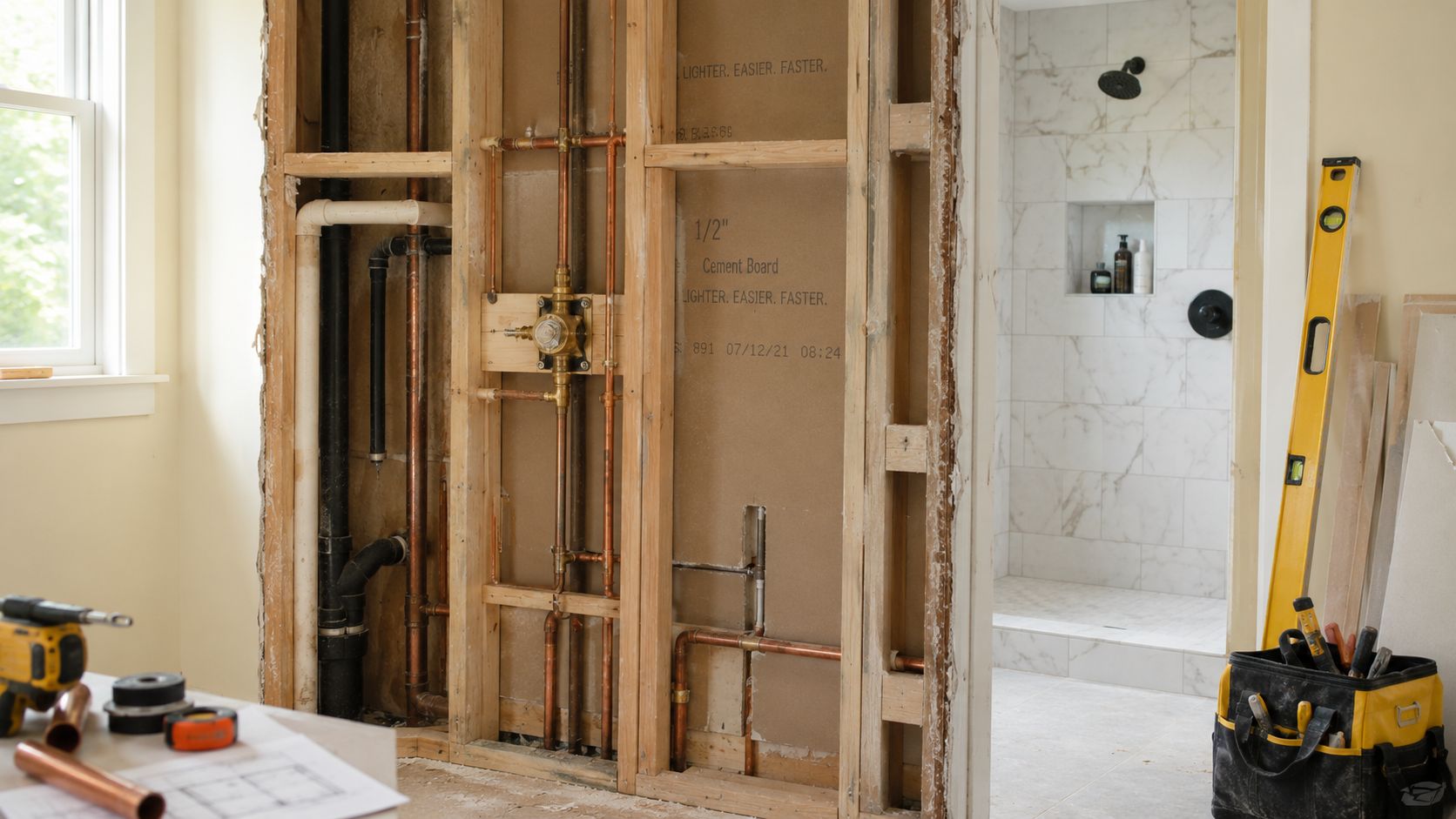
The drain size question comes up early
Homeowners usually ask about the shower valve, tile pan, niche placement, and glass. The drain size should be in that same conversation. Once the subfloor is open, that's the time to decide whether the existing line can stay, whether it needs to be upsized, and whether the trap and venting arrangement still make sense for the new fixture.
Practical rule: If the project is a true new shower installation, plan around a 2-inch drain line from the start. It avoids a lot of late redesign.
That becomes even more important in projects tied to a larger renovation. If you're expanding a primary suite or reworking the floor plan, it's smart to coordinate the shower drain with the broader layout and structure. For homeowners considering that type of work, this guide to a home addition in Newton MA shows how early planning affects everything behind the walls.
For a second perspective focused on renovation sequencing and plumber involvement, this piece offers useful expert advice for Sydney homeowners. The geography is different, but the point is the same. Shower plumbing decisions need to happen before finishes lock you in.
The 2-Inch Standard Why MA Plumbing Code Prefers It
The short version is that 2-inch piping is the common standard for showers because it gives the system more flow capacity and more tolerance for hair, soap residue, and daily use. That's why modern code-oriented guidance keeps pointing homeowners and contractors toward it instead of a smaller branch line.
The cleanest code reference for the confusion is this: the 2015 International Residential Code section on shower compartments sets the minimum shower drain outlet size at 1.5 inches, while many residential guides and code summaries note that 2-inch drain piping is the common standard for showers because it provides more capacity and reduces clog risk compared with 1.5-inch piping.
Why homeowners get mixed answers
The mixed answers usually come from people talking about different parts of the assembly.
One person is talking about the outlet size listed for a shower base. Another is talking about the drain piping serving the shower. Those are not always described the same way online, which is why homeowners think there are two equally valid answers. In practice, there usually aren't.
A dedicated shower drain in a modern remodel is typically planned around 2-inch piping because that's what inspectors, plumbers, and experienced remodelers expect to see for normal performance and code compliance. If someone tries to preserve an older smaller line just because it exists, that shortcut can create a problem that doesn't show up until the shower is in use.
Shower Drain Pipe Size Comparison
| Attribute | 1.5-Inch Pipe | 2-Inch Pipe |
|---|---|---|
| Code discussion | Listed in the 2015 IRC as a minimum shower drain outlet size | Widely cited as the common standard for shower drain piping |
| Flow capacity | Lower | Higher |
| Clog tolerance | Less forgiving | More forgiving |
| Typical use in new shower work | Usually where confusion starts, especially with old fixtures or product language | Standard choice for most new shower installations |
| Inspection risk in remodels | More likely to raise questions | Better aligned with current code-driven practice |
The code doesn't favor larger shower piping by accident. It favors a drain that keeps working after real household use starts.
What works and what doesn't
What works is planning the shower as a shower, not as a reuse of whatever drain happened to be under an old tub. What doesn't work is assuming a reducer, adapter, or off-the-shelf drain body solves the full code and performance question by itself.
That distinction matters in Massachusetts under 780 CMR coordination and local permit review. Plumbing work isn't judged only by whether water disappears today. It's judged by whether the rough-in, drain size, and installation method meet the standard the inspector is checking against.
Drain Slope Traps and Venting Details Matter
Pipe size is only one piece of the drainage system. A shower can have the right diameter and still drain poorly if the slope is off, the trap is wrong, or the venting isn't doing its job.
The code-oriented guidance most homeowners see points to two slope numbers. One summary states that shower drains must be 2 inches in diameter with a slope of not less than 1/8 inch per foot toward the building drain, and it also notes that 1/4 inch per foot is the widely adopted standard for proper flow, as explained in this shower drain size summary.
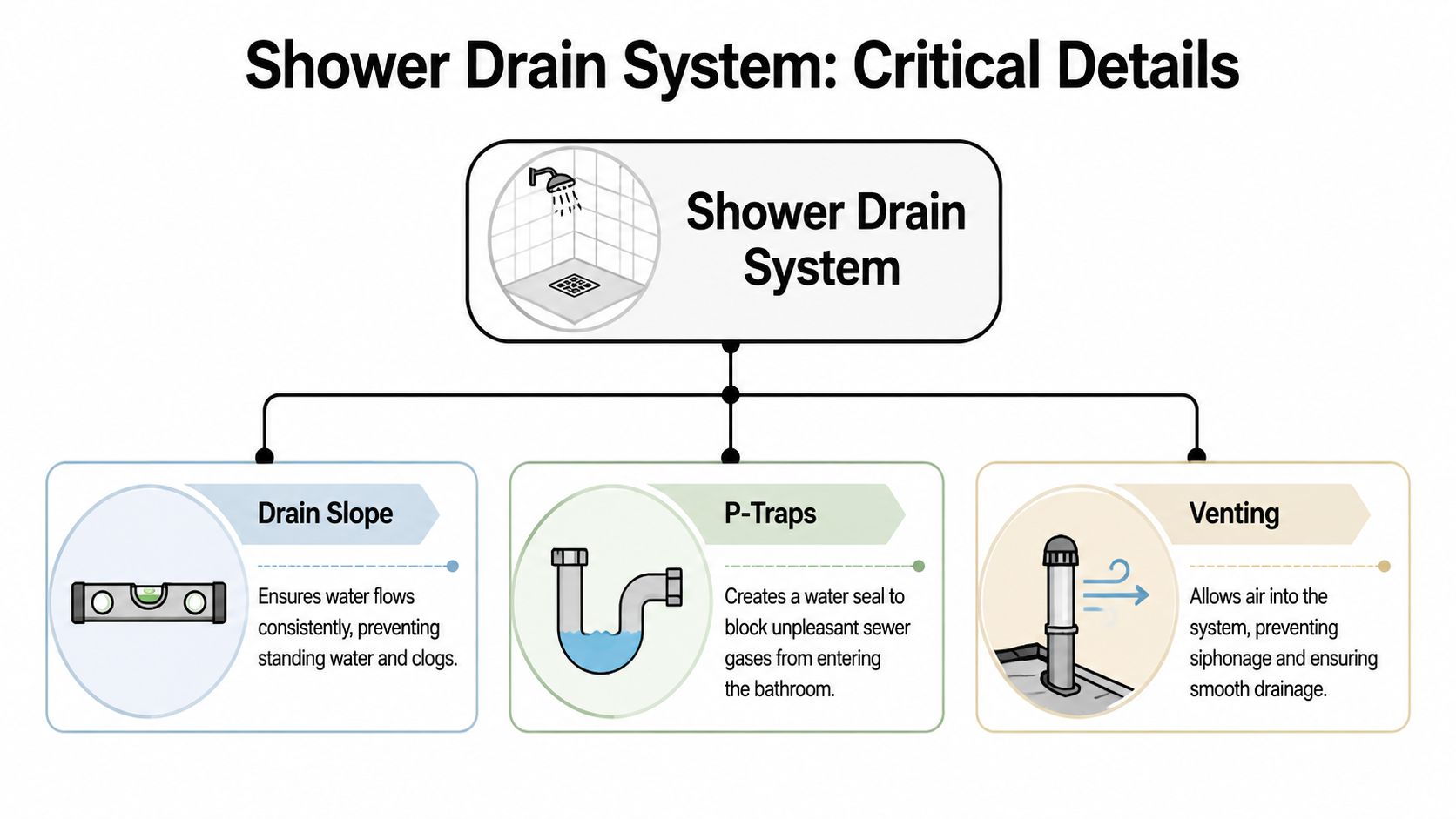
Slope is what keeps the line moving
A shower drain needs continuous fall toward the main drain. If the line is too flat, water slows down and debris lingers. If the framing is tight and someone forces the piping into an awkward route, the shower may never perform the way it should.
In older homes around Medford and Somerville, this gets tricky fast. Floor joists, ceiling finishes below, and existing drain stack locations often limit how much room there is to run the line properly. That's why the shower layout and the plumbing layout have to be designed together, especially in a bathroom renovation medford or bathroom remodeling somerville project where every inch matters.
The trap and vent have jobs too
Every shower needs a P-trap. The trap holds water and blocks sewer gases from entering the bathroom. If the trap is missing, installed incorrectly, or siphoned dry because of venting problems, you'll notice it. Usually by odor first, then by drainage issues.
The vent matters just as much. Without proper venting, the system can struggle to pull air behind flowing water. That can slow drainage, create gurgling, and interfere with the trap seal.
Here's the field reality:
- Bad slope often shows up as standing water or sluggish draining.
- Bad trap placement can create service headaches and odor problems.
- Bad venting can make a new shower feel defective even when the tile work looks perfect.
A shower drain is a system, not just a pipe. If one part is wrong, the whole assembly feels wrong to the homeowner.
Drain Planning for Custom Showers in Brookline MA
A standard shower follows a standard rule. Custom showers don't always stay that simple.
In Brookline, Wellesley, and higher-end remodels across Greater Boston, homeowners are asking for curbless entries, wall-to-wall glass, oversized rain heads, body sprays, steam features, and long linear drains. Those features change how we think about drainage because the floor design and the water delivery system are no longer basic.
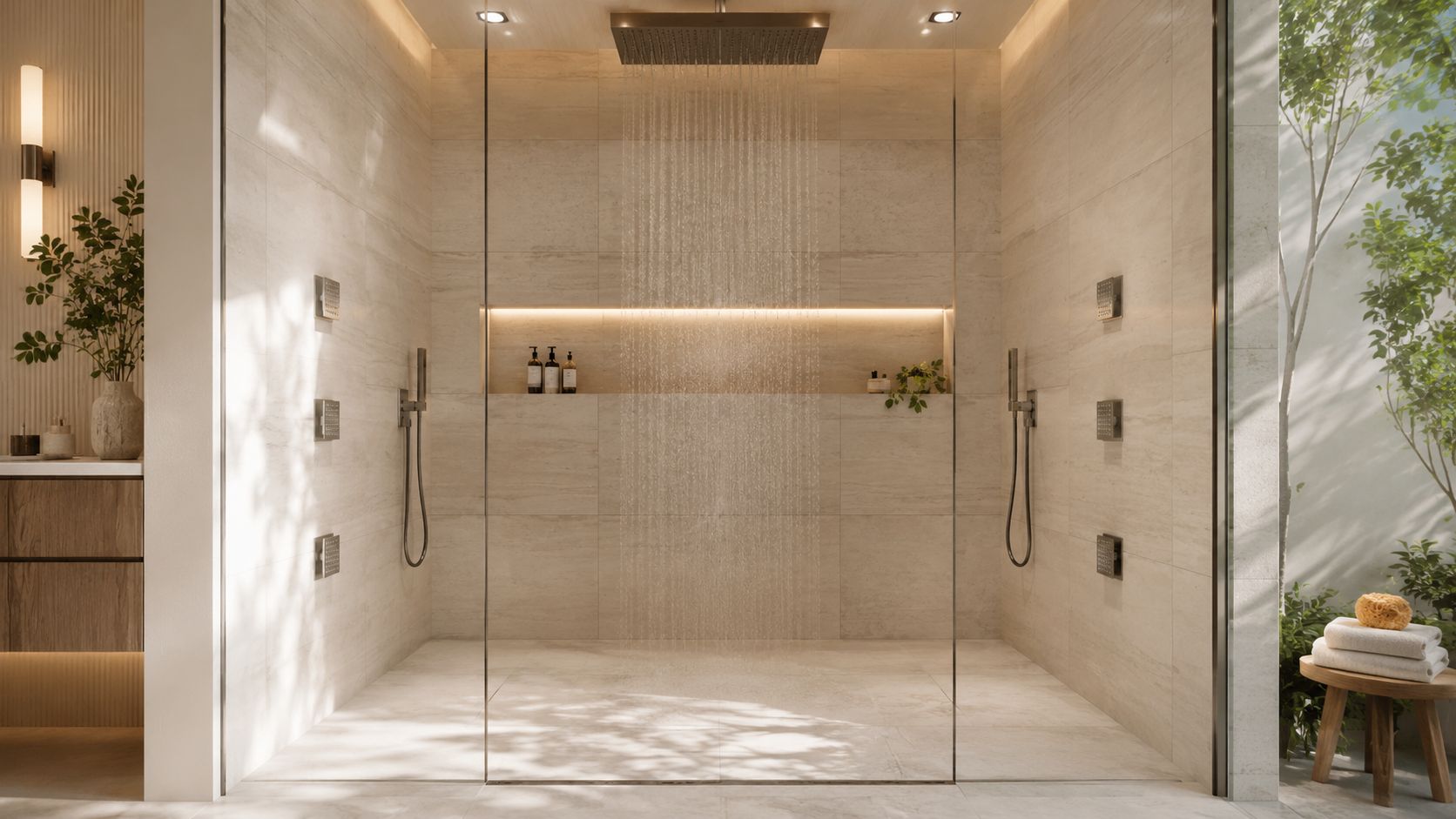
A lot of homeowners start with aesthetics. They want a flush transition, large-format tile, and a cleaner look. The drainage design has to support that vision. If it doesn't, the shower may hold water near the entry, drain unevenly, or feel sloppy in daily use.
For projects where the bathroom is part of a bigger suite expansion, planning the drain at the same time as structure and floor layout is critical. This is especially true in a Brookline home addition planning guide context, where bathroom placement and framing decisions affect what kind of shower system is even possible.
Curbless and linear drains change the conversation
A center drain in a basic shower pan is one thing. A linear drain in a curbless shower is another.
With a curbless layout, you're managing water at a low threshold with less forgiveness. The finished floor, waterproofing, pitch, drain body, and tile assembly all have to work together. A nice-looking linear drain cover doesn't solve the hard part. The hard part is making the whole system drain cleanly without ponding.
In custom showers, the prettiest detail is usually the one that causes the most hidden plumbing work.
Steam showers and multi-head layouts need design discipline
Steam showers and multi-head systems deserve a plumbing review before anyone orders finishes. More water delivery, more condensation, and a larger footprint can all push the drain design beyond basic assumptions.
General online advice frequently proves insufficient. A blanket statement like "all showers use the same drain setup" isn't useful once you're building a larger custom enclosure with specialty fixtures. The drain body, line routing, floor recess, waterproofing method, and inspection path all need to be decided together.
A good visual on custom shower assembly and installation sequencing is below.
What to Expect Our Plumbing Process for a Bathroom Remodel in Arlington MA
A shower drain should never be a guess made on demo day. In Arlington MA, the right process starts before the old tile comes out. The plumbing plan, fixture selection, floor framing, and permit path all need to line up.
Massachusetts projects typically involve building permit coordination plus licensed plumbing and electrical permit work where required. The local building department and inspector are looking at the rough-in work before walls get closed. Under 780 CMR and the local inspection process, that's where mistakes get caught.
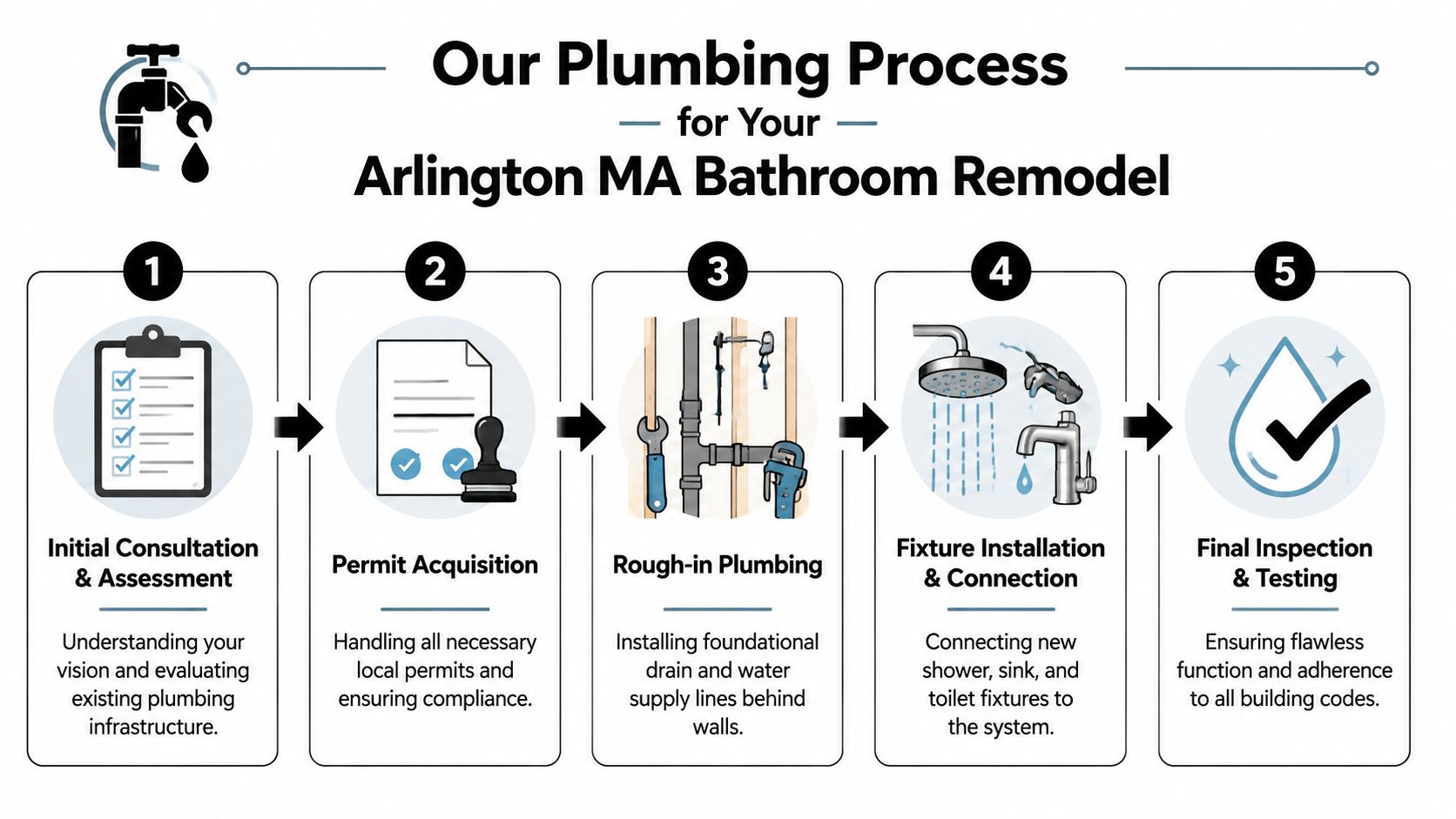
How permit and inspection flow works
A clean process usually looks like this:
Existing condition review
Someone checks the old drain size, trap location, vent path, framing limits, and whether the project is a simple replacement or a full reconfiguration.Permit filing
Plumbing work gets documented and submitted through the proper channels before concealed work starts.Rough-in work
The new drain, trap, water lines, and venting are installed while the framing is still open.Inspection before close-up
The inspector reviews what can't be seen later, which is why rough-in matters so much.Finish installation and final sign-off
After waterproofing, fixture installation, and final connections, the project moves to closeout.
If you want a plain-language primer on what happens before walls are closed, this article on understanding rough-in plumbing is a useful outside reference.
What homeowners should expect during rough-in
Rough-in is where the project proves whether the plan was serious. If a contractor glosses over drain size, trap placement, or venting, that usually shows up here.
For homeowners planning bathroom remodeling Arlington, this stage is where good preconstruction pays off. The tile and fixtures get the attention, but the rough plumbing is what keeps the finished shower from becoming a callback.
A few things homeowners should expect:
- Open access: The floor or ceiling below may need to be opened to route the line correctly.
- Inspection timing: Work may pause while the rough plumbing is reviewed.
- Coordination with finish choices: Drain location affects tile layout, slope, and shower pan detailing.
Don't judge a bathroom remodel by the trim kit. Judge it by whether the rough plumbing was planned before anyone ordered stone.
FAQs on Shower Drain Pipes from MA Homeowners
Can I keep an old tub drain when converting to a shower
Usually, that's the wrong move. A shower isn't a tub with different tile. It's a different drainage condition, and the line serving it needs to match that use. If the old setup was designed around a smaller drain assembly, the safer path is to evaluate and upgrade it rather than force the new shower to live with an old limitation.
Is a 2-inch shower drain always required
For almost all new shower installations in Massachusetts, 2-inch is the standard answer homeowners should expect to hear. The confusion comes from the fact that the 2015 IRC lists a 1.5-inch minimum shower drain outlet size, while modern code-driven practice commonly routes showers to 2-inch piping. That's why you want a licensed plumber and a permit-backed remodel, not a shortcut.
Can I figure this out myself if I'm handy
You can understand the basics yourself. You should. But changing drain piping, trap location, venting, and shower waterproofing isn't a casual DIY item in Massachusetts. These projects usually require permits, inspections, and licensed trade work.
The risk isn't just "it drains a little slow." The risk is concealed water damage, sewer gas issues, or an installation that doesn't pass rough inspection. Once tile is installed, fixing a bad drain decision gets expensive and disruptive.
Why does my shower back up when another fixture has a problem
That often points to a branch line or larger drainage issue, not just hair at the shower strainer. If a toilet and shower clog at the same time, you're usually looking at a shared drainage problem deeper in the system. This article offers helpful plumbing advice for dual bathroom issues and explains why those symptoms shouldn't be treated as an isolated shower problem.
What does a bathroom remodel cost in Greater Boston if the drain has to be changed
Costs depend on access, finishes, and whether you're doing a basic replacement or a custom reconfiguration. In Greater Boston, plumbing changes under a bathroom floor can materially affect the total scope, especially in older homes where framing, subfloor repair, waterproofing, and finish restoration all move together.
A simple bathroom remodel with modest plumbing adjustments is very different from a full custom shower build with a relocated drain, curbless floor prep, and new venting. The right way to budget is to have the plumbing reviewed during design, not after demolition.
Will the shower drain size affect tile and shower pan design
Yes. Drain location and drain type directly affect slope, pan geometry, waterproofing details, and even the tile format that works best. A center drain, an offset drain, and a linear drain each create different floor conditions. That's one reason the drain decision has to happen early.
How do I compare contractors for this kind of work
Ask direct questions:
- Who pulls the permits?
- Who handles the plumbing inspection sequence?
- Are they opening the floor and checking the full drain path or just swapping visible parts?
- Have they built curbless or custom showers in older Massachusetts homes before?
- How are change orders handled if the existing piping isn't what the demo suggested?
Those answers will tell you more than showroom photos will.
If you're planning a shower remodel in Newton, Arlington, Brookline, Cambridge, Belmont, Lexington, Medford, Somerville, Wellesley, or nearby, the drain should be settled before finishes are selected. Ready to get started? Contact Aureli Construction for a free estimate.