In Arlington, MA, a lot of homeowners reach out when they're staring at a tired backsplash and trying to decide what works in a busy kitchen. They want something that looks sharp, cleans easily, and won't feel dated after the rest of the kitchen remodel is done. A glass backsplash usually lands on the shortlist for exactly that reason.
At Aureli Construction, we handle kitchen remodel Greater Boston projects in Arlington, Belmont, Cambridge, Somerville, Newton, Wellesley, and surrounding towns, and glass keeps coming up because it gives a kitchen a cleaner, brighter finish without the upkeep headaches of more porous materials. Glass tiles are non-porous and stain-resistant, and some installations can reflect up to 90% of incident light, which is one reason smaller kitchens often feel more open after installation according to MSI Surfaces. If you're comparing kitchen backsplash ideas glass homeowners live with, the best choice usually comes down to how much texture, reflection, color, and grout you want to deal with day to day.
We also look at the local side of the job. In Massachusetts, backsplash work can overlap with electrical, wall repair, permits, and code review, especially if the kitchen remodel includes new circuits, lighting, or changes near cooking equipment under 780 CMR. This guide gets straight into eight glass backsplash options we install and recommend, with practical trade-offs, Boston-area pricing, and what tends to work best in real homes. For upkeep after install, homeowners often like these eco-friendly glass cleaner recipes.
Table of Contents
- 1. Clear Glass Backsplash with Subway Tile Pattern
- 2. Frosted or Textured Glass Backsplash
- 3. Colored or Tinted Glass Backsplash
- 4. Mirrored Glass Backsplash
- 5. Printed or Digitally Designed Glass Backsplash
- 6. Mosaic or Patterned Glass Tile Backsplash
- 7. Beveled or Edge-Detailed Glass Backsplash
- 8. Textured or Artisan Handmade Glass Backsplash
- 8 Glass Backsplash Styles Comparison
- Ready to Plan Your Kitchen Remodel in Somerville, MA?
1. Clear Glass Backsplash with Subway Tile Pattern
You walk into a typical Arlington or Belmont kitchen from the early 2000s. The cabinet boxes are still solid, the new quartz counters are already picked, and the room needs a backsplash that sharpens the finish without stealing attention from everything else. Clear glass subway tile is often the right answer.
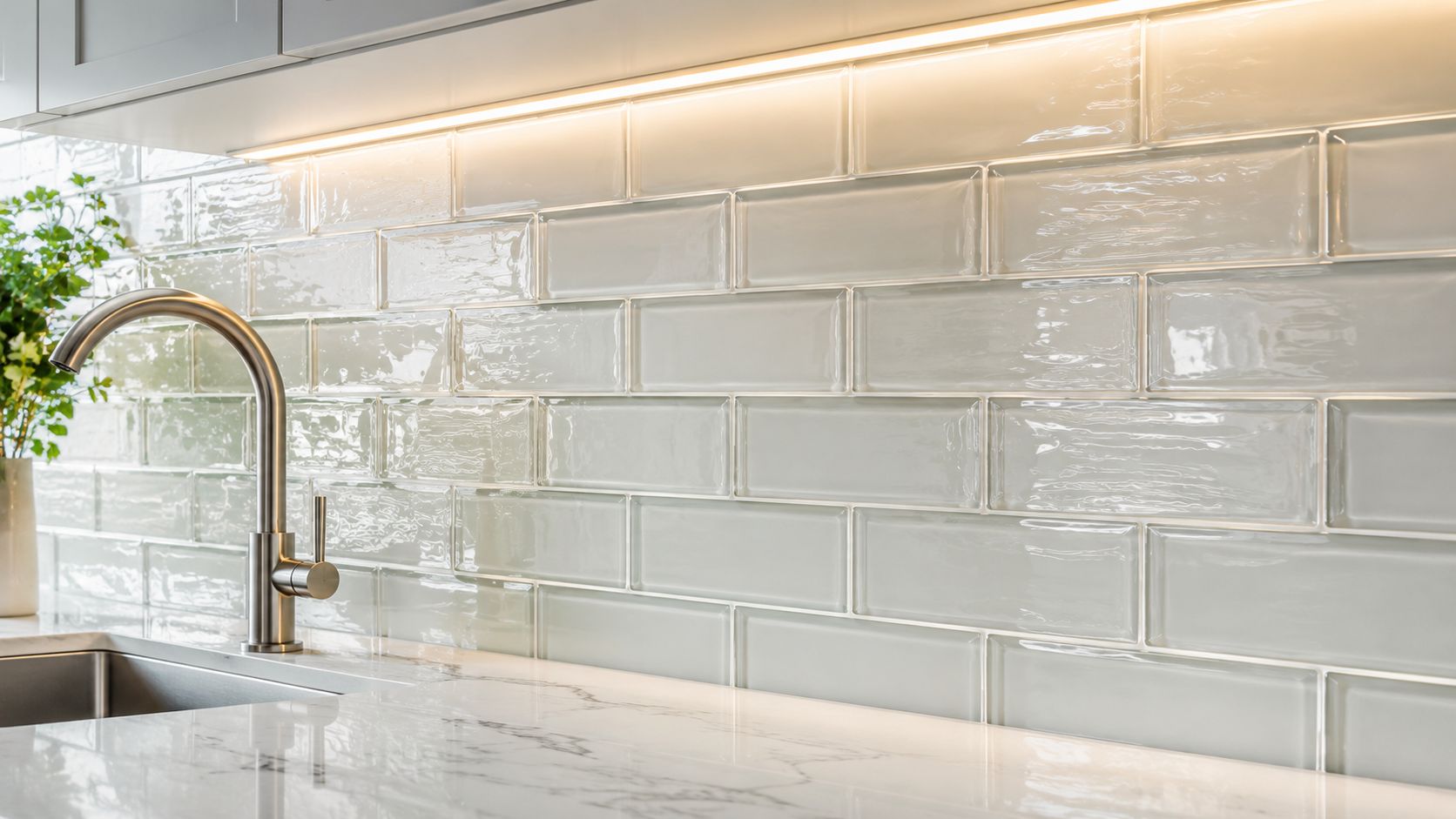
It keeps the familiar subway pattern homeowners already know, but it reflects more light than ceramic and usually feels lighter on the wall. In Cambridge and Belmont, we install it often with white shaker cabinets, simple slab counters, and under-cabinet LED lighting because that combination reads clean without feeling sterile.
Best fit in Arlington MA and nearby kitchens
Clear glass subway tile works best when the cabinetry, hood, or countertop already carries the visual interest. In Lexington, Arlington, and Belmont remodels, we use it to keep the backsplash disciplined. It supports the rest of the kitchen instead of competing with it.
There are two real paths here. Individual glass subway tiles give you the classic running-bond layout, more flexibility around outlets, and easier spot repairs later. They also leave grout joints, and grout always means some maintenance. Large edge-finished glass pieces cut down on joints and look cleaner, but they cost more, require flatter walls, and show bad prep work fast. In older Greater Boston homes, that wall prep can add time and money because plaster and patched drywall are rarely perfectly true.
We usually tell homeowners to decide based on the wall condition first, not just the photo they saved.
Installed cost in Massachusetts is commonly around $35 to $70 per square foot for straightforward clear glass subway tile work. That range can climb if the kitchen needs wall correction, tight cuts around outlets, specialty trim, or premium low-iron glass that reduces the green cast standard glass can show at the edges. In a full remodel, backsplash pricing is just one line item, but it is one of the finish choices that people notice immediately.
A few practical recommendations make this style work better:
- Use the right backing color: Clear glass shows what is behind it. Warm whites and light greiges usually look cleaner than bright blue-whites or dark paint.
- Plan lighting early: Under-cabinet lighting changes how glass reads. We coordinate fixture placement before tile starts so the finished wall does not end up with harsh hotspots.
- Be careful with grout color: Bright white grout looks crisp on day one but can read busy if the tile is highly reflective. A soft light gray often ages better.
- Check the wall before ordering material: Tile hides minor variation. Large glass panels do not.
For homeowners comparing this option against other installed kitchens, our kitchen renovation examples in Greater Boston homes show how reflective finishes read at full room scale.
One more point on code. Near cooking surfaces, we review the application against Massachusetts requirements under 780 CMR, especially where safety glazing or manufacturer heat-clearance guidance may come into play. Glass can work well in a backsplash, but product selection and placement still need to match the location.
2. Frosted or Textured Glass Backsplash
Some homeowners love glass until they realize they don't want to wipe fingerprints off a glossy surface all week. That's where frosted or lightly textured glass makes sense.
A frosted backsplash softens reflection instead of bouncing every light source back into the room. In Wakefield, Stoneham, and Melrose kitchens, this is often the better fit when the homeowner wants a modern surface but not the high-polish look.
Where frosted glass earns its keep
Frosted glass hides smudges better than clear glass and pairs well with matte painted cabinetry, brushed nickel, and quieter counter patterns. We like it in transitional kitchens where polished clear glass would feel a little too slick.
Heavier texture needs restraint. Ribbed, wave, or etched patterns can look great in a sample board and feel busy once the outlets, switches, hood, and under-cabinet lights are installed. That's why we usually recommend subtle texture over strong pattern unless the rest of the kitchen is very restrained.
For homeowners comparing inspiration before hiring a kitchen remodeling contractor Stoneham or kitchen remodeling Melrose team, it helps to review real installed spaces, not just close-up product shots. Aureli clients often start by looking through our kitchen renovation examples to get a better sense of scale and how these surfaces read in finished rooms.
Frosted glass is a practical pick when you want the low-porous, easy-clean benefit of glass without the full mirror effect of a glossy surface.
Installed pricing in the Boston area typically lands above basic ceramic and can move higher if you're using custom-cut panels, textured specialty stock, or detailed trim work around windows. We also check how the backsplash meets adjacent walls and cabinet ends, because unfinished transitions are what make custom materials look cheap.
3. Colored or Tinted Glass Backsplash
A homeowner picks a bold green sample at the showroom, then gets it into a Somerville kitchen with warm under-cabinet LEDs, white quartz, and oak floors. Suddenly the color reads muddier or brighter than expected. We see that happen all the time with tinted glass, which is why this style needs more planning than the photos suggest.
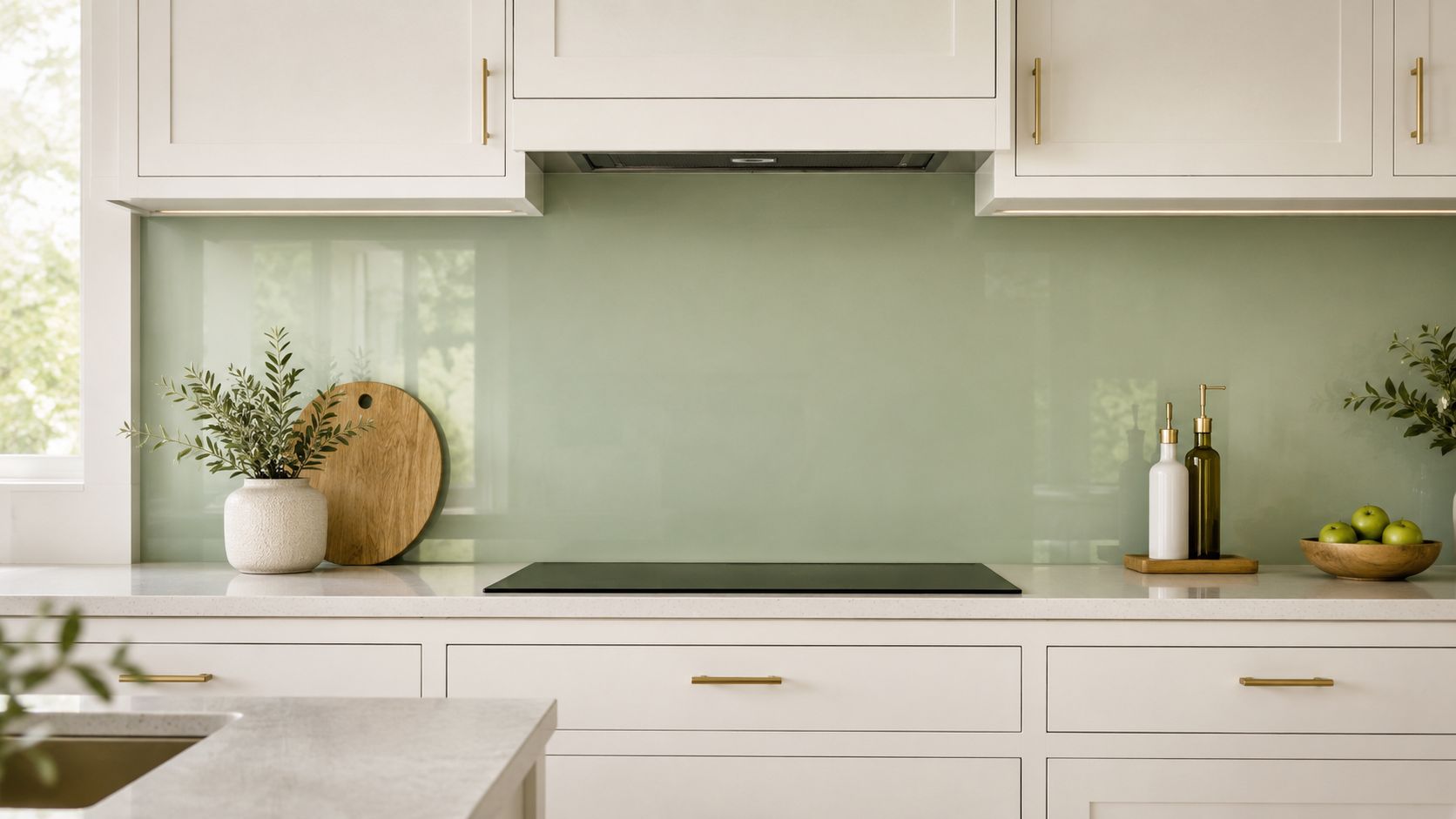
Colored glass works best when the rest of the kitchen stays disciplined. In Cambridge, Somerville, Reading, and Brighton, we usually see the strongest results with neutral cabinetry and counters that do not fight for attention. Soft sage, smoky blue, warm gray, and charcoal tend to age better than highly saturated reds, oranges, or bright teals, especially in homes that may be resold in a few years.
How to choose a color you will still like later
Glass picks up everything around it. Cabinet paint, daylight, hood lighting, brass hardware, and even the wall color across the room can shift how it reads. We have clients review full samples in the actual kitchen, not just a small chip under showroom lighting. That step saves a lot of second-guessing.
There is also a real product choice here. Back-painted sheet glass gives a cleaner, more contemporary look with fewer grout lines, but it costs more and demands accurate templating around outlets and corners. Tinted glass tile is usually easier to fit in older Greater Boston kitchens where walls are not perfectly flat, but the grout joints become part of the look. In many prewar homes, that trade-off matters.
Some homeowners also ask about recycled content. Many glass tile lines are marketed as using recycled material, so this option can appeal to homeowners trying to keep finish selections more environmentally conscious. We still tell clients to focus first on appearance, cleanability, replacement lead times, and how the material will be cut and installed.
If you are weighing a colored glass wall against a more natural finish, it helps to compare it with kitchen backsplash ideas in stone before committing. The maintenance profile, visual weight, and edge treatment are very different.
In the Boston area, colored glass tile usually falls into the mid-to-upper price range for installed cost. Custom back-painted or low-iron glass panels run higher because fabrication, color consistency, outlet cutouts, and polished edges all affect labor and shop pricing. We also check substrate condition before pricing. If the wall is out of plane, the finished glass will show it.
From a code and install standpoint, 780 CMR does not create a special rule just for a decorative kitchen backsplash in a typical dry wall area, but proper wallboard, outlet box extensions, and noncombustible clearances at the cooking area still need to be handled correctly. Around ranges, we pay close attention to the manufacturer's required clearance details and how the glass terminates at cabinets, windows, and counter splashes. Those details are what separate a custom-looking installation from one that feels patched together.
4. Mirrored Glass Backsplash
A mirrored backsplash can solve a very specific problem in a tight Greater Boston kitchen. In a Somerville triple-decker or a compact Cambridge condo, it pulls borrowed light across the room and keeps the wall from feeling closed in.
Used well, it makes a narrow kitchen feel more open. Used carelessly, it creates glare, shows every fingerprint, and can make the room feel busy fast.
We usually steer clients toward antiqued or smoked mirror instead of a standard high-reflective mirror. The softer finish is more forgiving, especially in older Arlington, Brighton, and Medford homes where the kitchen already has a mix of wood trim, uneven natural light, and existing character that does not benefit from a sharp commercial-looking reflection.
Placement matters more than the material itself. Mirrored glass tends to work best on shorter runs, at a coffee station, or on a wall that catches daylight from a nearby window. Those are the areas where you get the visual benefit without putting the surface in the worst grease and heat conditions.
Behind a cooking surface, we get more cautious. Some mirrored products are not a good fit for the hottest zone because the backing, adhesive, or edge treatment can fail if the product is not made for that application. We check the manufacturer specs, the range clearance requirements, and how the panel will terminate at cabinets and counters before we recommend it.
Cost in Massachusetts usually lands in the mid-to-upper range for installed backsplash pricing, and custom antique mirror panels run higher than mirrored tile. Fabrication drives that number. Outlet cutouts, polished edges, field measurements, and template accuracy all affect shop cost and install time. Wall flatness matters too, because mirror highlights every dip and hump in the substrate.
From a code standpoint, 780 CMR typically does not impose a special decorative rule just because the backsplash is mirrored glass in a standard kitchen wall area. Primary code-related issues are usually tied to the surrounding scope. We look at receptacle box extensions, spacing at combustible surfaces near the cooking area, and permit coordination if the backsplash is part of a larger remodel involving electrical, plumbing, or wall changes.
For homeowners who want a brighter kitchen without adding another window, mirrored glass can be a smart choice. It just needs restraint, the right finish, and careful placement.
5. Printed or Digitally Designed Glass Backsplash
This is the most custom option on the list, and it's the one that needs the most discipline. A printed glass backsplash can look fantastic when the image is controlled, scaled correctly, and coordinated with the rest of the kitchen.
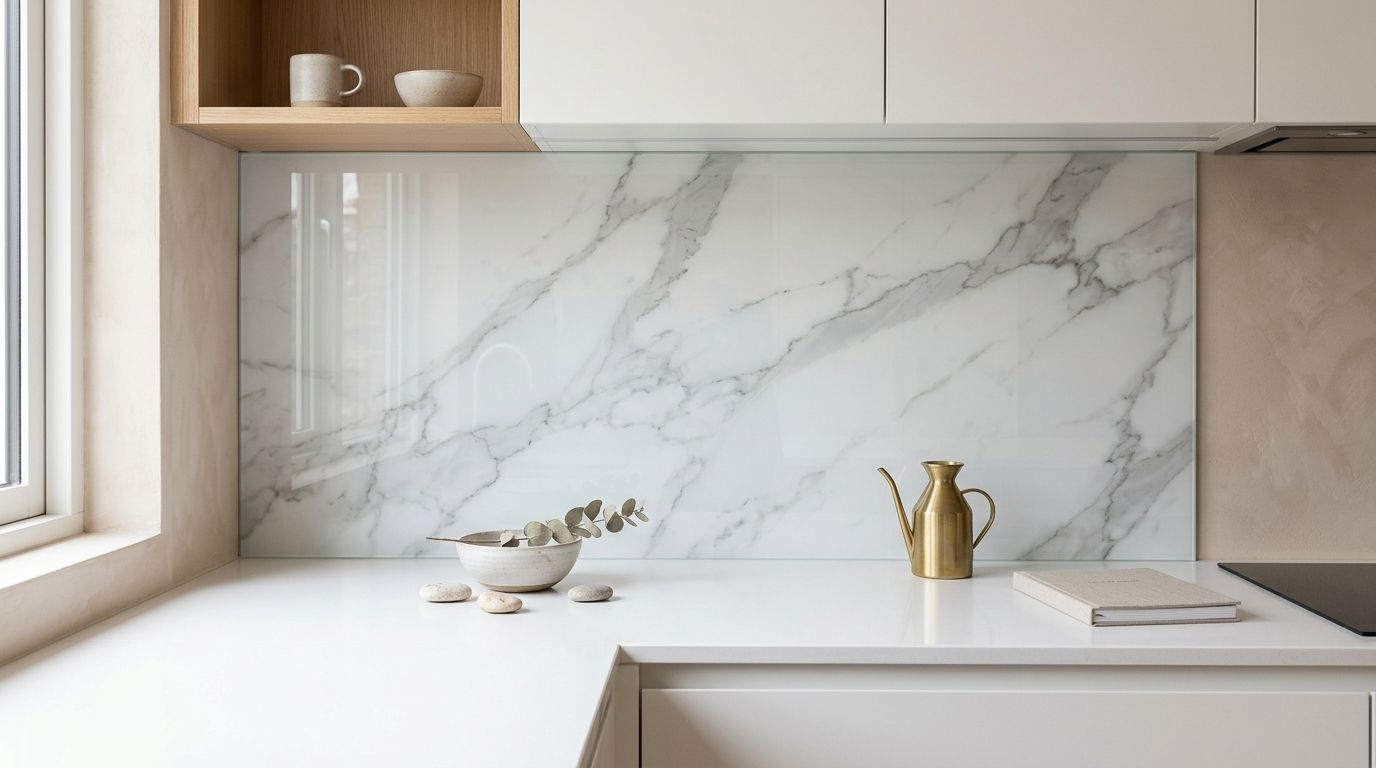
We've seen homeowners use digitally printed glass to mimic slab marble, create a soft abstract wash of color, or install a single image with no grout lines at all. In a modern Newton or Wellesley kitchen, that can be a strong move if the cabinetry stays quiet.
Custom image backsplashes need discipline
The problem isn't the technology. It's selection. Busy artwork, sharp contrast, or trendy graphics can overwhelm the room fast. In most kitchens, the better choice is a subtle print with depth, not a loud picture that dominates every conversation.
You also need to be realistic about replacement. If a cabinet line changes later or an appliance dies and dimensions shift, matching a custom printed panel can be harder than replacing a standard tile backsplash. We flag that upfront.
For homeowners who want to see how custom glass panels are discussed in installation examples, this walkthrough gives a useful visual reference:
From a budget standpoint, printed glass is usually a premium selection in Greater Boston. Fabrication, templating, proof approval, and precise install all take time. If you're already investing in a custom kitchen Somerville or kitchen remodeling Newton project, it can be worth it, but only if the design has staying power.
Field note: We tell homeowners to look at the print from ten feet away, not just on a sample. That's how the kitchen will actually read.
6. Mosaic or Patterned Glass Tile Backsplash
Mosaic glass is where homeowners get into trouble by trying to do too much. A little mosaic can look rich and layered. Too much can make the kitchen feel crowded.
In Brighton, Cambridge, Medford, and Somerville, we usually steer mosaic toward one focal stretch, such as behind the sink or a smaller cooking wall, unless the kitchen is simple enough to carry a full patterned field. The smaller the tile, the more visual activity and grout you're introducing.
Grout matters more than homeowners expect
This is the item where grout color can make or break the whole installation. A harsh contrast draws attention to every joint and can make even a good pattern feel choppy. A closer grout match usually gives glass mosaic a more polished look.
That's why we spend time on grout selection, especially when the homeowner is mixing cool and warm tones in the same sheet. If you're sorting through that decision, our guide on how to pick grout color is worth reviewing before you lock in a sample.
We also recommend epoxy grout for many glass mosaic installs because it resists staining better than standard grout in splash zones. That matters in kitchens where cooking oils and food splatter hit the wall regularly. The trade-off is that epoxy is less forgiving during installation, so the installer needs experience.
Boston-area pricing for glass mosaic can climb quickly because the material may come on sheets, but cutting, aligning, trimming around outlets, and grouting all take time. It's one of those finishes where labor quality shows immediately.
7. Beveled or Edge-Detailed Glass Backsplash
Beveled glass is a quieter luxury move. It doesn't rely on a bold color or pattern. The shape of the edge does the work.
In Wellesley, Newton, Reading, and Belmont, we often see beveled glass fit best in transitional kitchens where the homeowner wants something more refined than flat tile but not ornate. Under-cabinet lighting catches the angled edges and gives the wall more depth than a plain gloss finish.
Good choice for transitional kitchens
This style works best when the wall plane is flat and the installation is precise. Uneven substrate, sloppy spacing, or poor edge alignment stands out more on beveled glass than on simpler tile. We spend more time on prep because the finished surface is less forgiving.
The design benefit is longevity. Beveled glass has been around a long time and doesn't feel tied to one trend cycle. That matters if you're doing a larger kitchen renovation Wellesley or kitchen remodeling Newton project and want the backsplash to outlast current showroom fashion.
Don't use beveled glass to rescue a weak kitchen design. Use it to sharpen a good one.
Cost usually sits above basic glass subway tile because fabrication and install are fussier. We recommend it most often when the cabinetry and hardware already lean classic, polished, or transitional rather than ultra-minimal.
8. Textured or Artisan Handmade Glass Backsplash
Handmade glass is the most character-driven option on this list. You choose it because you want variation, movement, and a surface that doesn't look mass-produced.
That can be a strong fit in Cambridge, Arlington, Somerville, and Melrose homes where the kitchen blends old-house details with newer finishes. Slight ripples, uneven surface movement, and color variation give the room a warmer feel than machine-perfect sheet glass.
Why homeowners choose artisan glass
Some homeowners also like the sustainability angle. A 2025 discussion around current glass backsplash preferences points to recycled glass tile gaining homeowner preference as sustainability becomes a bigger factor in material selection, as referenced in this trend discussion on Reddit. We'd still treat trend chatter carefully, but the direction lines up with what we hear locally.
The trade-off is consistency. Handmade glass rarely looks identical piece to piece, and that's the point. If you want a perfectly uniform, highly controlled finish, this isn't the right material. If you like a bit of natural variation, it can be one of the best-looking choices in the room.
For budget, artisan glass is usually a premium material in the Boston area because sourcing, lead times, breakage planning, and install skill all matter more. It's not what we'd call the value option. It's the finish you choose when you want the backsplash to feel crafted.
One practical note for Massachusetts kitchens. When the backsplash scope is part of a larger remodel, we coordinate all related permit steps, including rough and final inspections for any electrical or plumbing work involved. In Brookline, homeowners should also know that inspectors often look for a non-combustible splash near stoves, and local practice may call for a 4-inch granite or similar splash at the back of the range area according to this Brookline discussion of inspector expectations.
8 Glass Backsplash Styles Comparison
| Backsplash Option | Key Advantage ⭐ | Implementation Complexity 🔄 | Resources & Cost ⚡ | Expected Outcomes 📊 | Ideal Use Cases / Tips 💡 |
|---|---|---|---|---|---|
| Clear Glass Subway Tile Pattern | Clean, bright, timeless look that showcases wall finish | Moderate, edge-bonding requires skilled glass installer; ~2–3 days | Medium–High cost; tempered glass; standard lead time | Maximizes light and perceived space; low grout maintenance but shows fingerprints | Modern/transitional kitchens; consider anti-fingerprint coating and under-cabinet lighting |
| Frosted or Textured Glass | Diffuses light and conceals fingerprints with subtle texture | Moderate, acid-etching/sandblasting handled by specialists; ~2–3 days | Medium cost; custom surface treatment increases price slightly | Softer ambient light and lower visible smudging; less glare than clear glass | Low-maintenance contemporary kitchens; seal textured surfaces and use subtle LED lighting |
| Colored or Tinted Glass | Bold, uniform color field for strong design unity | Moderate, custom tinting requires precise color matching; adds design time | High cost; custom tinting adds ~2–3 weeks lead time | Striking focal point that resists fading; can make space feel smaller if dark | Accent walls or coordinated palettes; test samples under real lighting before finalizing |
| Mirrored Glass | Dramatically amplifies light and creates illusion of depth | Moderate–High, careful installation; 3–5 days; experienced handlers needed | High cost and maintenance (frequent cleaning) | Bright, expansive feel; high reflectivity can cause glare and show smudges | Small or dim kitchens for added light; use sparingly and avoid direct stove heat |
| Printed / Digitally Designed Glass | Fully customizable imagery/graphics for unique statement | High, design approval, printing, and certified install; 4–8 weeks | Highest cost; long lead times; professional design input required | Unique, durable visual focal point; permanent image quality but trend-sensitive | Bespoke projects and statement backsplashes; request high-res proofs and neutral surroundings |
| Mosaic or Patterned Glass Tile | Artistic, multi-color patterns with shimmering texture | High, labor-intensive tile work; ~4–5 days; grout work required | High per sq ft; grout and sealing add maintenance costs | Complex visual impact with shimmer; grout lines require ongoing care | Eclectic or feature areas; use epoxy grout, limit coverage in small kitchens |
| Beveled or Edge-Detailed Glass | Elegant light refraction and subtle dimensional sparkle | Moderate–High, precision cutting and polishing; adds ~2–3 weeks | Medium–High cost for precision edge work | Refined, timeless depth that performs best with good lighting | Traditional/transitional kitchens; pair with task lighting to maximize sparkle |
| Textured / Artisan Handmade Glass | One-of-a-kind, handcrafted surfaces with tactile interest | High, custom artisan production and careful install; 6–8 weeks | High cost; limited availability; longer lead times | Unique, sustainable aesthetic with natural variation; slightly harder to clean | Artisan or sustainable-focused projects; request multiple samples and plan for bespoke installation |
Ready to Plan Your Kitchen Remodel in Somerville, MA?
You pick a glass backsplash after seeing a sample under showroom lights. Then the cabinets go in, the outlets land where they have to, the counter template shifts a cut line by half an inch, and suddenly that same backsplash reads very differently in the actual kitchen. We see that all the time in Somerville and across Greater Boston.
The best result usually comes from choosing the backsplash as part of the full kitchen plan, not as a last finish item. Glass can brighten a tight room, bounce task lighting back onto the counters, and clean up well behind a prep area. It can also show fingerprints, expose uneven walls, and create awkward reflections near a range if the layout and lighting were not resolved first.
That is why we review the whole assembly before materials are ordered. We look at cabinet style, countertop movement, outlet spacing, hood details, undercabinet lighting, and the condition of the wall substrate. In older Massachusetts homes, especially around Somerville, Medford, Arlington, and Lexington, wall flatness is a bigger issue than homeowners expect. Large-format glass panels and reflective finishes are less forgiving than ceramic tile, so prep work matters.
Code and permitting matter too. If the kitchen remodel includes new electrical, plumbing changes, framing, or layout work, we plan the backsplash around the broader scope so the job stays aligned with 780 CMR and the local inspection process. That helps prevent rework around receptacles, clearances, and finish transitions.
Glass remains a practical backsplash material because it solves real problems. It is easy to wipe down, it works well in kitchens that need more reflected light, and it can fit anything from a clean contemporary look to a more traditional space, depending on the finish. The right choice depends less on trend and more on how you cook, how much maintenance you will tolerate, and how exact you want the final installation to look.
We help homeowners across Greater Boston sort through those trade-offs with jobsite experience, not showroom sales language. If you are planning a kitchen remodel in Somerville, this is the stage where good decisions save money.
Ready to get started? Contact Aureli Construction for a free estimate at homeadditionma.com.