
In the world of kitchen and bath remodels, tile gets all the glory. But as licensed general contractors working in homes from Arlington to Cambridge, our team knows the real secret to a stunning tile job is the grout. It’s the unsung hero that can make or break the entire design.
This one choice can make a small bathroom feel expansive and seamless, or it can turn a beautiful backsplash into a busy, dated-looking grid.
Why Grout Color Is More Than Just a Minor Detail
We’ve all seen it: a tile installation that just looks… tired. Often, the problem isn’t the tile itself, but the old, discolored grout that’s become patchy and stained over the years. This is a common issue, even touched on in Quote My Wall's tile sticker guide when discussing how to refresh old surfaces. Getting the color right from the start is your best defense against that fate.
To help you choose with confidence, we follow three core strategies when advising our clients on how to pick grout color:
- Blending: This approach creates a smooth, monolithic look by matching the grout to the tile. It's a fantastic trick for making a space feel larger and more serene.
- Contrasting: For a bolder, more graphic statement, contrasting grout highlights the shape of each tile and turns the grid pattern into a design feature itself.
- Neutral: When in doubt, a neutral grout offers a timeless choice that complements nearly any style without competing with the tile or other elements in the room.
Of course, it’s not just about preference. We’ll also walk you through crucial factors like your tile's material, the size of the room, and how natural and artificial light will play off the final installation. These are the details that are easy to overlook but make all the difference.
You can see how these choices play out in our projects by checking out some of our real Boston before and after remodels. When we get the grout right, we ensure your new space looks incredible from day one and for many years to come.
Table of Contents
- Why Grout Color Is More Than Just a Minor Detail
- Matching vs. Contrasting Grout: The Two Core Strategies for Massachusetts Homes
- What to Expect: How We Test Grout Colors on Your Project Site
- Grout Types and Maintenance for New England Homes
- Common Grout Color Mistakes We See in Boston Homes
- FAQ: Grout Color Questions We Hear from Boston Homeowners
Matching vs. Contrasting Grout: The Two Core Strategies for Massachusetts Homes
When it comes to grout, your first big decision boils down to two distinct paths: matching the grout to your tile or creating a sharp contrast. There's no single right answer, and the best choice depends entirely on the look you're trying to achieve for the room. Each approach tells a very different story.
The Case for Matching Grout
Choosing a grout color that blends with your tile creates a seamless, uniform surface. Think of it as a way to let the tile itself be the main event. We often recommend this strategy in the smaller bathrooms you find in many historic Somerville homes. A matching grout color makes the space feel larger and less broken up, putting the focus on the tile’s texture or subtle pattern instead of a grid. It's a quiet, sophisticated approach.
This is the go-to choice when you want a clean, monolithic look that doesn’t draw attention to the grout lines.
When to Use Contrasting Grout
On the flip side, contrasting grout—like a classic dark charcoal against white subway tile—is all about making a statement. This approach turns the grout lines into a design element, emphasizing the shape and layout of each individual tile. It delivers a bold, graphic look that works beautifully as a focal point, like a modern kitchen backsplash in a newly built Belmont home.
Just be mindful that this can make a small or already busy room feel even more cluttered. It’s a powerful tool, but it needs the right canvas.
The infographic below really highlights the different visual impacts of these two strategies.
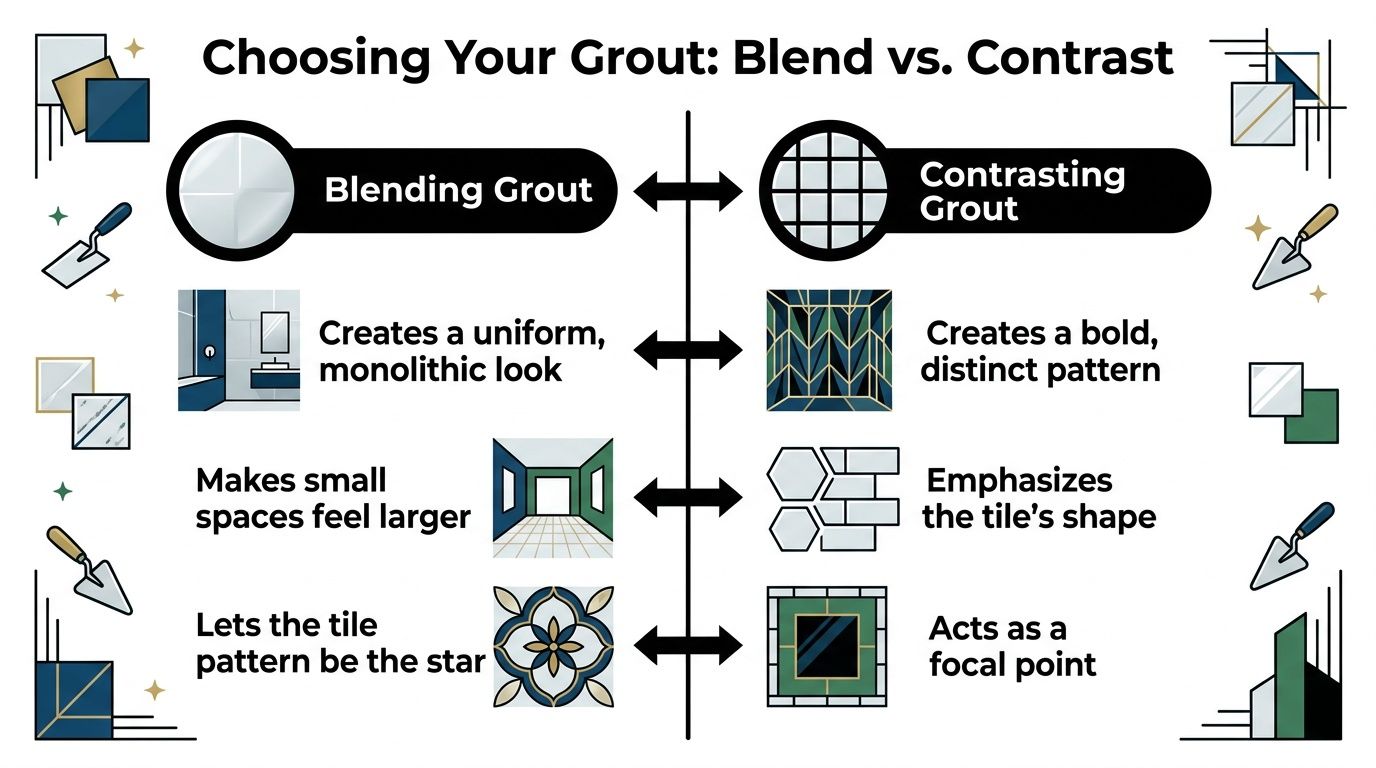
To help you decide which path is right for your project, here’s a quick breakdown of how each strategy plays out.
Grout Strategy Comparison: Matching vs. Contrasting
| Grout Strategy | Primary Effect | Best For | Consideration |
|---|---|---|---|
| Matching Grout | Creates a uniform, seamless surface that minimizes the grid pattern. | Making small spaces feel larger; showcasing intricate or expensive tile; creating a subtle, monolithic look. | Can be harder to clean if it's a very light color; any imperfections in the tile layout are less noticeable. |
| Contrasting Grout | Emphasizes the shape and pattern of the tile, turning grout lines into a design feature. | Creating a bold, graphic style; highlighting classic tile shapes like subway or hex; adding visual interest to a simple tile. | Can make a space feel busy; highlights every single tile, so a perfect installation is crucial. |
Ultimately, a blending grout quiets the visual noise, while a contrasting grout makes the lines part of the art.
Our Pro Tip: If you've invested in a beautiful, intricately patterned tile, a blending grout is almost always the right call. A high-contrast grout will just compete with the tile’s own design, making the whole installation look chaotic. Let that gorgeous tile be the star of the show.
The right grout strategy should harmonize not just with your tile, but with all the other finishes in the room. This decision is just as important as your hardware and fixture selections, which you can read more about in our guide to the latest kitchen cabinet trends.
What to Expect: How We Test Grout Colors on Your Project Site
Choosing a grout color from a paper swatch or an online photo is one of the most common mistakes we see homeowners make. It’s a recipe for disappointment because those tiny samples rarely capture how the color will actually look in your home. As your licensed Massachusetts general contractor, we’ve developed a foolproof process to make sure the grout color you choose is the one you’ll love.
Here’s how our team at Aureli Construction eliminates the guesswork and gets it right on-site.
Physical Samples in Your Space
First things first, our team brings physical grout sample sticks directly to your home, whether you're in Lexington or Wellesley. We hold these plastic sticks right up against your actual tile, in the very room where it will be installed.
This step is absolutely critical. A grout that looks like a warm, inviting gray in a showroom can suddenly take on a cool, bluish tint in your kitchen, all because of the lighting. The natural light from your windows and the artificial light from your fixtures dramatically change how we perceive color.
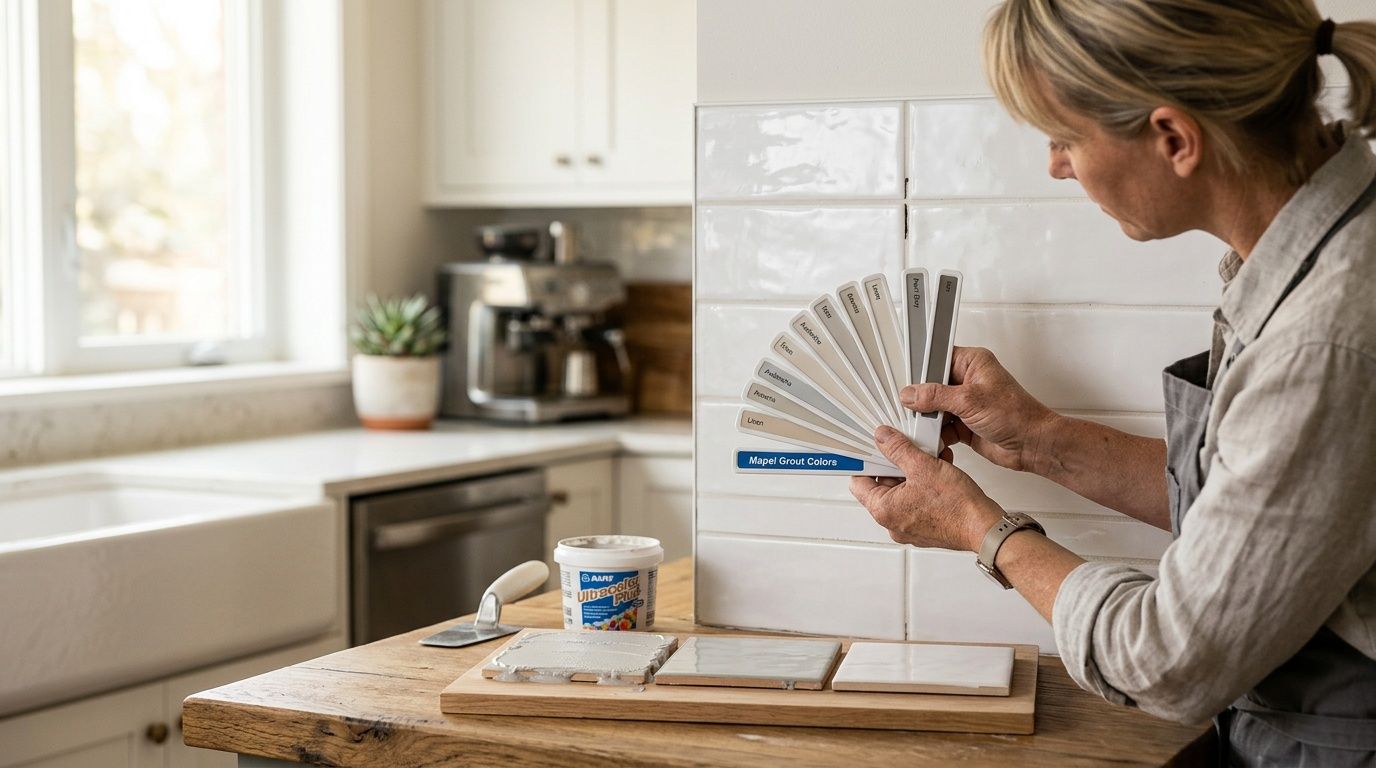
We've seen a huge shift away from just defaulting to white grout. Insisting on physical samples has become standard practice for good reason. In markets like Greater Boston, this simple step has cut down on color mismatch errors. Those old paper samples? They're often less than 50% accurate in showing the true final color. It’s a detail many people overlook, but as the folks at Young House Love explain, it makes all the difference.
Creating a Real-World Sample Board
For any important area—like a prominent kitchen backsplash or a large bathroom floor—we don't stop at sample sticks. We take it one step further by creating a custom sample board. It’s a standard part of our process to ensure you have complete confidence before we mix the first bag of grout.
Our Process: We take a few of your exact tiles, mount them on a small piece of backer board, and apply your top grout choices. We let it dry for a full 24 hours. Then, you get to see, touch, and approve the final look. No surprises, no regrets.
This small, simple step prevents costly do-overs and guarantees the final result of your renovation is exactly what you envisioned. The interplay between tile and grout is a major design choice that can define a room's aesthetic. If you're looking for inspiration on how different combinations come together, exploring tiles backsplash ideas for Toronto homes can be a great place to start.
Grout Types and Maintenance for New England Homes
Choosing the right grout goes way beyond just picking a color. The type of grout you select has a massive impact on long-term maintenance, especially with the humid summers and harsh winters we get across Massachusetts. In all our kitchen remodels in towns like Medford and Stoneham, we’ve learned that the right grout is absolutely non-negotiable for durability.
This is exactly why our team almost always recommends a high-performance, stain-resistant grout. These newer formulas, like epoxy or premium urethane grouts, come with built-in sealants that create a non-porous shield against everyday dirt, grime, and moisture.
Cement vs. Epoxy Grout for a Massachusetts Bathroom Remodel
Traditional cement-based grout is certainly less expensive at the outset, but its porous nature is its biggest downfall. It demands regular sealing to fend off stains and mildew. We've seen it time and again: an unsealed, light-colored grout on a busy bathroom floor can look dingy and old in less than a year.
On the other hand, epoxy grout, while having a higher material cost and needing a more skilled hand for installation, is completely waterproof, stain-proof, and will never need to be sealed. Ever.
We consider premium, stain-resistant grout a smart investment in any moisture-prone area like a kitchen or bathroom. It’s a key part of building a space that not only looks great but is also easy to maintain for years to come.
All of our tile work is built to meet the strict moisture-management standards in the MA State Building Code (780 CMR), and choosing the right grout is a critical piece of that puzzle. You can learn more about what goes on behind your tiled walls in our article on the differences between greenboard and cement board.
The Link Between Grout Color and Cleaning
Your grout color choice also plays a huge role in your future cleaning routine. It’s just common sense, but it's worth saying: in high-traffic areas, darker grouts can show 40% less visible dirt than classic white grout.
Many homeowners we work with find that a darker grout can stretch the time between deep cleanings from every 18 months to 36 months or even longer. For some great real-world feedback, you can review homeowner discussions online.
And for those who like to handle their own upkeep, you can learn how to clean grout naturally using some surprisingly effective homemade solutions. It's a great way to keep any grout color looking its best.
Common Grout Color Mistakes We See in Boston Homes
In our years completing kitchen and bathroom renovations in homes from Brookline to Brighton, we’ve been called in to fix a few common, and entirely avoidable, grout-related regrets. Learning how to pick the right grout color is often about knowing what not to do.
The number one mistake is choosing a color that's far too trendy. A bold, of-the-moment grout color might look incredible on social media, but it can date your expensive remodel faster than anything else. We generally advise clients to stick with timeless choices that complement the tile for lasting value.
Overlooking Undertones
Another frequent error is forgetting to consider the undertones in your tile. A tile with cool, blueish undertones paired with a grout that has warm, beige undertones can clash in a subtle but noticeable way. This mismatch makes the entire installation feel just a little 'off,' even if you can't put your finger on why.
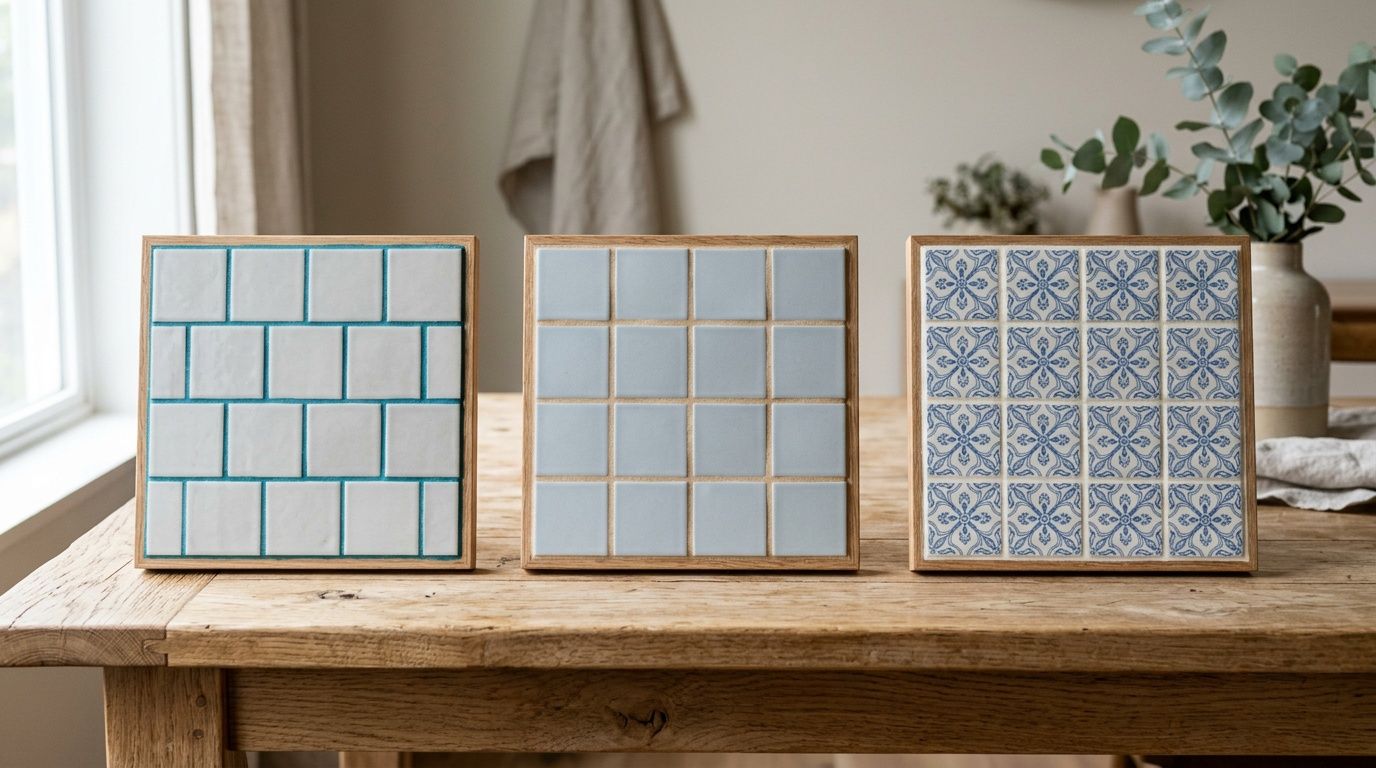
This is why our team always brings samples to test directly in your home, under your specific lighting. You can't get a true sense of color from a picture online or under the harsh lights of a showroom.
We believe the goal is to create a cohesive look, not one where elements are fighting for attention. A quick check of undertones prevents a subtle but permanent design mistake.
Forgetting About Patterned Tile
Finally, homeowners often underestimate how much impact grout has on patterned tile. If you've invested in a beautiful geometric or encaustic tile for your bathroom renovation, using a high-contrast grout can make the design feel chaotic and overwhelming.
In these cases, a matching grout that blends into the background is almost always the right call. It allows the intricate pattern of the tile itself to shine—which was the reason you chose it in the first place.
FAQ: Grout Color Questions We Hear from Boston Homeowners
Grout color might seem like a small detail, but we know it's one of those decisions that can make or break the final look of your new kitchen or bathroom. It’s a choice homeowners often stress over, and for good reason. Let’s tackle some of the most common questions we get from our clients across the Greater Boston area.
Should my floor and wall grout match?
There’s no hard and fast rule here—it really comes down to the look you’re trying to achieve. Using the same grout on both the floor and walls gives the room a very clean, uniform appearance. This approach works especially well in modern designs where you want to create a seamless, cohesive feel. On the other hand, it’s just as common to use different colors, and there are practical reasons for it. In a high-traffic bathroom, for example, we often suggest a darker grout for the floor. It’s a game-changer for hiding dirt and keeping the space looking fresh. For the walls, a lighter grout can help keep the room feeling bright and open.
How much does this level of detail affect the project cost in Massachusetts?
The grout color itself doesn't significantly change the price, but the type of grout does. A standard cement grout for a typical 5'x8' bathroom floor in the Boston area might cost $100-$150 for materials and labor. Upgrading to a premium epoxy grout could raise that to $300-$450 for the same area due to higher material costs and the specialized labor required for installation. We believe the superior stain resistance and durability of epoxy are well worth the investment for high-moisture areas. Our team will provide a detailed line-item quote so you can see exactly how these choices impact your budget.
Will you seal the grout after installation?
Absolutely. For traditional cement-based grouts, applying a high-quality penetrating sealer is a non-negotiable final step for our team. This sealer sinks into the porous grout to protect it from moisture and stains—a must-have for ensuring longevity in a bathroom or kitchen. This is a critical step for passing final inspections with local building departments in towns like Newton or Brookline. Some of the newer epoxy or high-performance grouts we use are actually stain-resistant right out of the box and don't need sealing. We’ll always specify the right type of grout for your project and make sure it’s finished for maximum durability.
What if I hate the grout color after it is done?
This is the exact scenario our on-site sampling process is designed to prevent. Trying to change grout color after it has fully cured is a nightmare. It’s a messy, labor-intensive job that involves grinding out all the old grout, which adds significant cost and time to the project and even risks chipping your brand-new tile. While you might see products like grout "paints" or colorants on the market, they are almost always a temporary band-aid, not a durable, long-term solution. Our goal is to get it right the first time by having you sign off on a physical sample board in your home, with your lighting, before we grout the entire space.
Ready to get started? Contact Aureli Construction for a free estimate at homeadditionma.com.