
In Arlington, MA, a kitchen remodel is usually about getting the balance right. You want a space that still fits the age and character of the house, but you also want finishes that can handle weeknight cooking, splatter behind the range, and real family use. One of the most important finish decisions we help clients make is the backsplash, because it sits at eye level and affects both maintenance and cost.
A stone backsplash can absolutely anchor the whole kitchen. It protects the wall, ties countertops and cabinetry together, and gives the room a more finished look than painted drywall or basic tile alone. At Aureli Construction, we install kitchens across Cambridge, Belmont, Lexington, Medford, Newton, Somerville, Wakefield, Wellesley, and surrounding Greater Boston towns, and we've seen the same pattern over and over. Homeowners love the look of stone, but they need honest guidance on what works near a cooktop, what stains, what's easy to clean, and what makes sense for the budget.
The backsplash category is growing for a reason. The global kitchen backsplash market was valued at $4.2 billion in 2025 and is projected to reach $6.8 billion by 2034, growing at a 5.8% CAGR, according to Market Intelo's kitchen backsplash market report. Demand is there, but the right choice still depends on your kitchen, your habits, and your tolerance for maintenance. Below are the kitchen backsplash ideas stone options we recommend most often in Greater Boston homes.
Table of Contents
- 1. Stacked Stone Veneer Backsplash
- 2. Marble Subway Tile Backsplash
- 3. Slate Tile Backsplash with Natural Cleft Finish
- 4. Tumbled Stone Mosaic Backsplash
- 5. Granite Tile Backsplash with Polished Finish
- 6. Travertine Tile Backsplash with Filled and Honed Finish
- 7. Limestone Backsplash with Brushed or Tumbled Finish
- 8. Mixed Stone and Glass Blend Backsplash Mosaic
- 8-Option Stone Backsplash Comparison
- Ready to Plan Your Dream Kitchen Renovation?
1. Stacked Stone Veneer Backsplash
Stacked stone veneer gives a kitchen instant texture. It's one of the boldest kitchen backsplash ideas stone homeowners ask us about, especially in Cambridge and Arlington homes where the rest of the kitchen is fairly clean-lined and needs one strong focal point.
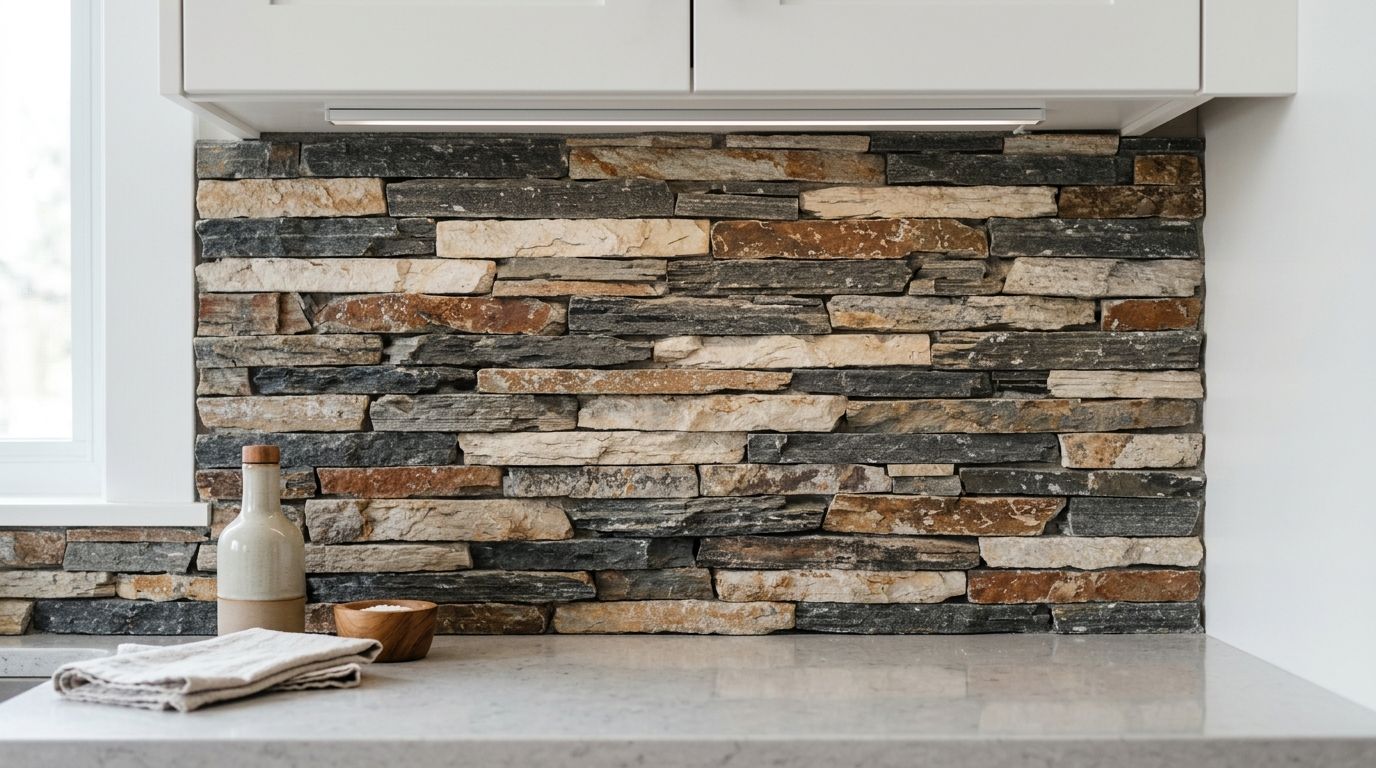
We use it most often behind a cooktop wall or on a shorter run where the homeowner wants depth without covering every wall surface in heavy texture. In a Cambridge kitchen remodel, charcoal slate veneer against white shaker cabinets can look sharp. In Belmont, a mixed limestone veneer can warm up a room that would otherwise feel too white.
Where It Works Best in Cambridge MA Kitchens
The main trade-off is cleanup. Stacked veneer has ledges, recesses, and uneven faces, so grease and dust settle faster than they do on flat tile. That doesn't mean it's a bad choice. It means you should use it where you'll appreciate the texture and where you're willing to clean it properly.
Practical rule: If you want stacked stone behind the range, make sure your ventilation is solid and seal the stone right after grouting.
A few installation decisions matter more than homeowners expect:
- Keep the surrounding finishes simple: Smooth quartz counters and plain cabinet doors balance the texture.
- Control the height: A shorter field often looks more intentional than taking rough stone to every upper cabinet.
- Plan cuts early: We dry-lay problem areas first so outlets, windows, and cabinet returns don't leave awkward slivers.
In older Massachusetts homes, backsplash work itself usually isn't the permit issue. The permit question comes up when a kitchen remodel includes electrical relocation, plumbing changes, wall removal, or ventilation upgrades under the MA State Building Code and local inspection process. Our team handles that coordination as part of larger kitchen remodeling Arlington, kitchen remodeling Belmont, and kitchen remodeling Cambridge projects.
If you're also thinking through broader finish upgrades, our guide to kitchen upgrades that add style and value pairs well with this decision.
2. Marble Subway Tile Backsplash
Marble subway tile is the safest classic option if you want real stone but don't want the backsplash to dominate the room. It works in traditional kitchens, transitional spaces, and even cleaner modern layouts if the veining is soft.
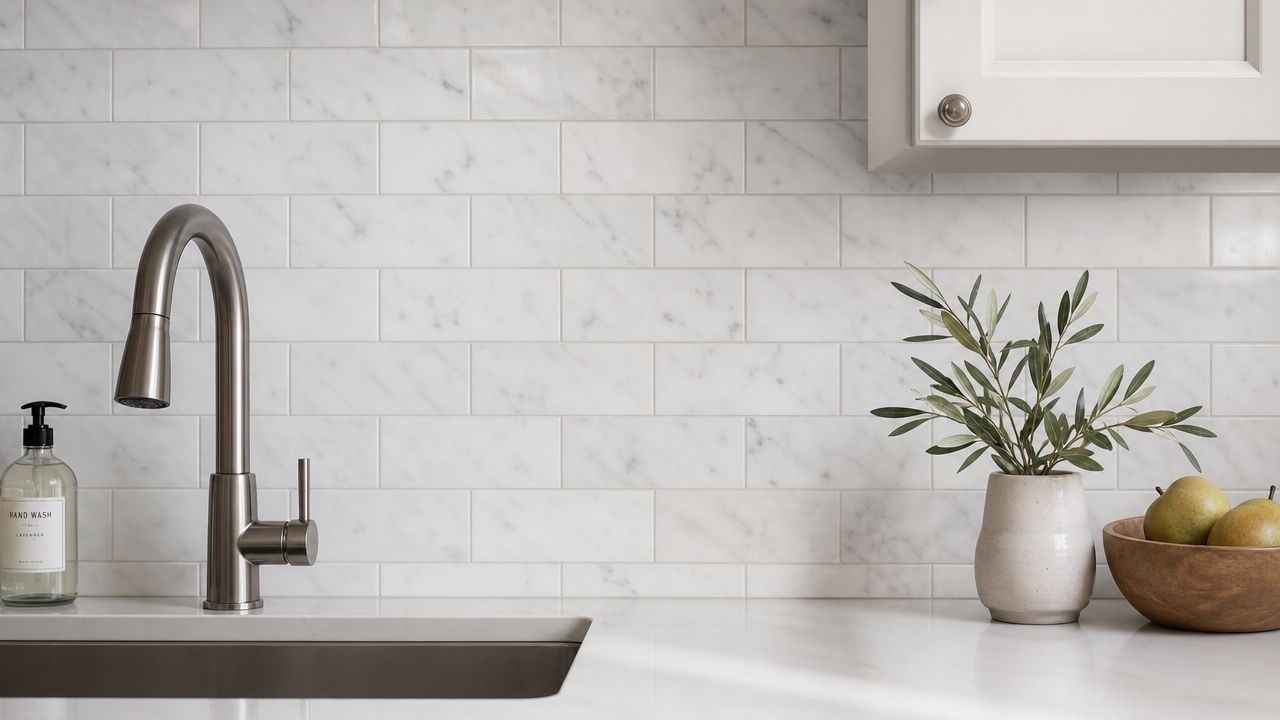
We install a lot of marble subway in Somerville, Belmont, and Medford kitchens where the homeowner wants a high-end finish that still feels familiar. Carrara with white or light gray grout is the standard look. Calacatta reads more dramatic and works better when the rest of the room is restrained.
What Marble Looks Great With in Belmont and Somerville
Marble's problem isn't style. It's chemistry. Natural stone is porous, and marble is susceptible to acid etching from common kitchen ingredients like vinegar, lemon juice, and tomato. CLE Tile also notes the need for immediate sealing and ongoing resealing every 1 to 2 years for natural stone in kitchen backsplash applications in active cooking areas, which is why we set expectations clearly before installation in family kitchens in CLE Tile's stone backsplash guidance.
That's why we often steer clients toward honed marble rather than polished marble. Honed finishes don't prevent etching, but they hide water marks and surface wear better.
Marble looks expensive because it is delicate. If you cook a lot, that delicacy is part of the ownership experience.
A few practical choices make marble easier to live with:
- Seal before and after grouting: We don't skip that step on marble.
- Use softer grout contrast: Bright white or light gray usually looks cleaner long term than a dark joint.
- Be careful behind the range: For heavy cooking households, another material may be smarter in that zone.
Grout color changes the look more than is often anticipated. If you're debating white versus gray joints, our article on how to pick grout color is worth reviewing before you finalize tile.
3. Slate Tile Backsplash with Natural Cleft Finish
Slate has a grounded look that works especially well in older Greater Boston houses. It doesn't try to be flashy. It adds texture, variation, and shadow, and it pairs well with wood cabinetry, bronze hardware, and warm paint colors.
In Lexington and Arlington kitchens, we often use charcoal or warm gray slate when the client wants something natural but less formal than marble. The cleft finish also hides fingerprints and splash marks better than polished materials.
Why Slate Holds Up in Active Lexington MA Kitchens
Slate is one of the more forgiving natural stone options visually, but it still needs proper installation. We look closely at tile thickness, edge consistency, and layout because some slate lots have more variation than homeowners expect. That variation can be beautiful, but only if it's distributed intentionally.
Here's where slate tends to work best:
- Busy family kitchens: The texture disguises everyday wear better than glossy surfaces.
- Warm palette designs: It complements natural oak, walnut, and painted greige cabinets.
- Feature walls: Behind a range or coffee station, slate adds depth without looking overdone.
In terms of maintenance, slate is still a natural product. We recommend stone-safe cleaners and periodic resealing according to the product used. We also tell homeowners not to judge the tile by one showroom sample. Real installed slate will show more movement in tone.
For kitchen remodeling Lexington, kitchen renovation Arlington, and custom kitchen Belmont projects, slate is often the middle ground between rustic stacked veneer and more refined cut stone. It feels substantial without looking too polished.
4. Tumbled Stone Mosaic Backsplash
Tumbled stone mosaic brings movement into a kitchen fast. It's made for homeowners who like variation, softer edges, and a more collected look than large field tile gives you.
We see this style most often in traditional kitchens in Cambridge, Medford, and Stoneham. A blend of tumbled marble, limestone, and travertine can tie together cream cabinets, warm brass, and natural wood in a way that feels layered rather than overly designed.
Where We Use It in Medford and Stoneham
The challenge with mosaics is visual density. If the countertop already has heavy veining or the cabinet style is ornate, a tumbled mosaic can push the room too far. When it works, it usually works because the surrounding elements are quieter.
Jobsite note: Mosaic backsplashes look best when we plan the sheet layout around outlets and corners before the first piece goes on the wall.
We also pay close attention to the specific stones in the blend. A mosaic that includes marble or limestone needs gentler cleaning than many homeowners assume. That's one reason we sometimes limit tumbled stone to a coffee bar niche, a framed range accent, or a smaller wall rather than every backsplash surface in the room.
If your kitchen remodel in Medford or Stoneham includes new lighting, cabinet changes, or a full layout update, this style can become a strong accent without making the room feel busy. It's especially effective in kitchens that are trying to feel warm and established rather than crisp and contemporary.
5. Granite Tile Backsplash with Polished Finish
Granite tile is one of the practical choices in this category. It gives you real stone, a tougher surface than marble, and a polished finish that reflects under-cabinet lighting well.
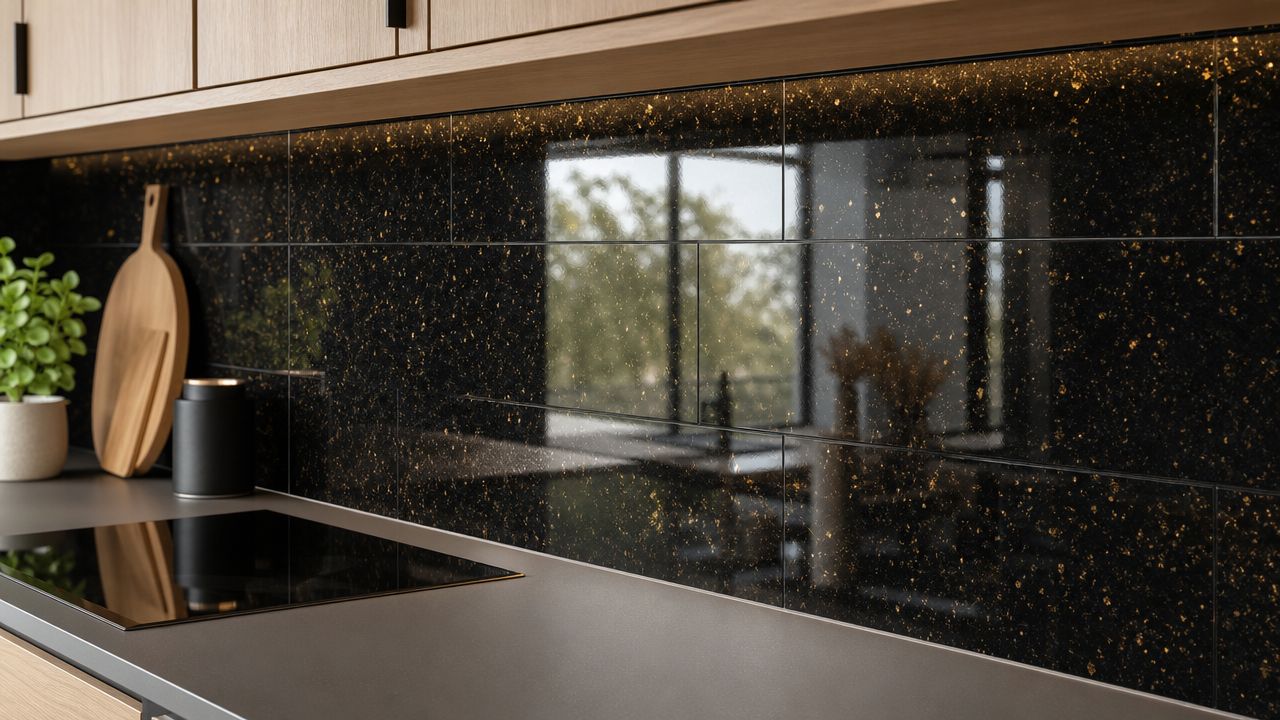
In Newton, Wakefield, and Reading kitchens, polished granite backsplash tile is a strong option when the homeowner wants durability and a darker, more dramatic material. Black or deep gray granite with subtle movement can look sharp against white cabinetry. Warmer tan or gold-toned granite can also help older oak kitchens feel more intentional.
Best Fit for Newton MA Kitchen Renovation Projects
The biggest mistake with granite backsplash tile is overdoing the shine. If the countertop, floor, and backsplash are all glossy and patterned, the kitchen starts to feel hard and busy. We usually balance polished granite with simpler cabinet fronts and restrained hardware.
We also have honest conversations about cost. If you're comparing real stone against stone-look alternatives, the spread can be dramatic. One 2025 to 2026 comparison cited DIY large-format porcelain that mimics stone at approximately $500 to $600, while a genuine stone slab backsplash for the same area ranged from $2,800 to $3,500, a difference highlighted in this large-format porcelain versus real stone comparison video. That's exactly why some homeowners use granite tile instead of a full stone slab. You still get natural stone, but you avoid slab pricing.
For homeowners also deciding how countertop and backsplash materials should work together, our countertop materials cost guide helps frame the bigger finish budget.
6. Travertine Tile Backsplash with Filled and Honed Finish
Travertine has a softer, warmer look than granite. In the right kitchen, that's a major advantage. It pairs well with creamy cabinet colors, warmer woods, and kitchens that lean Mediterranean, cottage, or traditional rather than ultra-modern.
In Belmont and Burlington, we use filled and honed travertine when a homeowner wants a natural stone surface that feels calm and lived-in. The honed finish cuts glare, and the filled surface is easier to clean than open, pitted material.
What to Expect During Installation in Burlington and Belmont
Travertine rewards restraint. Larger tile with simple grout joints usually looks better than a busy pattern. We also pay attention to where it goes. Near a prep sink or in a lower-splash area, it can perform well with proper sealing. Directly behind a high-use cooktop, it's a more demanding choice.
The engineered stone market is projected to grow from USD 24.65 billion in 2024 to USD 38.99 billion by 2032 at a 5.9% CAGR, driven in part by low maintenance and stain resistance, according to Credence Research's engineered stone market report. That matters because many homeowners start out wanting travertine or marble, then shift to lower-maintenance surfaces once they understand daily upkeep. Even when they stay with natural stone, they make better decisions about where to use it.
A few things we tell clients up front:
- Seal it properly: Travertine needs a penetrating sealer before grouting and again after cure.
- Use stone-safe cleaners only: Acidic cleaners will damage the finish.
- Expect variation: Good travertine doesn't look uniform, and that's part of the appeal.
For kitchen remodeling Burlington, kitchen remodeling Belmont, and custom kitchen Lexington projects, travertine works best when the whole palette supports its warmth.
7. Limestone Backsplash with Brushed or Tumbled Finish
Limestone gives a kitchen a quiet look. It doesn't sparkle like granite or show veining like marble. Instead, it creates a soft backdrop that can make cabinets, shelving, and hardware feel more refined.
We like limestone in Cambridge, Arlington, and Stoneham kitchens that have a lighter palette and a more architectural feel. Brushed or tumbled limestone can work beautifully with white oak, painted cabinets, and understated fixtures.
The Maintenance Reality in Greater Boston Homes
To be direct, limestone is not a carefree backsplash material. It's one of the more maintenance-heavy natural stone choices in a working kitchen, especially around sinks and cooking zones. In active homes, that matters more than the showroom sample.
We also pay attention to local code and inspection context. There's no statewide Massachusetts code that requires a residential kitchen backsplash, but multiple home inspectors and local officials in Greater Boston have reportedly required a minimum 4-inch granite or stone splash behind the sink and stove as a practical moisture barrier, based on the discussion documented in this Greater Boston backsplash code conversation on Houzz. We don't treat forum posts as law, but we do know local interpretation can affect remodel decisions, especially during final punch and inspection conversations.
Softer stone asks more from the homeowner. If you know you won't keep up with sealing and careful cleaning, pick a different finish.
In Massachusetts kitchen renovations, we also coordinate broader permit requirements when a project includes electrical, plumbing, or structural work under 780 CMR and local building department review. That comes up often in kitchen renovation Medford, kitchen remodeling Newton, and kitchen remodeling Wellesley projects where the backsplash is only one part of a full scope.
8. Mixed Stone and Glass Blend Backsplash Mosaic
Mixed stone and glass mosaics are for homeowners who want a little more light play without giving up the warmth of stone. They're a good fit when plain subway tile feels too flat, but full natural stone feels too heavy.
In Brookline and Cambridge kitchens, we use these blends to bridge traditional and modern elements. A mosaic with marble and frosted glass can soften a contemporary kitchen. A slate-and-glass mix can sharpen up a more classic cabinet package.
A Smart Choice for Brookline and Cambridge Remodels
The reason these blends work is contrast. Stone gives you depth and texture. Glass catches light and keeps the installation from reading too dark. That balance is useful in Boston-area homes where some kitchens have limited natural light or lower ceilings.
Here's the style in context:
The practical issue is product coordination. Different materials in the same sheet may want different sealers, different cleaning products, and tighter attention to grout haze during installation. We always mock up a sample board when the client is mixing cabinet paint, countertop stone, and a reflective backsplash.
Massachusetts homes also vary a lot in wall condition. In older kitchens, prep matters. We often have to flatten substrate, correct old patchwork, or bring surfaces into tolerance before setting mosaic sheets. That's one of the reasons homeowners searching for kitchen remodeling Somerville, kitchen remodeling contractor Medford, or kitchen remodeling near me in Arlington should ask how the contractor handles wall prep, not just tile selection.
8-Option Stone Backsplash Comparison
| Backsplash Type | Implementation Complexity 🔄 | Resource Requirements & Cost ⚡ | Expected Outcomes ⭐📊 | Ideal Use Cases 💡 | Key Advantages |
|---|---|---|---|---|---|
| Stacked Stone Veneer Backsplash | 🔄 Moderate, labor‑intensive horizontal layering; needs moisture‑resistant backing | ⚡ Moderate resources; $12–$18/ft² materials, $15–$30/ft² installed; mortar, sealer | ⭐📊 High visual impact and texture; durable if sealed; grout needs cleaning | Accent walls, farmhouse or contemporary focal backsplashes; avoid high‑splash zones | Unique natural texture; lighter than full stone; strong architectural character |
| Marble Subway Tile Backsplash | 🔄 Low–Moderate, standard tile installation, forgiving formats | ⚡ Low–Moderate resources; $8–$15/ft² materials, $20–$35/ft² installed; regular sealing | ⭐📊 Timeless, elegant look with natural veining; higher maintenance (etching risk) | Traditional and contemporary kitchens, low‑splash areas, complements white cabinetry | Classic aesthetic; widely available; easy to coordinate with finishes |
| Slate Tile (Natural Cleft Finish) | 🔄 Moderate, uneven thickness needs skilled set; cement board and waterproofing | ⚡ Moderate resources; $10–$20/ft² materials, $25–$40/ft² installed; sealer, specialized thinset | ⭐📊 Rustic, durable and non‑reflective; hides fingerprints but traps dirt | Farmhouse/transitional kitchens; textured focal walls; good for active use areas | Durable, hides wear, rich color depth and natural character |
| Tumbled Stone Mosaic Backsplash | 🔄 Low–Moderate, mesh‑back sheets simplify install; mixed stones add complexity | ⚡ Moderate resources; $12–$22/ft² materials, $30–$45/ft² installed; multiple sealers may be needed | ⭐📊 Artisanal, layered appearance; softer stones require more care | Mediterranean, cottage, decorative accent areas; feature walls | Varied texture/color blends; faster than hand‑laid stones; artisanal look |
| Polished Granite Tile Backsplash | 🔄 Moderate, standard tile methods; attention to substrate and grout | ⚡ Higher resources; $15–$25/ft² materials, $35–$50/ft² installed; infrequent sealing (2–3 yrs) | ⭐📊 High‑end, durable, reflective finish; scratch and acid resistant | High‑use or luxury kitchens; dramatic contrasts; durable work zones | Extremely durable, low etching, premium visual impact |
| Travertine (Filled & Honed) | 🔄 Low–Moderate, standard install; filled surface eases cleaning | ⚡ Moderate resources; $8–$15/ft² materials, $25–$40/ft² installed; annual sealing | ⭐📊 Warm, Mediterranean look; softer than granite; may darken small spaces | Warm, traditional or Mediterranean kitchens; pairs with wood cabinetry | Warm tones, inviting aesthetic, cost‑effective relative to some stones |
| Limestone (Brushed/Tumbled) | 🔄 Moderate, careful sealing and frequent maintenance required | ⚡ Moderate resources; $8–$14/ft² materials, $25–$38/ft² installed; reseal 2–3×/yr | ⭐📊 Soft, sophisticated matte look; high porosity and maintenance | Light‑filled, serene kitchens; European farmhouse or minimalist designs | Matte, understated elegance; hides fingerprints and glare |
| Mixed Stone & Glass Blend Mosaic | 🔄 High, multi‑material prep, varied sealing, precise installation | ⚡ High resources; $18–$35/ft² materials, $40–$60/ft² installed; custom components | ⭐📊 Highly customizable, luminous and textured; strong visual impact with mixed maintenance | Contemporary/luxury kitchens, feature walls, coordinated design schemes | Combines stone warmth with glass luminosity; highly customizable aesthetic |
Ready to Plan Your Dream Kitchen Renovation?
A backsplash choice usually looks easy until the work starts. Then we are standing in a Belmont or Cambridge kitchen checking old plaster, outlet depth, cabinet alignment, and how a natural stone tile will sit against a wall that is not perfectly flat. The sample is only part of the decision. Installation conditions, cleanup, sealing, and long-term upkeep matter just as much in a Greater Boston home.
We advise homeowners to start with how they cook. A kitchen that sees frequent frying, sauce splatter, and heavy weekday use benefits from smoother, less porous finishes that wipe clean without much fuss. Textured slate, stacked stone, marble, and limestone can look excellent, but each asks more of the owner, either in sealing, gentler cleaners, or more time spent cleaning grout joints and surface variation.
In older homes across Arlington, Newton, Somerville, and Medford, prep work often drives the result. We regularly have to flatten sections of wall, adjust boxes so receptacles sit flush, and tighten layout lines under cabinets and around windows. That work affects labor cost and schedule, but it is what keeps a stone backsplash from looking wavy, crowded, or patched together after installation.
Code concerns usually come through the larger remodel scope. If the project includes new electrical, lighting, plumbing moves, ventilation changes, or wall opening, Massachusetts permits and inspections may be part of the job. We review that scope early so the backsplash installation does not get treated like an isolated finish decision.
Stone also has to work with the rest of the room. As discussed in Hammond Lumber's kitchen backsplash design guidance, the material should support the countertop, cabinet color, flooring, and available light. In the field, we also check grout tone, termination points, switch plates, and where cuts will fall around focal areas. Those details usually decide whether the kitchen feels calm or visually crowded.
Bring home real samples before you commit. Set them against the counter in daylight and again at night with your actual kitchen lighting. If the stone is honed, tumbled, or split-faced, wet the sample to get a better sense of how it may read after sealing and routine cleaning. If you want more outside inspiration while narrowing down concepts, you can browse additional kitchen renovation ideas.
Ready to get started? Contact Aureli Construction for a free estimate.
If you're planning a kitchen remodel in Arlington, Belmont, Brighton, Brookline, Burlington, Cambridge, Lexington, Medford, Melrose, Newburyport, Newton, Reading, Somerville, Stoneham, Wakefield, or Wellesley, Aureli Construction can help you choose a backsplash that fits the house, the budget, and the way you live. We're a Massachusetts licensed general contractor, and we handle design coordination, permitting, construction, and finish selection for Greater Boston kitchen renovations.