Last October, a homeowner in Newton discovered that adding a full second story would cost 40% less than purchasing a comparable larger home in the same school district. You likely feel the same frustration with the Greater Boston real estate market, where high interest rates and low inventory make moving feel like an unnecessary gamble. It’s a common dilemma for Massachusetts families who love their location but have simply run out of square footage. You need more space, but you also need the peace of mind that your home’s structural integrity is in expert hands.
This guide provides the essential roadmap for planning, permitting, and selecting the right design-build team for your vertical home expansion. You’ll learn the specific design-build sequence required for Massachusetts homes and how to manage strict local setback requirements. We’ll also show you how to vet second floor addition contractors for specialized structural experience so you can avoid foundation issues or costly delays. This 2026 guide ensures you have the knowledge to build upward with confidence, turning your current house into a high-value investment that serves your family for decades.
Key Takeaways
- Understand why vertical “pop-top” additions are the most effective way to gain square footage on Greater Boston’s narrow lot lines.
- Learn how to prioritize structural integrity by evaluating your foundation and soil requirements before construction begins.
- Navigate the 2026 Massachusetts State Building Code and local zoning setbacks to ensure your project meets all regulatory standards.
- Identify the specific qualifications to look for when vetting second floor addition contractors to ensure they have the regional expertise your home requires.
- Discover how a turnkey design-build process provides a seamless transition from initial architectural concepts to a finished, value-adding expansion.
What is a Second Story Addition and Is It Right for Your MA Home?
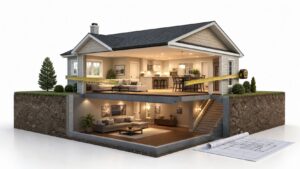
A second story addition, often called a “pop-top,” involves removing your existing roof to construct a full or partial second level. This process allows you to double your square footage without altering the home’s footprint. In Greater Boston, where residential lots are frequently narrow and restrictive, this vertical approach is the most efficient way to gain living space. Partnering with experienced second floor addition contractors ensures that your home’s structural integrity is preserved while you add the bedrooms or home offices your family needs.
Space is a premium commodity in towns like Newton and Belmont. Many homes in these areas sit on lots where side-yard setbacks are limited to 15 feet or less. If you build outward, you risk losing your entire backyard or violating local zoning bylaws. Vertical expansion solves this problem. It preserves your outdoor oasis while providing the interior room of a much larger property. Homeowners in Medford and Winchester often find that their post-war Ranches, Capes, and bungalows are the perfect candidates for this structural transformation.
Building Up vs. Building Out in Massachusetts
Local zoning laws in Lexington and Arlington often cap lot coverage between 15% and 25% of the total land area. Building a horizontal bump-out can trigger a lengthy variance process with the Zoning Board of Appeals, often adding 4 to 6 months to your project timeline. Building up stays within your existing footprint, which simplifies the permitting process. This strategy protects your yard and maintains the neighborhood character that local planning boards prioritize in 2026. It’s a turnkey solution that respects both your property lines and your neighbors’ privacy.
The Financial ROI of Staying Put in the Boston Market
The math of moving rarely adds up in the current market. With median home prices in Cambridge hovering around $1.2 million as of early 2026, the cost of upgrading includes high purchase prices and 5% real estate commissions. Choosing a vertical addition allows you to retain your current mortgage rate and stay within your preferred school district. In North Shore communities, these projects typically see a 70% to 80% return on investment. Professional second floor addition contractors provide a strategic way to build equity without the stress of a competitive housing search. If you’re curious about specific costs for your property, understanding how much to add a second story in Greater Boston can help you make an informed financial decision.
The Structural Roadmap: Evaluating Your Home for a Second Level
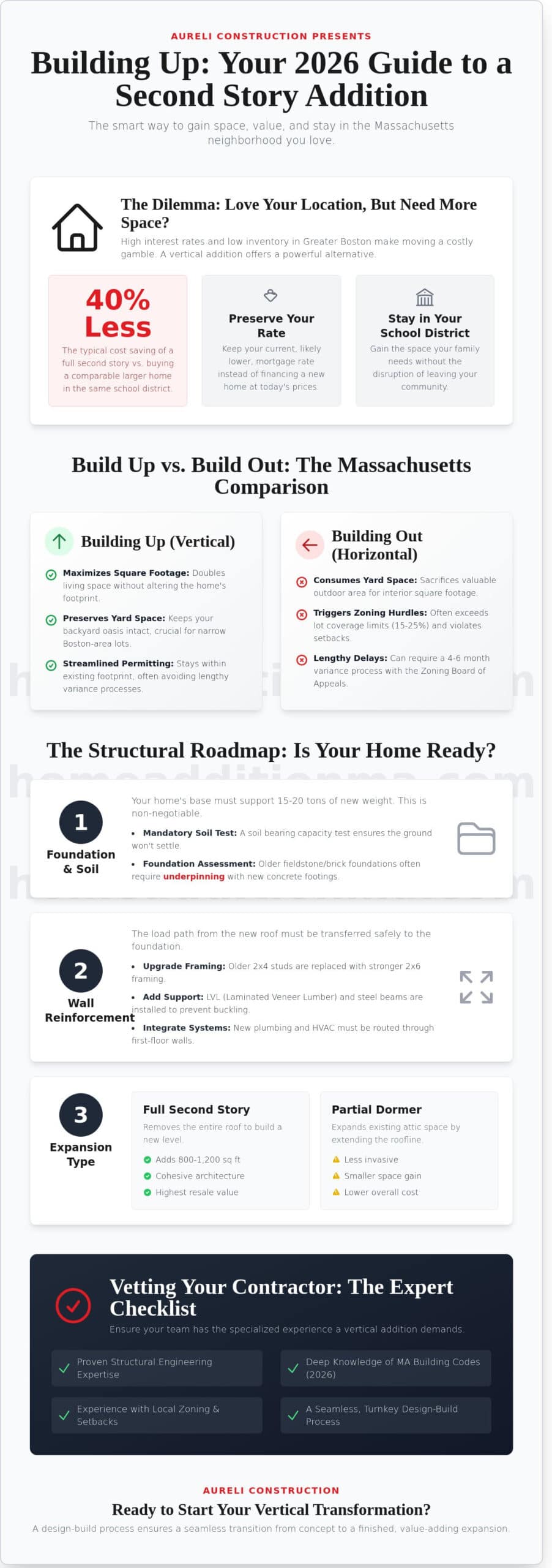
Building up is a complex engineering feat that requires more than just a vision for new bedrooms. Your home must support thousands of pounds of new material. Experienced second floor addition contractors prioritize structural integrity before a single board is cut. The load path is the continuous route that transfers weight from the new roof, through the second-floor joists, down the first-floor studs, and into the foundation. If this path is interrupted or weak, the entire project is at risk.
Homeowners must choose between a full second-story addition and a partial dormer expansion. A full addition involves removing the entire roof to create a completely new level, typically adding 800 to 1,200 square feet. A partial dormer expansion uses existing attic space and extends the roofline to create headroom. While dormers are less invasive, a full second story offers a cohesive architectural look and higher resale value in the 2026 Massachusetts market. Before committing to either path, reviewing a detailed second floor addition cost breakdown for Greater Boston will help you align your structural goals with your overall budget.
Foundation and Soil Assessment for New England Homes
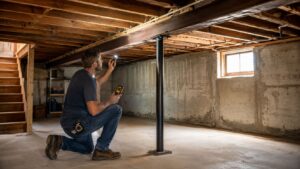
In Medford and Somerville, many homes sit on 100-year-old fieldstone or brick foundations. These materials often lack the compressive strength of modern poured concrete. If your current foundation is insufficient, we use underpinning to pour new concrete footings beneath the existing ones. This increases the depth and load-bearing capacity of the base. A soil bearing capacity test is mandatory in New England to ensure the earth can support the added 15 to 20 tons of a vertical expansion without settling.
First-Floor Wall and Structural Reinforcement
Older Massachusetts homes typically use 2×4 exterior wall studs. Modern building codes for vertical additions often require upgrading these to 2×6 framing or reinforcing them with LVL (Laminated Veneer Lumber) and steel beams. These supports prevent the first floor from buckling under the weight of the new level. You should expect some impact on your current living space during this phase.
- Walls are opened to install new 2×6 studs or steel columns.
- New plumbing stacks and HVAC ductwork must be routed through existing first-floor walls to reach the new rooms.
- Ceilings may be lowered slightly to accommodate larger floor joists.
Professional second floor addition contractors coordinate these trades to minimize the time your home is under construction. If you’re unsure if your current structure is ready for a vertical move, request a structural feasibility review to get an expert opinion on your home’s potential. This early assessment prevents costly surprises once the roof is off.
Navigating Local Zoning, Permits, and Historic Districts
Zoning laws are the silent architects of your home. The 10th edition of the Massachusetts State Building Code (780 CMR) dictates every structural decision for vertical expansions in 2026. You cannot simply add weight to an existing foundation without a certified load-bearing analysis. In Somerville, strict side-yard setback requirements often limit how high or wide you can build. If your existing structure sits within 8 feet of a property line, you’ll likely need to petition the Zoning Board of Appeals (ZBA) for a variance. This legal process adds approximately 90 to 120 days to your timeline and requires a formal demonstration of why the project is necessary.
Local expertise is the difference between a project that starts on time and one that remains stuck in committee. Cambridge requires specialized stormwater management reviews that Melrose doesn’t prioritize. Second floor addition contractors with deep regional roots understand these nuances. They ensure your plans meet the 2026 energy stretch codes, which now mandate specific R-values for insulation that were optional just three years ago. Hiring a team that knows the specific clerks in your town hall creates a smoother path to approval.
Working with Local Historic Commissions
Lexington and Concord maintain rigorous oversight through their historic commissions to preserve the 19th-century New England character of their streets. If your home is in a designated district, you must submit material samples for siding and window trim before construction begins. Public hearings are a standard requirement in these towns. You should expect to present a design that maintains the original roof pitch and architectural rhythm of the neighborhood. Providing a 3D digital rendering during these meetings helps commissioners visualize how the addition respects the historic streetscape.
The Permitting Timeline in Greater Boston
Approval times vary significantly by municipality. In high-demand areas like Cambridge or Brookline, expect a 7 to 11-week wait for a full building permit review. Your application must include a comprehensive document package:
- Certified site plans showing current and proposed lot coverage.
- Architectural drawings with 2026 building code compliance stamps.
- Structural engineering reports verifying foundation and soil capacity.
- Energy audit results (HERS ratings) required by state law.
Professional second floor addition contractors operate on a turnkey basis, handling every municipal filing on your behalf. This approach eliminates the risk of technical errors that often cause permit rejections. We manage the bureaucracy so you can focus on the design of your new space. This strategic management transforms a complex legal hurdle into a predictable step in your home’s evolution.
How to Vet and Hire Second Floor Addition Contractors
Choosing the right team is the most critical decision you’ll make for your home’s future. Start your search by prioritizing second floor addition contractors in Newton and Greater Boston who maintain a physical office in Middlesex or Suffolk County. Local proximity ensures the team is familiar with the 2024 Massachusetts State Building Code and the specific permitting quirks of towns like Newton or Brookline. Contractors located within a 25-mile radius of your home are much more likely to provide consistent on-site supervision and responsive communication.
Don’t hire a generalist for a project of this scale. Building upward requires a specialist who understands structural load-bearing requirements and vertical integration. You need a professional who can calculate if your current foundation can support the additional 25 to 40 pounds per square foot a new level demands. Always verify two specific credentials: a valid Construction Supervisor License (CSL) and a Home Improvement Contractor (HIC) registration. Request a site visit where the contractor performs a preliminary structural walkthrough to identify potential challenges before you sign any paperwork.
The Design-Build vs. Traditional Bid Comparison
The design-build model is often the safest path for complex vertical projects. It combines architectural design and construction into a single contract, which prevents the blame game between different firms. This unified approach ensures that your vision stays within your 2026 budget from day one. Many homeowners find The Design-Build Advantage for Your Cambridge Remodel provides the peace of mind necessary when removing the roof of their primary residence. It creates a single point of accountability that simplifies the entire 12 to 24 week construction window.
Critical Questions to Ask Your Contractor
- Weather Protection: What is your specific protocol for protecting my home’s interior if a sudden Nor’easter hits while the roof is removed?
- Local Proof: Can you provide three references for second-story additions you finished in this specific town within the last 18 months?
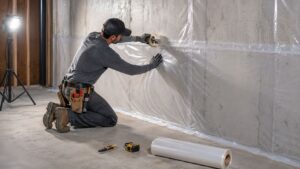
- Dust Mitigation: Will you use HEPA-filtered air scrubbers and floor-to-ceiling plastic barriers to keep my first floor clean and livable during the heavy construction phase?
Start Your Vertical Transformation with Aureli Construction
Choosing the right second floor addition contractors is about more than finding a crew with a hammer. It’s about finding a partner who understands the structural soul of a New England home. Aureli Construction brings a 30-year legacy of building across Massachusetts. We provide a complete turnkey experience. This means we handle every detail from the first architectural sketch to the final coat of paint on your new trim. Our team operates with the mindset of a Reliable Master Craftsman. We don’t take shortcuts because we know your family’s safety and your home’s equity depend on our integrity. You can see our dedication to quality in the local project galleries we’ve completed for homeowners in Newton, Belmont, and Lexington.
Our Seamless Design-Build Process
Our approach eliminates the friction often found in major renovations. We guide you through three distinct phases: Discovery, Design, and Construction. During Discovery, we analyze your existing foundation to ensure it can support the 15 to 20 pounds per square foot of additional load a second story requires. We manage the complex permitting and zoning requirements inherent to Massachusetts municipalities, saving you months of administrative delays. Our commitment to high-quality New England craftsmanship ensures that your addition looks like it was always part of the original structure. We use sustainable materials and modern insulation techniques to meet or exceed 2026 energy codes while maintaining the aesthetic integrity of your neighborhood.
Ready to Build Up? Schedule Your Consultation
A vertical addition is a strategic investment that increases your square footage without sacrificing your yard. It’s a safe and proven way to double your living space while significantly boosting your property’s market value. We’re ready to help you determine the feasibility of your vision. Our team provides comprehensive site evaluations and project feasibility studies across Greater Boston to ensure your home is a prime candidate for vertical growth. We take the responsibility of altering your home with the utmost gravity and care.
Take the first step toward a more spacious home today.
Contact Aureli Construction for your second-story consultation.
Elevate Your Living Space with Greater Boston’s Trusted Experts
Expanding your home vertically is a significant investment that requires more than just a blueprint. It demands a partner who understands the 2026 Massachusetts building codes and the structural complexities of local architectural styles. From navigating strict zoning laws in historic neighborhoods to managing the full design-build process, the right team ensures your project adds lasting value. You’ve learned that a successful build relies on thorough structural evaluations and a clear roadmap through the local permitting landscape.
Aureli Construction brings 30+ years of Massachusetts building experience to every project we undertake. Our A+ BBB rating and deep portfolio of local Boston area references reflect our commitment to craftsmanship and transparency. We handle every detail through our full design-build turnkey service, so you don’t have to manage multiple vendors or worry about logistical gaps. When you’re ready to expand, hiring experienced second floor addition contractors is the most important decision you’ll make for your home’s future. We’re ready to help you build a space that fits your lifestyle perfectly.
Schedule Your Second-Story Addition Consultation
Frequently Asked Questions
Can I live in my house while a second story is being added?
Most homeowners choose to move out for 4 to 6 months while the heavy structural work occurs. While some families attempt to stay during the final interior finishing, 85% of Massachusetts residents find the noise and dust levels too disruptive for daily life. The process involves removing your existing roof and exposing the interior to the elements; this creates safety hazards and temporary utility shut-offs that make the home uninhabitable for several weeks.
How much does a second-story addition cost in the Boston area in 2026?
In 2026, Greater Boston homeowners should budget between $350 and $550 per square foot for a high-quality vertical expansion. For a standard 1,000-square-foot addition, this equates to a total investment of $350,000 to $550,000. These figures reflect current labor rates in Middlesex and Norfolk counties along with the rising costs of premium materials. Investing in these quality upgrades typically yields a 65% return on value during a future resale. For a more detailed breakdown of costs specific to your project, use our second story addition cost calculator to get accurate estimates based on your home’s unique requirements.
How long does it typically take to add a second floor to a house in MA?
A typical second-floor project in Massachusetts takes between 7 and 10 months from the initial design phase to the final inspection. The physical construction phase usually spans 22 to 26 weeks once the project begins. This timeline accounts for the 5 to 8 weeks required to secure necessary permits from local building departments in municipalities like Newton or Brookline. Weather delays during the winter months can occasionally add 3 weeks to this estimate.
Will my property taxes go up significantly after adding a second story?
Your property taxes will increase because the local municipality will reassess your home’s value based on the newly added square footage. In many Greater Boston suburbs, homeowners see a 25% to 45% increase in their annual tax bill following a major vertical renovation. This adjustment reflects the enhanced market value and the expanded living space you’ve gained. We recommend checking with your local assessor’s office for specific 2026 mill rates in your specific town.
Is it cheaper to build up or build out in Massachusetts?
Building up is often 15% more expensive per square foot than building out, though it preserves your valuable yard space. While you save on foundation costs, the structural reinforcement required for the first floor and the complexity of roof removal drive the price higher. Professional second floor addition contractors will analyze your existing frame to determine which path offers the best return on investment for your specific lot and local zoning laws. For a comprehensive cost comparison, our guide on how much to add a second story in Greater Boston provides detailed pricing scenarios for both vertical and horizontal expansion options.
What is the most common structural challenge when adding a second level?
The most frequent challenge is reinforcing the existing first-floor wall studs and the foundation to carry the new weight load. Roughly 70% of older Boston homes require additional “sistering” of floor joists or the installation of new steel l-beams. This ensures the structural integrity meets the 2026 Massachusetts State Building Code requirements for gravity and wind loads. Our team handles these technical calculations during the engineering phase to ensure a stable result.
Do I need a completely new roof when adding a second story?
You will definitely need a completely new roof because the existing one must be removed to build the new living level. Your second floor addition contractors will design a new roof system that matches the updated architectural profile of your expanded home. This is an ideal time to upgrade to 50-year architectural shingles or standing seam metal for better weather resistance. A new roof ensures your entire structure remains protected from the harsh New England climate.
Can any house foundation support a second floor addition?
Not every foundation can support the weight of a second story without significant modifications. Approximately 30% of residential foundations in Eastern Massachusetts require underpinning or concrete reinforcement to handle the added 15 to 20 tons of a new level. A licensed structural engineer must evaluate the soil composition and footing depth before construction begins. We prioritize this assessment to guarantee that your home’s foundation remains secure for decades to come.