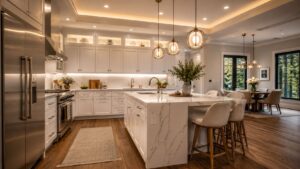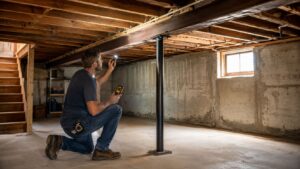
A homeowner in Arlington recently walked us through a familiar setup. The kitchen was closed off from the dining room, the upstairs bath barely worked for a busy family, and the basement smelled damp every spring. The house itself was solid. The problems were in the layout, the old mechanicals, and years of piecemeal updates that never fixed how the home functioned.
That is the story behind most before and after remodels we take on across Greater Boston.
These projects are about more than new finishes. They solve daily friction. We open sightlines, add storage, correct moisture problems, improve circulation, and make older homes work for the people living in them now. In Cambridge, Belmont, Lexington, Medford, Newton, Wellesley, and Arlington, that often means reworking homes built long before open kitchens, second-floor primary suites, or legal accessory units were part of the plan. Homeowners looking at open concept living spaces in older Massachusetts homes usually find out quickly that design is only one piece of the job.
The harder part is what happens behind the walls. A clean before-and-after photo does not show the sagging floor joists we sistered, the undersized beam we replaced, the venting we had to reroute, or the water entry issue that had to be addressed before any finish work could start. Once a remodel touches structure, egress, plumbing, electrical, or major layout changes, our team is dealing with permits, inspections, and code compliance under 780 CMR, along with local zoning and building department review that can vary quite a bit from one town to the next.
The eight remodel types below are the ones we handle most often in the Greater Boston market. Each one has a different reason behind it, a different cost range, and a different approval path. A kitchen wall removal in Cambridge is a different job from an ADU in Newton or a second-story addition in Wellesley, even if the before and after photos look equally dramatic.
Table of Contents
- 1. Kitchen Renovation Open Concept Transformation with Island Seating
- 2. Second-Story Addition Bedroom and Bath Expansion
- 3. Master Bath Spa Renovation Luxury Upgrade from Basic 1980s Bath
- 4. Basement Finishing Converting Damp Unfinished Space into Livable Recreation Area
- 5. Outdoor Living Addition Deck Patio and Pergola for Year-Round Entertainment
- 6. ADU Addition Creating Multigenerational Living or Rental Income
- 7. Whole-Home Renovation Comprehensive Modernization of Aging Colonial or Cape
- 8. Bathroom Modernization Converting Cramped Outdated Bath to Contemporary Space
- Before & After Remodels: 8-Project Comparison
- Planning Your Own Before and After Story in Greater Boston
1. Kitchen Renovation Open Concept Transformation with Island Seating
A homeowner in Arlington calls us after hosting one holiday dinner too many in a kitchen built for 1955. One person can cook. Everyone else stacks up at the doorway, the refrigerator door blocks the range, and there is no place for kids to sit except the formal dining room nobody uses on a school night.
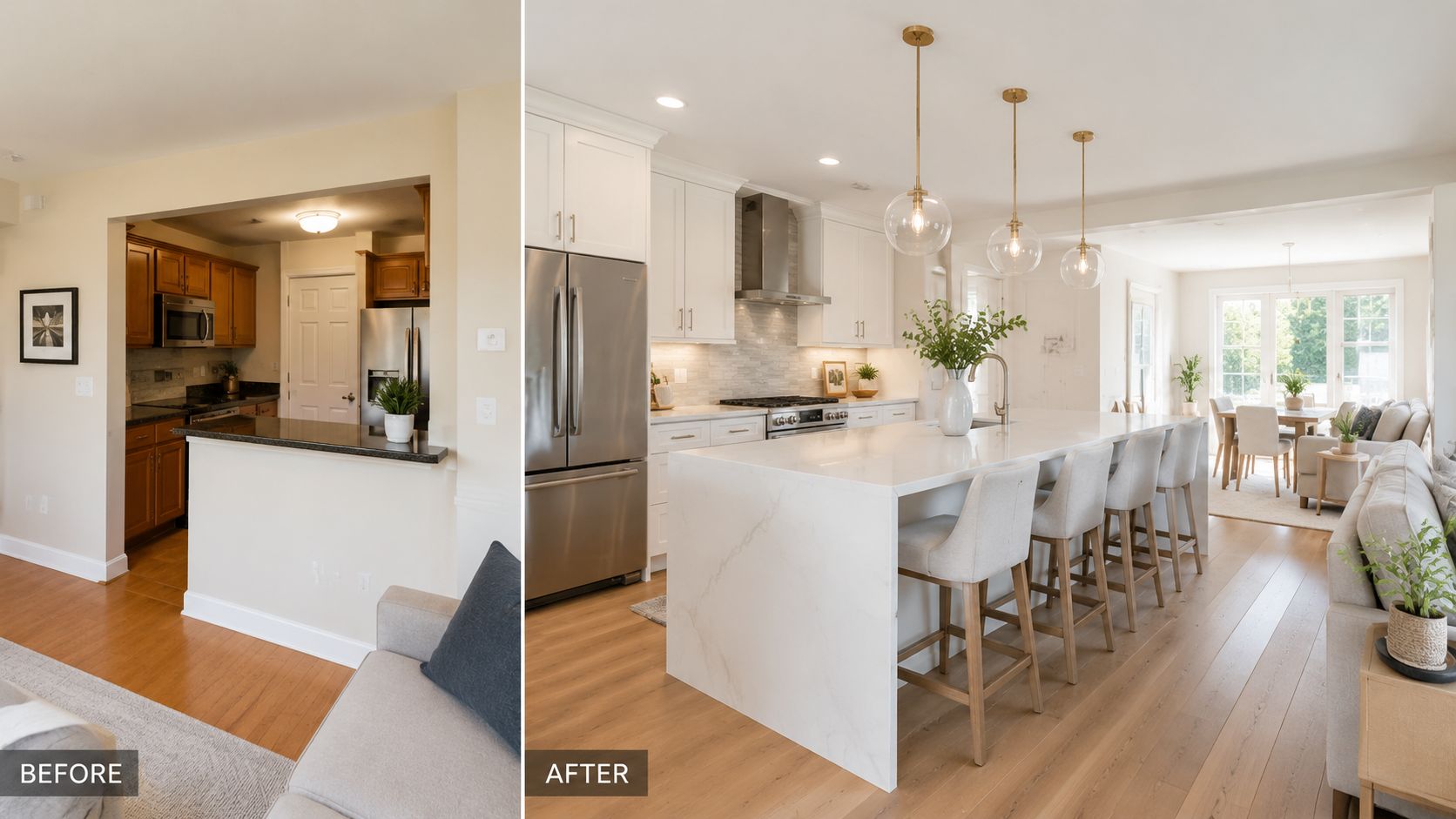
That is the kitchen remodel we see all over Greater Boston, especially in older Colonials, Tudors, and capes in Belmont, Arlington, and nearby towns. The problem is usually the plan, not the finishes. Our team often removes a partition wall, widens a cased opening, adds island seating, improves task lighting, and shifts appliances so the kitchen works with the dining or family area instead of fighting it. If you're comparing options for open concept living spaces, this type of project usually creates the biggest day-to-day improvement.
What changes in the after
The best results come from fixing how the first floor functions as a whole. One practical example shows that clearly. In this Arlington kitchen remodel case study, a walk-in closet became an upstairs laundry room, a formal dining room became a mudroom and drop zone, and the kitchen gained extra island seating to make up for lost dining space in a way that fit daily life better. That is how we evaluate these projects too. A strong before-and-after kitchen remodel improves circulation, storage, sightlines, and cleanup.
Cost depends on how much hidden work sits behind the walls. In Greater Boston, a cosmetic kitchen update is one budget. A true open-concept remodel is another. Once we move walls, add recessed lighting, relocate plumbing, upgrade circuits, patch flooring, and bring framing and insulation into line with current code, the price rises fast. Older homes in Cambridge, Newton, and the inner suburbs also bring surprises like undersized headers, uneven framing, and knob-and-tube wiring that has to be addressed before the finish work starts.
Island seating helps, but only when the room can support it.
Practical rule: If the island creates tight clearances or sends foot traffic through the cooking zone, we shrink it, reshape it, or skip it.
Timeline follows scope. A light kitchen refresh can move along quickly. A kitchen that opens walls and changes electrical, plumbing, HVAC, and inspections takes longer because the work has to be sequenced correctly and approved under 780 CMR and the local building department's permit process. In Boston's older housing stock, the after photo looks clean and simple. Getting there rarely is.
2. Second-Story Addition Bedroom and Bath Expansion
A second-story addition is one of the most dramatic before and after remodels we build in places like Medford, Lexington, and Melrose. Homeowners usually start with a house they like on a lot they can't easily replace. The problem is bedroom count, bathroom count, or the lack of a real primary suite.
These jobs are less about decorating and more about structure. We have to confirm what the existing foundation, framing, and bearing points can support. Then we coordinate engineering, roof removal sequencing, weather protection, stair integration, HVAC expansion, and full permit review through the local building department. If zoning limits setbacks or height, we may also need planning board or zoning board review depending on the town.
What to expect in Lexington MA and Medford MA
A typical Boston-area second-story addition often adds bedrooms, baths, closets, and mechanical space without taking away yard area. One documented retrofit from the IEA EBC shows how renovation can produce meaningful functional gains. In that case, heated floor area increased from 458 m² before renovation to 657 m² after renovation, a 43.4% expansion in usable heated space. That's a useful benchmark for understanding why an addition changes how a house lives, not just how it looks.
We tell homeowners to expect disruption. Once the roof comes off, sequencing matters. Temporary weather protection, framing inspections, mechanical rough-ins, insulation review, and finish coordination all need to stay on schedule. This is also where matching rooflines, siding profiles, trim details, and window proportions matters if you don't want the new level to look pasted on.
A realistic local budget is usually substantial. In Greater Boston, a second-story addition commonly lands well into six figures because it combines structural work, exterior envelope work, interior finishing, and often a full-floor reconfiguration below.
For a visual sense of the kind of transformation homeowners ask us about, here's a relevant project format:
- Structural review first: We don't price these seriously until we understand the existing framing and foundation.
- Mechanical coordination early: HVAC, plumbing chases, and electrical panel capacity should be resolved before framing starts.
- Temporary housing may be smart: Some families stay. Many prefer not to during the heaviest structural phase.
3. Master Bath Spa Renovation Luxury Upgrade from Basic 1980s Bath
A primary bath remodel in Winchester, Arlington, or Belmont often starts with the same complaints. The room is dark, the shower is undersized, storage is bad, and the ventilation never really handled moisture properly. The after isn't just a prettier room. It's a room that finally works every morning and doesn't trap humidity in the walls.
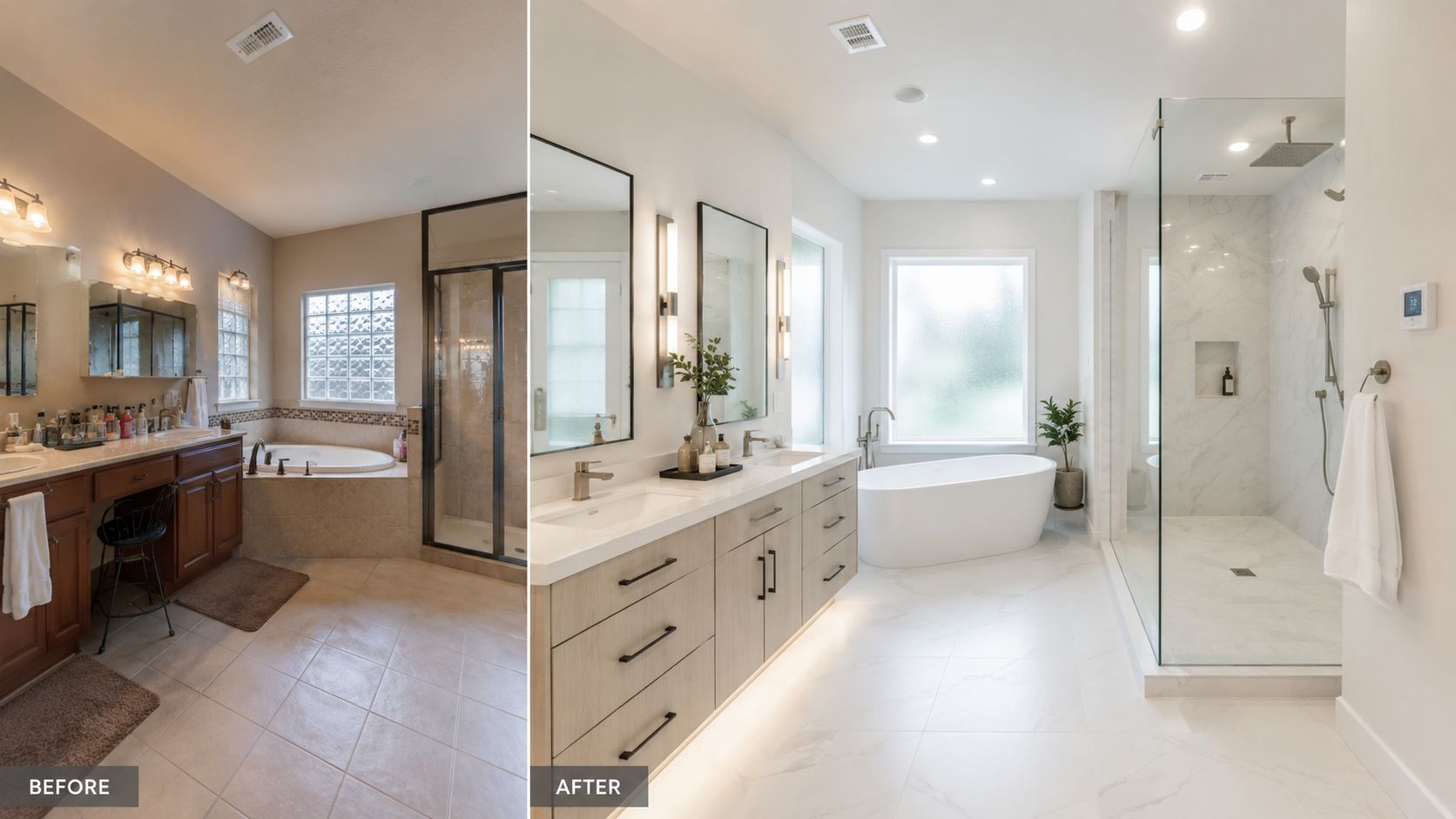
We usually see homeowners aiming for a larger shower, better lighting at the vanity, cleaner tile lines, and more useful storage. In older Massachusetts homes, though, the hard part is often hidden. We may need to reframe a wall for a niche, flatten an out-of-square floor, upgrade drain lines, replace old shutoffs, or vent the fan properly through the exterior instead of into an attic cavity.
What actually matters behind the tile
One of the biggest content gaps in before and after remodels is the hidden work behind the visible result. That's especially true in bathrooms and kitchens where the same final look can involve very different levels of structural correction, waterproofing, framing, and code work. This kitchen and bath design discussion of hidden structural interventions behind visible renovations captures the issue well. Homeowners deserve to know whether the dramatic reveal came from paint and tile, or from expensive behind-the-wall reconstruction.
Moisture control isn't a finish decision. It's a building-science decision.
In Massachusetts, bath remodels often require building, plumbing, and electrical permits when fixtures move or systems change. Venting, GFCI protection, waterproofing methods, and any structural modifications have to satisfy local inspectors under 780 CMR and related code sections. Heated floors, steam showers, and custom glass all add complexity. So do old houses with undersized joists, patched subfloors, or no straight walls anywhere.
For budgets, Boston-area primary bath remodels vary a lot based on footprint, tile selection, plumbing relocation, and whether we're borrowing space from an adjacent room. A refresh can be manageable. A true spa-style rework with layout changes, custom tile, radiant heat, and premium fixtures is a much bigger number.
4. Basement Finishing Converting Damp Unfinished Space into Livable Recreation Area
Basements in Cambridge, Medford, Wakefield, and Lexington often look straightforward until demolition starts. Then we find old moisture staining, poor insulation, low duct runs, patched slabs, or windows that won't satisfy egress if the homeowner wants a legal bedroom or guest suite.
That's why the best basement before and after remodels begin with water and air, not paint colors. If the space smells damp now, finishing over the problem won't fix it. It will hide it temporarily and make the eventual repair more expensive.
What works in Greater Boston basements
We usually start with exterior drainage review, foundation conditions, interior moisture management, insulation strategy, dehumidification planning, and headroom constraints. If the plan includes sleeping space, office use, or any path to an in-law setup, code issues matter immediately. Egress, smoke and CO protection, ceiling heights, stair geometry, and mechanical access all come into play under 780 CMR and local inspection practice.
A lot of homeowners search for basement finishing Cambridge MA and assume the visible after is the hard part. It isn't. The hard part is getting the shell right so the finished room stays dry and comfortable through humid summers and wet freeze-thaw cycles.
If you're evaluating bedroom or suite potential below grade, review basement egress window requirements before the design is locked. Egress location affects excavation, window well layout, grading, and interior room planning.
- Skip carpet in most basements: We usually recommend more moisture-tolerant finish flooring.
- Plan access around equipment: Don't bury shutoffs, cleanouts, or service panels behind finished walls.
- Solve bulk water first: Interior finishes won't compensate for exterior water management problems.
A realistic local budget depends on whether the job is basic recreation space or a more complex legal living area with a bath, kitchenette, or separate access. The timeline also changes fast once excavation, egress cuts, or significant mechanical work are part of the scope.
5. Outdoor Living Addition Deck Patio and Pergola for Year-Round Entertainment
Some of the best before and after remodels aren't inside the house at all. In Arlington, Belmont, and Winchester, we regularly build outdoor spaces because homeowners want more usable living area without the cost and disruption of a full addition.
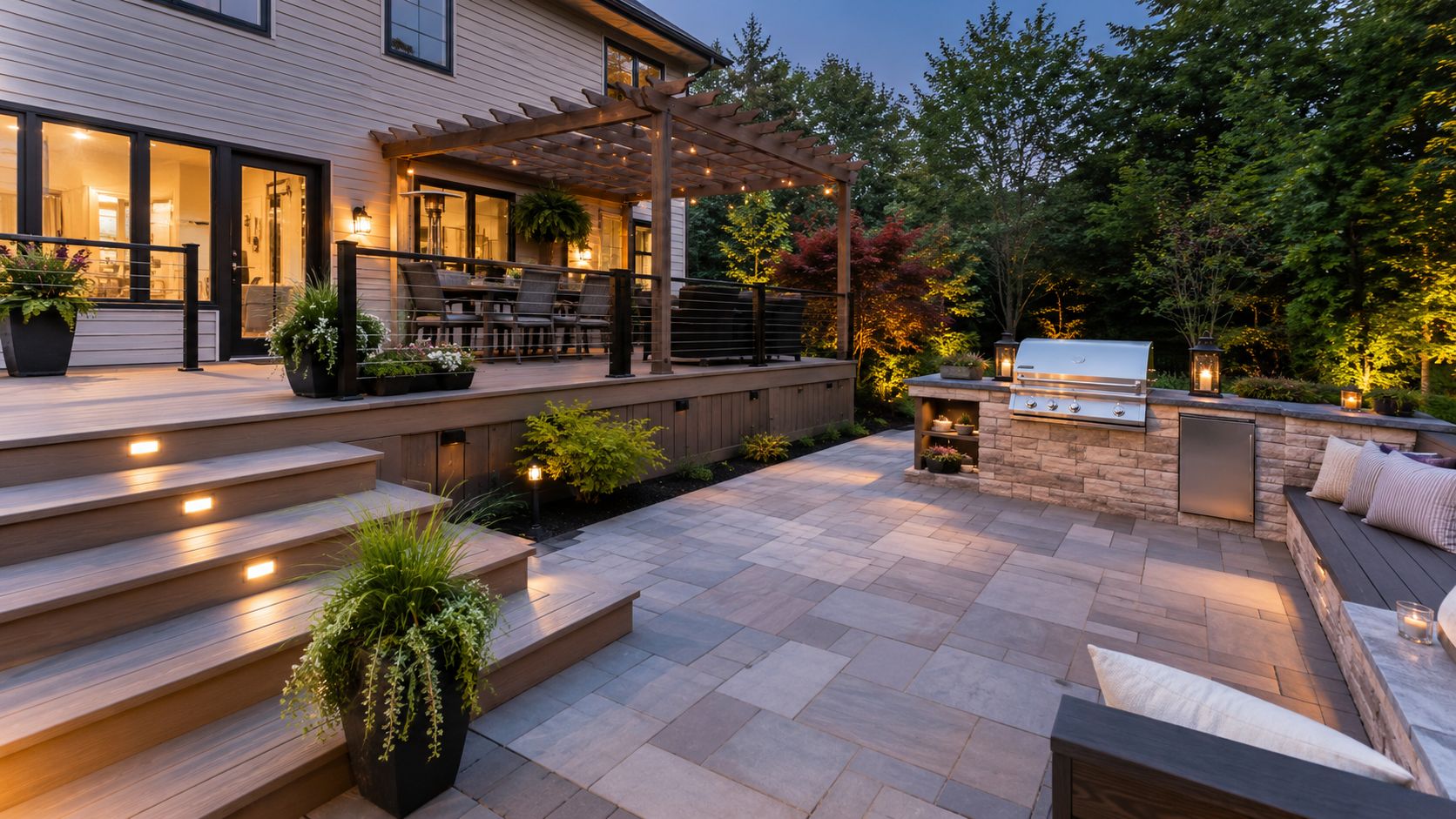
The difference between a good result and a disappointing one usually comes down to grading, circulation, and how the space connects back to the house. A deck that feels stranded above the yard or a patio that collects runoff won't get used the way homeowners imagined. We look at stairs, landing zones, drainage, privacy, lighting, grill location, and snow-season practicality before we think about decor.
Where Boston-area projects go wrong
A lot of failed outdoor projects were designed for photos, not New England weather. In this market, low-maintenance materials matter, but drainage matters more. Composite decking, properly flashed ledger connections, durable rail details, and site grading are what keep the after looking good.
The outdoor kitchen isn't the centerpiece if you can't move around it comfortably with people, chairs, and hot food in play.
Permits are often required for decks depending on height, structure, and attachment method. Setbacks and lot coverage can also trigger zoning review, especially in tighter neighborhoods. For homeowners who want inspiration beyond New England styles, this example of transforming Northern Arizona backyards with outdoor living shows how much the usability of a yard depends on function, not just finishes.
In Greater Boston, outdoor living budgets range from simple platform decks to multi-level structures with patios, pergolas, masonry, lighting, and integrated cooking areas. The more grade change and drainage correction involved, the more important preconstruction planning becomes.
6. ADU Addition Creating Multigenerational Living or Rental Income
ADUs are one of the most practical before and after remodels we handle because the result isn't just more space. It's flexibility. We build them for aging parents, adult children, long-term guests, live-in help, and homeowners who want a legal independent living area.
The form varies. In one town it may be a basement conversion with a separate entry. In another it may be a garage conversion, an over-garage addition, or a ground-level side addition. The design has to work with the lot, the existing structure, and the local zoning framework.
Permit requirements for ADUs in Massachusetts
Homeowners need local guidance, not generic internet advice. ADU rules vary by municipality. Zoning can affect size, parking, setbacks, owner occupancy issues, entrances, and use limitations. Then the construction itself has to comply with the MA State Building Code, 780 CMR, plus plumbing, electrical, fire separation, ventilation, and egress requirements where applicable.
We handle that coordination because the sequence matters. A homeowner can spend money on plans that look good and still hit a wall if the zoning path wasn't checked first. If you're exploring layouts, entries, or conversion paths, our guide to ADU options and benefits is a useful starting point.
A practical ADU also needs good daily boundaries. Separate access, acoustic control, heating and cooling strategy, laundry placement, and privacy between units all matter. The best version feels intentional, not like someone squeezed a kitchenette into leftover square footage.
Boston-area budgets vary widely here because the difference between a basic in-law fit-out and a fully independent legal dwelling can be substantial. Utility upgrades, fire-rated assemblies, excavation for egress, and town-specific zoning work all affect cost and timeline.
7. Whole-Home Renovation Comprehensive Modernization of Aging Colonial or Cape
A lot of whole-home jobs start with a house that has been patched for 20 or 30 years instead of properly updated. We see that all the time in Cambridge, Newton, Arlington, and Wellesley. The kitchen was redone once, a bath got a quick refresh later, the boiler changed at some point, and none of those decisions were made as part of one plan. The result is a house that still feels hard to live in, even after plenty of money has already gone into it.
A full-scale renovation pulls those disconnected fixes into one coordinated project. That can include kitchen and bath renovation, insulation upgrades, electrical replacement, HVAC improvements, window work, structural reframing, stair changes, basement updates, and in some cases a targeted addition. In older Colonials and Capes, our team also looks closely at what should remain. Original trim profiles, stair proportions, hardwood flooring, and exterior detailing often matter just as much as the new finishes.
How we plan whole-home remodels in Cambridge MA and Newton MA
Older housing stock needs a different process because the visible work is rarely the hard part. The hard part is correcting what is behind the walls so the new layout performs properly. As noted earlier in the article, older homes consistently require more repair and system coordination than newer houses. That matches what we handle every week across Greater Boston.
The first real decision is scope. Some homeowners need a selective house-wide update with better flow, code corrections, and mechanical improvements. Others are closer to a gut renovation because the wiring is outdated, insulation is poor, framing has been altered over time, and the floor plan no longer fits how the family lives. Those are very different projects with very different permit paths under 780 CMR.
In Cambridge and Newton, permit strategy can affect schedule as much as construction itself. Structural changes, insulation upgrades, stair geometry, smoke and CO compliance, egress, and energy code requirements all need to be handled in the right sequence. If the project includes moving bearing walls or reworking multiple systems at once, we coordinate those reviews up front so the job does not stall halfway through demolition.
Good before and after results at this level are measured in daily function. Better circulation. Quieter rooms. Lower drafts. More useful storage. A cleaner mechanical layout. That matters more than a polished photo set, which is one reason this article focuses on real project types instead of acting like a gallery. Havenly makes a fair point in its article on how makeover content often misses livability and resale outcomes, and we see that gap often in older homes that looked updated but still had poor flow and weak system performance.
Material choices also change when the scope is this large. Homeowners may want a consistent finish palette across the house, but they still have to choose products that fit each room's moisture level, maintenance needs, and wear pattern. For bath areas or mudroom-adjacent spaces, it helps to review expert advice on travertine tile applications before final selections are locked in.
A few rules keep these projects under control:
- Start with existing conditions: We inspect framing, moisture history, wiring, plumbing, insulation, and any signs of past shortcut work before final pricing.
- Phase decisions early: Layout, structure, and system changes need to be settled before finish selections start driving the schedule.
- Carry a realistic contingency: Old houses in Greater Boston often reveal hidden rot, undersized framing, or outdated utility work after demolition begins.
Budget ranges here can move fast because one discovery affects several trades. A house-wide update with selective structural work sits in a very different range than a near-gut renovation with new systems throughout. Once permits, inspections, temporary protection, and multiple trade schedules are involved, the best-run projects are the ones with a clear scope, disciplined allowances, and room in the budget for what older houses tend to reveal.
8. Bathroom Modernization Converting Cramped Outdated Bath to Contemporary Space
One of the most common calls we get starts with a bath that technically works, but nobody likes using it. In a triple-decker in Somerville or a 1950s house in Medford, that usually means a tight layout, weak lighting, dated tile, and a fan that never kept up with steam. The best result is not a flashy showroom bath. It is a room that feels bigger, dries out properly, and fits how the household lives. For finish planning, especially when homeowners are comparing stone looks against maintenance and slip resistance, it helps to review travertine tile bathroom applications before locking in materials.
These projects look simple from the outside, but the hard part is usually hidden in the walls and floor. We often find old galvanized lines, undersized wiring, patchwork plumbing, or subfloor damage around the toilet and tub. In Greater Boston, even a modest bath update can trigger code and permit questions under 780 CMR, especially if we are changing fixture locations, opening structural framing, or correcting wet-area work that was done poorly years ago.
Bathroom remodeling in Medford MA and Somerville MA
Homeowners looking for bathroom remodeling Medford or bathroom renovation Somerville should pay close attention to how a contractor handles venting, waterproofing, and inspections. Those decisions decide whether the room holds up for fifteen years or starts showing mold, cracked grout, and soft trim much sooner. We often help homeowners compare options for bathroom remodeling Medford and bathroom renovation Somerville when they want a clearer scope before hiring.
A typical before-and-after here is practical. We remove an oversized vanity, replace a seldom-used tub with a properly sized shower, add recessed lighting or a better vanity fixture, and improve storage without crowding the door swing or toilet clearance. A few inches gained at the shower entry or vanity edge can change the whole room.
In a small bathroom, inches matter more than expensive materials.
We also talk through the resale question. As noted earlier in the article, clean, well-executed updates help a home show better, but that does not mean every bathroom should be renovated like a luxury primary suite. In many Medford and Somerville homes, the right move is a durable hall bath upgrade with better moisture control, easier cleaning, and a layout that stops wasting space.
Cost depends on scope more than square footage. A straightforward cosmetic update stays in a different budget range than a full gut job with new tile backer, relocated plumbing, corrected framing, and permit sign-offs. In Greater Boston, those differences also affect schedule. A simple refresh may move quickly once materials are on site, while a true modernization can stretch if demolition exposes water damage or older work that needs to be brought up to current code.
Before & After Remodels: 8-Project Comparison
| Project | 🔄 Implementation Complexity | ⚡ Resources & Time (cost & duration) | 📊 Expected Outcomes (impact) | ⭐ Key Advantages | 💡 Ideal Use Cases / Tips |
|---|---|---|---|---|---|
| Kitchen Renovation: Open Concept with Island Seating | Moderate–High: wall removal, utility relocation, permit navigation | $85K–$150K; 12–16 weeks; skilled cabinetry/appliance installation | Improves flow, natural light; ~8–12% home value uplift | Modern entertaining layout, improved storage & workflow | Plan island for work triangle, ensure strong ventilation, budget 15–20% contingency |
| Second-Story Addition: Bedroom & Bath Expansion | High: structural engineering, foundation reinforcement, extended permitting | $200K–$350K; 16–24 weeks (construction 4–6 months) | Adds 1,000–1,500 sq ft; value increase ~60–80% of addition cost | Maximizes land use, adds bedrooms/master suite without losing yard | Hire experienced structural engineer, upgrade HVAC, plan temporary living arrangements |
| Master Bath Spa Renovation | Moderate: plumbing/electrical upgrades, moisture control required | $35K–$75K; 6–10 weeks; specialty fixtures and tile work | Luxury appeal; ~3–5% home value increase; high buyer interest | Enhanced comfort, moisture prevention, high-end finishes | Invest in ventilation and water-resistant materials; consider radiant floors |
| Basement Finishing: Livable Recreation Area | Moderate–High: waterproofing, egress, possible structural constraints | $40K–$80K; 8–12 weeks; includes dehumidification & insulation | Adds usable sq ft; typical value gain $15K–$50K; flexible use | Large usable area gain without losing yard; good ROI for family space | Install perimeter drainage first, avoid carpet, size HVAC for below-grade use |
| Outdoor Living Addition: Deck, Patio, Pergola | Low–Moderate: grading, drainage, local permits | $30K–$75K; 6–10 weeks; materials suited to freeze–thaw climates | Extends living area ~20–30%; value ~50–80% of cost | Enhances curb appeal and entertaining, low maintenance options available | Use composite decking, permeable pavers, plan grading away from foundation |
| ADU Addition: Multigenerational or Rental Unit | High: zoning variability, separate utilities, code compliance | $100K–$200K; 12–20 weeks; may need separate meters & entrances | Generates rental income ($1.5K–$2.5K/mo); increases value 5–20% | Supports multigenerational living and recurring income | Verify town ADU rules early, plan separate utilities and clear egress |
| Whole-Home Renovation: Comprehensive Modernization | Very High: full systems replacement, extensive permits, possible relocation | $200K–$500K+; 20–36 weeks; multi-trade coordination required | Major value increase 25–40% of cost; 20–30% energy savings possible | Solves structural/systemic issues; modernizes entire home | Start with detailed inspections, budget 15–20% contingency, phase to reduce displacement |
| Bathroom Modernization: Contemporary Update | Low–Moderate: plumbing/electrical, ventilation improvements | $12K–$30K; 4–8 weeks; modest materials and fixtures | Improves daily function; ~3–5% value increase; high ROI (70–80%) | Affordable, fast aesthetic and functional upgrade | Maximize space with compact fixtures, prioritize ventilation and light colors |
Planning Your Own Before and After Story in Greater Boston
The biggest mistake homeowners make is assuming the visible after tells the whole story. It doesn't. In Arlington, Cambridge, Belmont, Newton, and across Greater Boston, the best remodels are the ones that solve the hidden problems while improving the visible ones. Better framing, safer wiring, proper venting, code-compliant egress, smarter circulation, and cleaner transitions between old and new are what make a project hold up.
We also encourage homeowners to think in terms of function first. A remodel should answer daily-life questions. Where do coats and backpacks land? Can two people cook at once? Does the bathroom clear moisture fast enough? Is the basement dry enough to finish? Can an addition be integrated without creating awkward rooflines or underpowered heating and cooling? Those are the questions that shape successful before and after remodels.
In Massachusetts, planning matters because permits and inspections aren't optional details. Structural changes, additions, ADUs, basement bedrooms, relocated plumbing, major electrical work, and many deck projects all trigger some level of building department review. Under 780 CMR and local enforcement, rough inspections and final inspections need to be sequenced properly, and zoning review may come first depending on the town and the scope. We handle that coordination for homeowners so the project doesn't stall between design intent and construction reality.
Budgets also need honesty. Some remodels are cosmetic. Others only look cosmetic until demolition reveals framing repairs, moisture damage, outdated systems, or layout constraints that have to be corrected. That's why we prefer detailed scope development, realistic allowances, and direct conversations about trade-offs early. It saves time, protects the schedule, and leads to fewer surprises once work starts.
Aureli Construction is one local option for homeowners who want a design-build team that manages planning, permitting, and construction together across the Greater Boston area. If you're comparing contractors, ask each one the same practical questions: who is handling permits, who is coordinating inspections, how are allowances set, how are change orders approved, and what hidden conditions are most likely in your type of house. The answers will tell you a lot.
Frequently Asked Questions about Remodeling in Massachusetts
1. How are unexpected costs and change orders handled?
We build a contingency into the budget for older homes because surprises are common once walls and floors open up. If we find hidden rot, outdated wiring, or a framing issue, we stop, document it, explain the options, and issue a written change order before proceeding.
2. Do I need to move out during the remodel?
It depends on the scope. Many bathroom, basement, and smaller remodeling projects can be done while you stay in the house with dust protection and work-zone separation. For major kitchen remodels, second-story additions, or whole-home renovations, temporary housing is often the more practical choice.
3. Who handles the building permits and inspections?
We do. As a Massachusetts licensed general contractor, Aureli Construction coordinates permit applications, schedules rough and final inspections, and works with local building departments across Greater Boston to keep projects aligned with 780 CMR and local requirements.
4. How realistic are the timelines you provide?
We base timelines on actual local permitting, procurement, and construction sequencing. Weather, inspection timing, and material lead times can still affect the calendar, but we build the schedule around the actual project rather than an idealized one.
Ready to get started on your own before-and-after story? Contact Aureli Construction for a free estimate at homeadditionma.com.
Ready to plan your own remodel in Arlington, Cambridge, Belmont, Lexington, Medford, Newton, Wellesley, or nearby? Contact Aureli Construction for a free estimate and a practical review of scope, permits, budget, and timeline.