
Garage door and entry door replacements post some of the highest pure resale percentages in recent cost-vs-value reporting, but for most Greater Boston homeowners, kitchens and well-planned additions are the strongest broad value candidates because they change how the house lives and how buyers judge it. In current reporting, a midrange minor kitchen remodel has been shown at about 107.2% ROI, while major kitchens drop much lower, which is why scope matters as much as room choice.
In Cambridge and Belmont, that surprises people. Homeowners often assume the biggest project adds the most value, but that's rarely how it works in older Massachusetts housing stock. The better answer to what home renovations add the most value is that different projects create different kinds of value. Some boost resale appeal fast. Some fix layout problems that hold a house back. Some make the home work for another decade, which matters just as much if you're not selling soon.
We rank projects the way we see them in the field at Aureli Construction: by balancing resale appeal, lifestyle value, neighborhood fit, cost, construction risk, and permit complexity. That means looking at kitchens, additions, bathrooms, basements, ADUs, and energy work through a Greater Boston lens, not a national-average lens. It also means checking 780 CMR, local zoning, insulation and moisture issues, and whether the finished product fits the street and price band.
If you're comparing options, start with home additions, kitchen remodels, bathroom renovations, basement finishing, and ADU construction, then read this ranking as a planning tool rather than a guarantee. Exact cost depends on structure, access, finishes, utility upgrades, and town review. For another regional perspective on exterior-first value thinking, this roundup of best upgrades for Long Island homeowners is worth a look.
Table of Contents
- 1. Kitchen Remodeling in Newton MA
- 2. Kitchen Renovation in Medford MA
- 3. Home Addition Costs in Cambridge MA
- 4. Bathroom Remodeling in Medford MA
- 5. Basement Finishing Cambridge MA
- 6. Permit Requirements for ADUs in Massachusetts
- 7. Energy-Efficient Home Improvements in Cambridge MA
- 8. Master Suite Additions in Newton MA
- 9. Permits and Inspections for Home Renovations in Greater Boston
- 9 Home Renovations: Value & ROI Comparison
- Choose the Renovation That Fits Your Home
1. Kitchen Remodeling in Newton MA
Kitchen remodels create value faster than almost any other interior project in Greater Boston, but only when the scope fits the house, the block, and the likely buyer. In Newton, that usually means separating resale value from lifestyle value before drawings start. A smart kitchen can help both. An oversized, overfinished one often helps daily life more than resale.
Independent reporting on the 2025 Cost vs. Value results put a midrange minor kitchen remodel at about 107.2% ROI, while major kitchen remodels were about 49.0% and upscale major kitchens about 34.9% 2025 kitchen ROI reporting. That spread matches what we see in the field. Smaller, disciplined upgrades tend to hold value better. Full gut remodels still make sense, but usually for function first.
In Newton, the question is what the existing house is fighting you on. Many older colonials, capes, and two-families have tight work aisles, weak lighting, poor ventilation, too little landing space near appliances, and storage that never matched how people cook now. Those issues hurt resale because buyers notice them right away. They also hurt daily use, which is why kitchens rank high even when the return percentage is not the highest in the article.

What drives value in a full kitchen remodel
The best full kitchen remodels fix planning problems, not just finishes. In Newton, that often means better circulation to the mudroom or dining room, a correctly sized island, deeper pantry storage, and lighting that was laid out before the cabinet order, not after. We would rather put money into cabinet function, venting, and electrical capacity than spend it on statement materials that photograph well but do little for use or appraisal support.
Cost matters here because kitchens get expensive fast once the walls open. A cosmetic refresh is one budget band. A full remodel that moves plumbing, updates wiring, adds recessed lighting, upgrades service for new appliances, and patches structure is another. The return usually drops when the finish level jumps far past nearby comparables, especially if the rest of the house still shows its age.
That is the over-improvement trap.
Newton buyers expect quality, but they still compare your kitchen to the size of the lot, the condition of the baths, the age of the windows, the school district, and the asking prices nearby. A kitchen with custom walnut interiors, commercial-grade appliances, and imported slab stone can make sense in the right house. In a modest home surrounded by simpler renovations, it often shifts dollars into lifestyle value more than resale value.
Permit scope is another dividing line. If the project changes plumbing, gas, wiring, mechanicals, or structure, expect permit review and inspections. That affects cost, schedule, and sequencing. It also affects design decisions early, because range location, hood routing, beam work, and circuit planning are easier to solve on paper than after demolition starts.
For homeowners comparing scope, our team put together a practical guide to ROI Return on Investment focused kitchen renovations.
A full kitchen remodel in Greater Boston also takes coordination that homeowners often underestimate. Cabinet lead times, appliance specs, field measurements, temporary kitchen setup, rough inspections, countertop templating, and finish carpentry all have to land in the right order. When that sequence slips, the project usually gets longer and more expensive.
Questions homeowners ask before hiring for a kitchen
- Can we live at home during the remodel: Usually yes, if you can handle a temporary sink, microwave, and refrigerator setup in another room. Families with young kids often find the disruption harder than the dust.
- Do we need permits if the layout stays the same: Often yes. Hidden electrical corrections, new lighting, replacement windows in the kitchen, gas work, and plumbing updates can still trigger permit requirements.
- What causes change orders: Water damage, out-of-plumb framing, old knob-and-tube or undersized circuits, asbestos-related surprises, and owner finish changes are the common ones in older Newton homes.
- How do we protect resale value: Keep the layout simple, storage strong, finishes durable, and the finish level in line with comparable homes. Solve the room first. Decor comes second.
A short look at the construction side helps too.
2. Kitchen Renovation in Medford MA
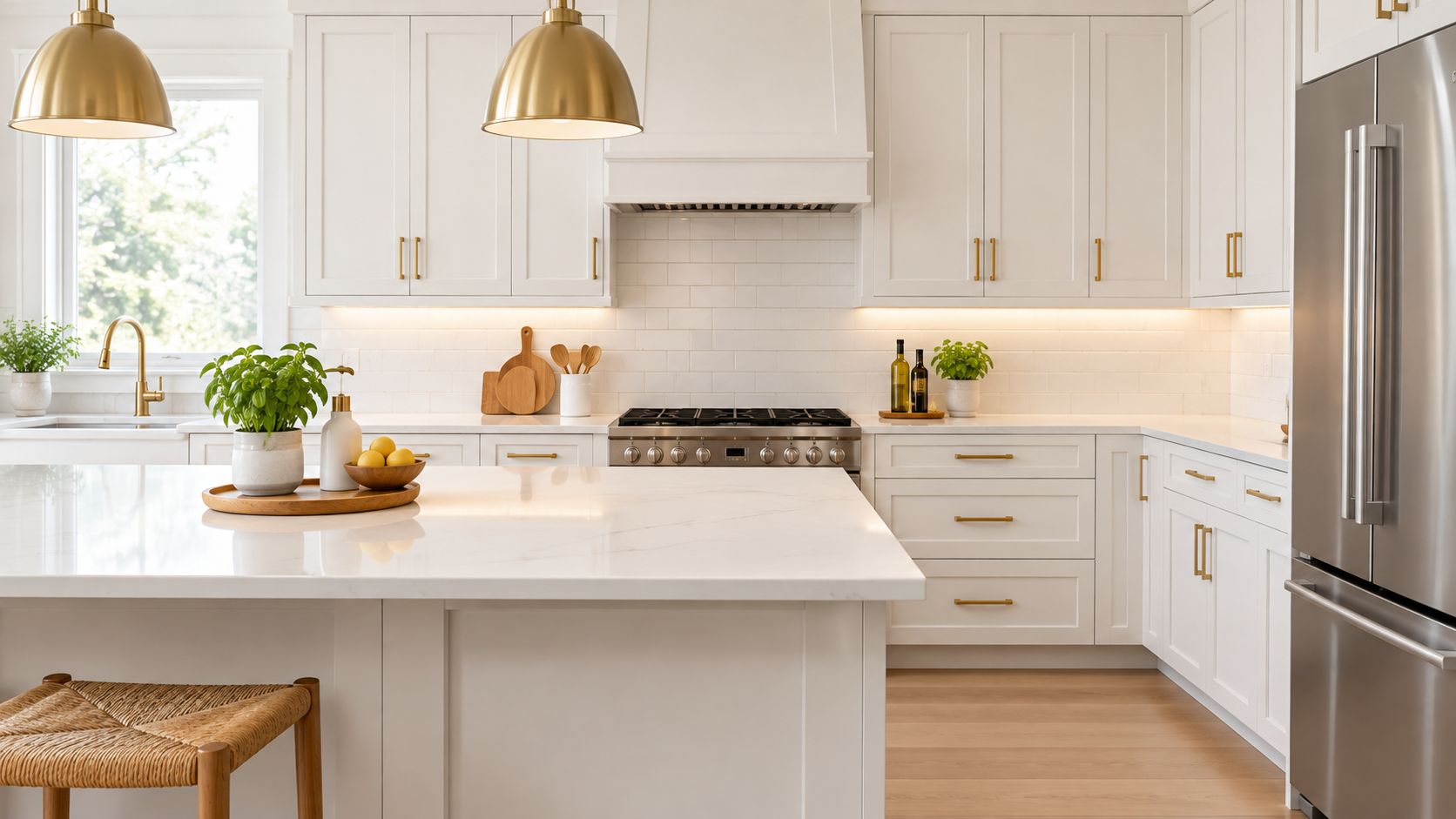
Sometimes the best kitchen project isn't a gut remodel. It's a disciplined refresh. In one 2026 ranking, a minor kitchen remodel was shown at about 95% ROI, while a major upscale kitchen remodel was around 40% ROI, which tracks with what we see when homeowners overspend relative to the neighborhood 2026 kitchen value ranking.
That's why kitchen renovation Medford projects often do well when the bones are serviceable. If cabinet boxes are solid, the layout works, and utilities don't need to move, new counters, backsplash, hardware, lighting, flooring, and select appliance upgrades can change the whole room without the cost and downtime of a full rebuild.
For homeowners searching kitchen remodeling medford or kitchen remodeling contractor medford, this is usually the fork in the road. A refresh works when the problem is visual fatigue. It doesn't work when the sink is in the wrong place, storage is poor, or the room has old wiring hidden behind the walls.
When a refresh beats a rebuild
We recommend a refresh when you want cleaner resale presentation, lower disruption, and tighter scope control. It's also a smart option in two-family and condo situations where structural work or major vent rerouting is harder.
Before finishes go in, we still check the hidden work. If a backsplash comes off and we find outdated wiring, unprotected circuits, or plumbing corrections, it's better to fix those before the walls are closed. Massachusetts inspections don't care whether the job started as cosmetic if covered systems were changed.
Practical rule: Spend first on the problems buyers and appraisers actually notice. Poor lighting, worn counters, dated flooring, and weak storage beat trend finishes every time.
If you're comparing local options, homeowners looking for kitchen remodeling medford should ask whether the contractor distinguishes clearly between cosmetic scope and rough-in scope. That's where budgets either stay under control or fall apart.
Quick hiring questions for a kitchen refresh
- How long does a refresh take: Shorter than a gut remodel, but schedule still depends on material lead times and whether hidden corrections appear.
- Do I need a permit for new cabinets and counters only: Not usually for like-for-like finish work alone, but often for electrical, plumbing, gas, or structural changes.
- Should I reface or replace cabinets: Depends on box condition, door style, hinge quality, and whether the storage layout still works.
- Can I add an island during a refresh: Only if circulation, power, and code clearances work.
3. Home Addition Costs in Cambridge MA
When a house is short on bedrooms, bathrooms, mudroom space, or family living area, an addition often creates more value than another round of finish upgrades. That's especially true in Cambridge, Belmont, Brookline, Newton, and Somerville, where moving can cost more than improving the house you already own.
A major point that many renovation lists miss is square footage. UK-based reporting citing Nationwide found that adding additional floorspace can add 13% to the value of a two-bedroom home, and as much as 24% to a three-bedroom, one-bath home when the addition includes a large double bedroom and bathroom reporting on value of added floorspace. Different market, same underlying lesson. If the home is under-supplied relative to the neighborhood, added space can beat cosmetic upgrades.
For anyone looking for a home addition contractor Boston MA, the challenge isn't just building more space. It's building the right space, legally and proportionally.
How we plan your home addition in Newton MA
We start with the lot and the existing structure. Setbacks, lot coverage, height, foundation capacity, roof tie-ins, drainage, and exterior matching all matter before design gets too far. In Massachusetts towns, some additions move through straightforward permit review, while others trigger zoning relief, board review, or special permit discussions.
A good addition also has to survive New England weather. Snow load, ice management, insulation continuity, flashing, and water control around old-to-new connections matter more than most homeowners expect. A bad tie-in can wipe out the value of an otherwise attractive new space.
- Best addition candidates: Bedroom additions, family rooms, mudrooms, second-story expansions, and office space that solves a real layout deficiency
- High-risk mistakes: Oversized additions that dominate the original house, cheap exterior matching, and underplanned HVAC and drainage
- Value discipline: Keep the addition consistent with neighborhood expectations and the home's architecture
Added square footage creates value when it fixes a market problem. Extra space for its own sake is harder to justify.
If you're weighing this path, start with our home addition services. We handle design-build coordination, permitting, and sequencing across Cambridge, Belmont, Lexington, Medford, Melrose, Wakefield, Wellesley, and nearby towns.
Common addition questions
- Will zoning stop the project: Sometimes. Setbacks, lot coverage, and height are the usual pressure points.
- Do we need engineering: Yes for most structural additions.
- Can we live in the house during the work: Often yes for phased additions, but not always.
- What slows the schedule: Zoning review, structural revisions, utility upgrades, and long-lead materials.
4. Bathroom Remodeling in Medford MA
Bathroom remodels punch above their size in resale. In Medford's older homes, buyers notice a bad bath in seconds. Weak ventilation, stained grout, a cramped vanity, or a shower that feels improvised can make the whole house feel less cared for.
National cost-versus-value reporting has consistently put midrange bathroom remodels near the top tier for payback, including a JLC summary of the annual Remodeling cost vs. value findings that cited roughly 79.9% for a midrange bath remodel. That lines up with what we see locally. Bathroom remodeling Medford projects tend to hold value well when the scope fixes function first and keeps finish choices in line with the house.
A bathroom that adds value usually does three jobs at once. It controls water, improves daily use, and looks current without chasing luxury trends that do not fit the neighborhood.
What to expect from a bathroom remodel in Medford MA
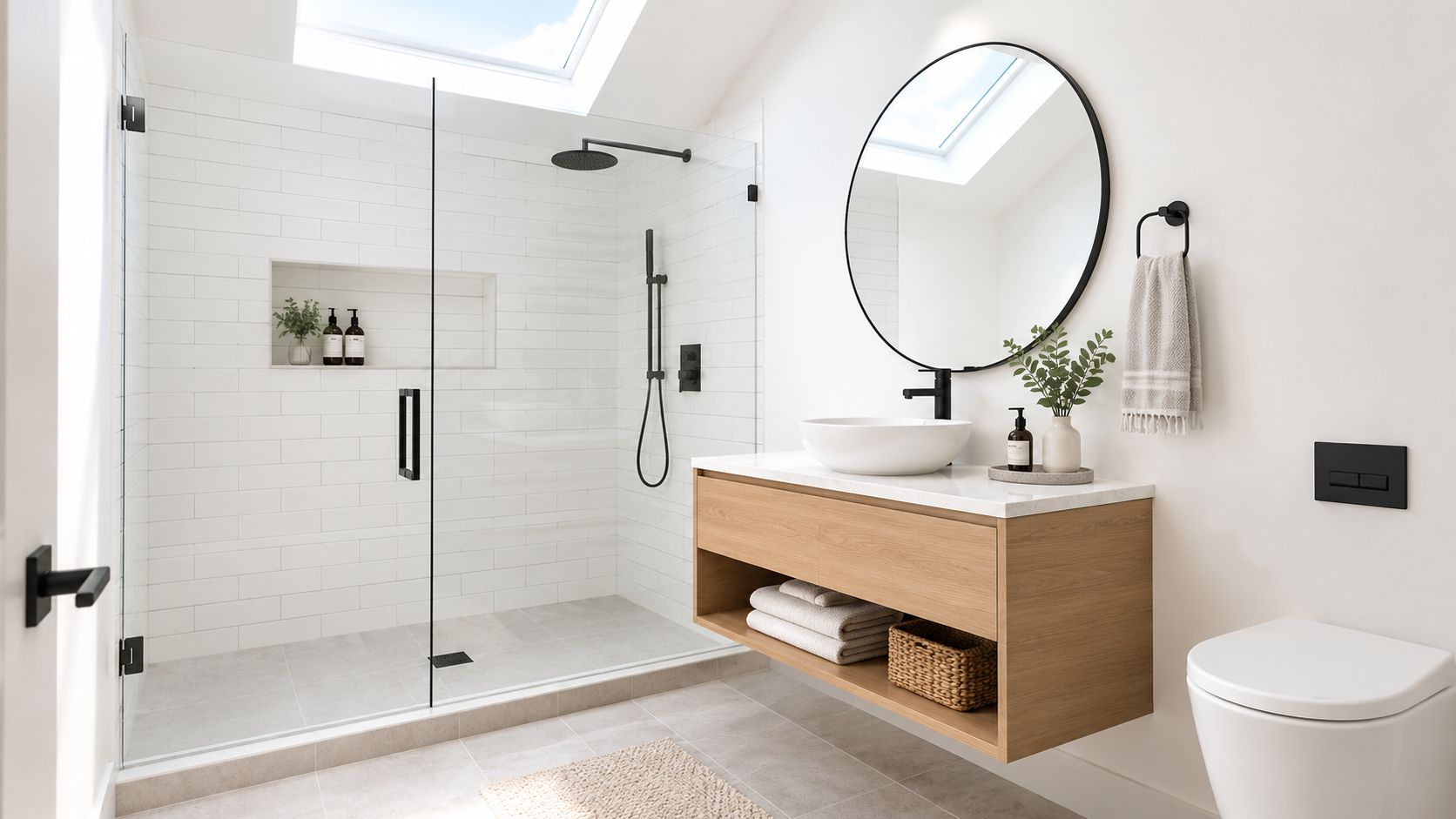
In Medford, a cosmetic bath update and a true remodel are priced very differently. A surface-level job might cover paint, fixtures, vanity, top, lighting, and limited tile repair. A full gut usually includes demolition, waterproofing, new tile, plumbing updates, electrical work, finish carpentry, and often surprise repairs once the walls are open. In older Greater Boston houses, those surprises are common. We regularly find out-of-level framing, old cast iron or galvanized lines, and subfloor damage around tubs and toilets.
The highest-value layouts usually keep the toilet, tub, and shower close to existing plumbing locations. Moving drain lines can make sense, but only when the current layout wastes space or fails basic function. In a small hall bath, better value often comes from a deeper vanity, a properly sized medicine cabinet, a niche that does not cut into exterior insulation, and a quiet fan vented to the exterior, not the attic.
Local housing type matters here. A two-bath Colonial in Medford may benefit more from improving the main family bath than from loading a primary bath with heated floors, body sprays, and custom glass. In a compact condo, storage and ventilation usually matter more than premium finishes. That is the difference between resale value and lifestyle value. Some upgrades make daily life better but do little for market price.
Code and permit checkpoints are easy to underestimate in a small room. Rewiring triggers electrical requirements such as GFCI protection and proper circuiting. New or relocated plumbing can trigger venting and inspection issues. If you open exterior walls, insulation and air sealing details come into play, which matters in our climate. Wet-area waterproofing is one place to spend carefully. A leak behind tile is expensive and slow to fix.
- Good candidates for value: Hall baths, powder rooms, and primary baths with poor storage, weak lighting, or failing tub and shower layouts
- Worth paying for: Waterproofing, quality valves, exterior-vented exhaust fans, durable tile, and lighting at the mirror
- Usually not worth it: Steam showers, oversized soaking tubs, and high-end specialty fixtures in modest homes that will not support the premium
If you're pricing the work, homeowners comparing bathroom remodeling medford or asking how much does a bathroom remodel cost Medford should separate a cosmetic update from a full gut. They are different scopes, with different permit paths, different risk, and different resale logic.
Bathroom hiring questions
- Can I keep one bathroom working during the job: Usually, if the house has another bath and the schedule is phased carefully.
- Does a new fan need a permit: Often yes, especially if the work includes wiring or new exterior venting.
- What causes budget creep: Hidden rot, plumbing updates inside walls, tile pattern changes, and fixture selections made after rough-in.
- Should I add an ensuite: Sometimes. It tends to make sense when the house is short on bathroom count for the price point and the floor plan can support it without hurting bedroom function.
5. Basement Finishing Cambridge MA
Basements can add serious day-to-day value, but only if the lower level is dry, legal, and comfortable. We've walked plenty of Cambridge and Belmont basements that had nice flooring and fresh paint over unresolved moisture, low insulation, or weak mechanical planning. That never ends well.
The practical appeal is obvious. You're using space you already own. The caution is just as obvious in Massachusetts. Ceiling height, egress, electrical protection, insulation, and moisture control aren't optional details. They determine whether the space feels like a true part of the house or just an expensive basement.
Where basement value really comes from
The best basement finishing Cambridge MA projects solve a shortage upstairs. Family room, office, workout area, guest zone, play space, or a legal bedroom with proper egress if the structure supports it. We address drainage, slab moisture, wall assembly, and dehumidification before we talk trim details.
A finished basement also sits in a gray zone for some homeowners who really want an ADU or rental setup. That's where local zoning and occupancy rules matter. Not every finished lower level can become a separate dwelling unit.
Before you count it as added lifestyle square footage, read our guide on whether finished basements count in square footage.
Dry first, finish second. If the basement still takes on moisture, every finish choice is on borrowed time.
Basement questions we hear all the time
- Do basements need permits to finish: Usually yes when you're creating habitable space or changing systems.
- Can we add a bathroom: Often yes, but plumbing layout and ejector needs can change scope.
- Can we stay in the house: Usually yes, with good dust control and a separate work route.
- What's the biggest mistake: Treating the basement like above-grade space and skipping moisture planning.
If basement space is the only realistic way to grow, it can be one of the smartest moves in an older Greater Boston house. Just don't let finish choices get ahead of water management.
6. Permit Requirements for ADUs in Massachusetts
ADUs can create flexible value that standard ROI charts don't capture well. They can support aging parents, adult children, guests, hybrid work, long-term flexibility, or rental use where local rules allow it. That's why homeowners asking what home renovations add the most value increasingly bring up ADUs even when resale isn't the immediate goal.
The most useful framing comes from broader 2025 to 2026 coverage noting that low-cost exterior projects lead pure resale percentages, while bigger projects like basement finishes, ADUs, or additions may be the better economic decision for households focused on rental income, added bedrooms, or long-term usability cost versus value perspective on household goals. That's exactly right.
What makes ADUs different
ADUs are less forgiving than standard remodels because zoning, occupancy, utilities, egress, fire separation, and parking questions can change the entire job. A basement apartment, detached cottage, garage conversion, or upper-level in-law suite all carry different code and permitting implications.
In Massachusetts, permit applications for covered work must be filed before work begins, and work covered by 780 CMR requires the permit to be obtained before starting except ordinary repairs Massachusetts code on filing permits before work begins. For ADUs, that matters because homeowners often underestimate how early zoning and code review should happen.
- Best ADU use cases: Multigenerational living, future caregiver space, legal guest quarters, and long-term flexibility
- Common blockers: Parking constraints, lot limitations, utility separation issues, and town-specific zoning review
- Smart first step: Feasibility before design development
If you're exploring this route, review our Massachusetts ADU laws guide and our ADU construction services.
The best ADU projects start on paper, not with demolition.
ADU questions homeowners ask
- Are ADUs allowed by right: It depends on the municipality and the property.
- Can a basement become an ADU: Sometimes, but not automatically.
- Does an ADU always add resale value: It can add strong utility value, but the right fit depends on the house and town.
- Should I design for family or rental first: Decide that early because layout and code priorities can diverge.
7. Energy-Efficient Home Improvements in Cambridge MA
Energy work rarely gets the same attention as kitchens, but in older Cambridge, Brookline, and Somerville homes, it can change comfort more than any finish upgrade. Drafts, poor attic insulation, old windows, weak ventilation, and oversized or aging mechanical systems all drag on how the house performs.
The mistake is doing this in the wrong order. We recommend air sealing and insulation first, then HVAC sizing, then targeted window or equipment upgrades if the house still needs them. If you replace mechanicals before reducing leakage and heat loss, you can end up paying for the wrong system.
Value beyond resale percentages
Exterior-envelope improvements have been shown to recover strongly in resale-oriented rankings. A 2026 renovation ROI ranking listed manufactured stone veneer at roughly 150%, fiber-cement siding near 90%, and garage door replacement at about 102% cost recovery 2026 exterior renovation ranking. That doesn't mean every homeowner should chase veneer or siding first, but it does confirm that visible condition and building-envelope confidence carry weight.
Inside the house, we treat energy upgrades as part comfort project, part durability project, part future resale support. Better insulation, improved ventilation, tighter air sealing, and properly planned equipment can also protect kitchens, baths, and additions from moisture problems.
For design details around custom exterior openings and envelope decisions, this custom fenestration guide from Black Badge Doors adds useful perspective.
- Do first: Air sealing, insulation review, roof condition review, bath and kitchen exhaust strategy
- Do carefully: Window replacement, siding, exterior trim, and mechanical replacement sequencing
- Avoid: Buying new equipment before understanding the envelope
Common questions on energy upgrades
- Do these projects need permits: HVAC, electrical, siding, and some window or solar work often do.
- Should I replace windows first: Not always. Draft control and insulation may matter more.
- Can energy work pair with an addition or remodel: Yes, and that's often the best time to sequence it.
- Will buyers notice: They may not see every detail, but they usually feel comfort and notice a well-maintained envelope.
8. Master Suite Additions in Newton MA
A master suite addition can create strong lifestyle value in the right house. Privacy, closet space, a real ensuite, better sound separation, and HVAC zoning all matter to today's buyers, especially in larger homes in Newton, Wellesley, Brookline, and Lexington.
This project ranks below a general addition because it's more specialized. It can be the right move if the house lacks a true primary suite and the local market expects one. It can also be an over-improvement if the house is modest, the addition crowds the lot, or the finish package outruns neighborhood standards.
How we plan your master suite addition
We treat this like a blend of addition and bath renovation. Structural loads, stair logic, egress, plumbing runs, venting, and sound control all get handled at the design stage. Then we calibrate the finish level. A suite can feel high-end without turning into a custom hotel room that won't be fully valued on resale.
The bathroom portion still has to function first. Good shower layout, durable tile, vanity storage, and layered lighting usually do more for long-term value than rare stone or complicated built-ins.
Luxury value is strongest when the suite feels like it always belonged in the house.
- Worth emphasizing: Closet storage, natural light, quiet, and a restrained spa-like bath
- Watch closely: Rooflines, window placement, privacy from neighbors, and HVAC zoning
- Don't overdo: Excessive square footage or ultra-custom finishes that narrow buyer appeal
Questions on master suite additions
- Is a suite addition better than a general bedroom addition: If the local market expects a primary suite, often yes.
- Will it trigger zoning review: Sometimes, especially with footprint expansion or height changes.
- Can it go over a garage: Often, but structure and stair layout need review.
- Does it need separate bath permits too: Yes when plumbing, electrical, ventilation, and structural work are involved.
9. Permits and Inspections for Home Renovations in Greater Boston
Permits protect value. In Greater Boston, a renovation with missing permits or failed inspections can hurt resale faster than a mediocre finish package.
That shows up all the time in this market. A buyer sees a removed wall with no structural record, a finished basement with a bedroom that may not meet egress rules, or an in-law setup that was never approved as a legal dwelling. The work may look finished, but the risk carries into appraisal, disclosure, insurance questions, and closing negotiations.
Massachusetts requires permits for a wide range of residential work, including many alterations, repairs, and changes that affect structure, systems, use, or occupancy under the state building code and permit rules in 780 CMR and related Massachusetts building regulations.
What we coordinate across Greater Boston towns
Our team works with local building departments across Belmont, Brighton, Brookline, Burlington, Cambridge, Lexington, Medford, Melrose, Newburyport, Newton, Reading, Somerville, Stoneham, Wakefield, and Wellesley. The sequence changes by town, but the practical review points are consistent. Check zoning first. File permits before work starts. Call inspections at the right stages. Close permits at the end and keep the paperwork.
That approval path affects value just as much as finishes in some projects.
A basement finish may need egress review, ceiling height review, smoke and CO compliance, and sometimes questions about legal habitable space. An addition can trigger setback, lot coverage, height, drainage, or historic review. An ADU or in-law conversion can raise use and occupancy questions before anyone talks about tile, cabinets, or paint.
- Before design gets locked: Verify setbacks, lot coverage, district rules, and whether the project changes use or occupancy
- Before walls close: Schedule framing, electrical, plumbing, gas, insulation, and mechanical inspections as required by the permit set
- Before final payment: Confirm finals are signed off and keep permit records for resale, refinancing, and future work
Unpermitted work often costs more to fix than homeowners expect, because opening finished surfaces for inspection is expensive.
Permit questions homeowners ask
- Can a handyman pull permits for this work: Sometimes for limited scope, but many projects require licensed trade permits and general contractor coordination.
- Do all towns handle this the same way: No. The state code framework is shared, but local forms, review timing, board approvals, and inspection scheduling vary.
- What if old unpermitted work is discovered: The town may require investigation, selective demolition, corrections, or revised plans before the new project can proceed cleanly.
- Who schedules inspections: We handle that as part of construction management, because timing matters. Miss an inspection point and the job can stall or finished work may need to be opened back up.
9 Home Renovations: Value & ROI Comparison
| Item | Implementation Complexity 🔄 | Resource Requirements ⚡ | Expected Outcomes ⭐ / 📊 | Ideal Use Cases 💡 | Key Advantages |
|---|---|---|---|---|---|
| Kitchen Remodels: The ROI Champion | High 🔄🔄🔄, layout changes, permits (building/electrical/plumbing/gas); 8–16 weeks | High cost $50K–$150K+; skilled trades, design + permitting coordination | High ROI 50–70%; strong buyer appeal; major functional/appearance gains 📊 | Sellers seeking max resale value; homeowners needing workflow reconfiguration | Broad market appeal; immediate functional improvement; energy savings with modern appliances |
| Kitchen Remodels: Modest Updates and Refreshes | Low–Medium 🔄🔄, mostly cosmetic; permits only if mechanical/structural work | Moderate $25K–$50K; limited trades; short lead time | Good ROI (reported 60–70% for modest updates); fast visual uplift 📊 | Preparing to sell soon; budget-conscious owners; cosmetic refreshes | Lower cost and disruption; quick timeline; high visual impact |
| Home Additions: Expanding Living Space and Value | Very High 🔄🔄🔄🔄, zoning review, structural engineering, foundation/roof tie‑in; 4–8 months (+ zoning 2–6 months) | Very high $100K–$300K+; permits, engineer, multiple trades, potential special permits | Substantial ROI 60–80% (neighborhood-dependent); adds usable sqft and value 📊 | Families needing space, avoiding move, adding bedrooms/offices | Creates above‑grade sqft; flexible uses; significant long‑term value |
| Bathroom Renovations: Small Space, High Impact | Medium 🔄🔄, waterproofing, plumbing/electrical rough-ins; 3–8 weeks | Moderate $15K–$60K; plumbing/electrical, waterproofing, fixtures | Strong ROI 50–70%; improves comfort and moisture control 📊 | Updating dated baths, adding ensuites, improving resale appeal | High impact for small footprint; relatively short timeline |
| Basement Finishing: Unlocking Hidden Square Footage | Medium–High 🔄🔄🔄, moisture/drainage, egress, code for habitable space; 8–12 weeks | $30K–$80K; waterproofing, egress windows, HVAC extension, permits | ROI 30–50%; adds 800–1,200 sq ft livable space; rental potential 📊 | Homes with usable below‑grade space; add family room or rental suite | Lower cost/ft² than above‑grade addition; increases usable area and income potential |
| Accessory Dwelling Units (ADUs): Flexible Housing Value | Very High 🔄🔄🔄🔄, zoning/special permits common; occupancy inspections; 6–14 months | High $80K–$200K+; separate utilities/HVAC, permitting, design | ROI 50–70%; potential rental income; adds $60K–$150K+ in value 📊 | Multigenerational living, rental income, flexible future use | Flexible long‑term uses; strong upside where zoning permits |
| Energy Efficiency & Green Updates: Lasting Appeal | Medium 🔄🔄, audit then sequenced upgrades; permits for HVAC/solar; 4–12 weeks | $20K–$60K; HVAC, insulation, windows, solar; rebates/tax credits available | 50–80% ROI (measure-dependent); 15–40% annual energy savings 📊 | Reduce operating costs, improve comfort and marketability | Lower bills, incentives availability, improved IAQ and resilience |
| Master Suite Additions: Targeted Luxury Value | Very High 🔄🔄🔄🔄, structural and zoning constraints; several months | $80K–$180K; structural work, high‑end finishes, plumbing/electrical | ROI 60–75%; increases luxury appeal and value ($75K–$150K+) 📊 | Luxury market positioning; owners wanting private retreat | High perceived luxury; strong appeal to affluent buyers |
| Permits & Code Compliance: Protecting Renovation Value | Medium 🔄🔄, variable by project; zoning can extend to 2–6+ months | Time/fees; licensed professionals (architect/engineer/trades); inspection scheduling | Reduces legal/resale risk; enables safe, code‑compliant occupancy 📊 | Any project requiring approvals; pre‑construction planning | Ensures safety, resale/financing compatibility; avoids stop‑work and costly remediation |
Choose the Renovation That Fits Your Home
The right answer to what home renovations add the most value isn't a one-size-fits-all list. It's a decision about fit. A kitchen often gives the broadest combination of daily-use improvement and buyer appeal. An addition can create more total value when the house is missing the space the neighborhood expects. Bathrooms, basements, ADUs, energy upgrades, and master suites all make sense when they solve a real problem in the home instead of just adding finish cost.
The strongest pattern in the available data is simple. Small, targeted improvements often outperform oversized luxury scope on pure resale percentage, and visible exterior upgrades can post unusually strong recoup rates. But that doesn't mean every homeowner should start with a garage door or front door. In Greater Boston, layout, legal living space, moisture control, and permit-ready execution often matter more to long-term value than the highest percentage on a generic list.
When we evaluate a project, we look at five things first.
- Existing condition: Hidden water damage, old wiring, dated plumbing, or weak structure can change the best use of the budget.
- Neighborhood expectations: Don't underbuild for a strong market, but don't over-improve past what the street supports.
- Permit and zoning path: 780 CMR, setbacks, occupancy rules, and town review can make one option far easier than another.
- Time horizon: Selling soon calls for a different scope than staying for ten years.
- Sequencing: Layout, drainage, insulation, venting, and code corrections come before premium finishes.
For many homeowners, the smartest action plan is to compare a few realistic paths side by side. A full kitchen versus a targeted kitchen refresh. A basement finish versus an addition. A bathroom upgrade versus a future ADU. That's where real planning starts. You're not just choosing a room. You're choosing where the next construction dollar has the best job to do.
If you're in Belmont, Brighton, Brookline, Burlington, Cambridge, Lexington, Medford, Melrose, Newburyport, Newton, Reading, Somerville, Stoneham, Wakefield, or Wellesley, we can help you sort that out. Aureli Construction is a Massachusetts licensed general contractor, and we handle design-build planning, permitting, and construction for home additions, kitchen remodels, bathroom renovations, basement finishing, and ADU projects. We'll help you weigh scope, town approvals, buildability, and neighborhood fit without promising a resale return that no contractor can guarantee.
Use this ranking as a planning framework. Then match the project to the house you have, the town you're in, and the way you expect to live there.
Aureli Construction helps Greater Boston homeowners plan value-focused additions, kitchens, bathrooms, basements, and ADUs with real attention to permitting, sequencing, and neighborhood fit. If you want a practical opinion on which renovation makes the most sense for your house in Cambridge, Belmont, Newton, Medford, or nearby towns, visit Aureli Construction to request a free estimate.