
A minor kitchen remodel is usually the strongest financial play if resale matters. National Cost vs. Value data shows a minor kitchen remodel averaging $28,458 with $32,141 in estimated resale value added, or 112.9% cost recouped, while a midrange major kitchen remodel returns 51% and an upscale major remodel returns 36%.
In Arlington, Cambridge, Newton, and across Greater Boston, that gap matters even more because our construction costs are high, permit requirements are real, and it's easy to overspend on a kitchen that feels amazing but doesn't come back at sale. Most homeowners we meet are in the same spot. They like their neighborhood, they're tired of the dated cabinets and bad lighting, and they want to know whether a kitchen renovation is a smart move or an expensive detour.
A good roi kitchen remodel starts with one decision. Are you trying to improve resale, improve daily life, or do both without wasting money? In this market, the answer usually isn't a full gut unless the existing kitchen is severely failing the house.
Table of Contents
- Is a Kitchen Remodel a Smart Investment in the Boston Market?
- Defining Kitchen Remodel ROI Cost Recouped vs. Personal Value
- Minor vs. Major Kitchen Remodels ROI in Greater Boston
- Strategies to Maximize Your Kitchen Renovation ROI
- What to Expect Our Kitchen Remodeling Process in Cambridge, MA
- Aureli Construction In Action Two Local Kitchen Remodels
- Frequently Asked Questions About Kitchen Remodeling in Boston
- What kind of kitchen remodel has the best ROI?
- How much does a kitchen remodel cost in Greater Boston?
- Do I need permits for a kitchen remodel in Massachusetts?
- Can we live in the house during the remodel?
- How do change orders work?
- How do we compare kitchen remodeling contractors in towns like Medford, Arlington, or Newton?
Is a Kitchen Remodel a Smart Investment in the Boston Market?
In Brookline or Newton, we often hear the same thing. “We love the house, but the kitchen is dragging everything down.” That's usually followed by the harder question. “If we spend real money on this, will we get it back?”
Sometimes yes. Sometimes not.
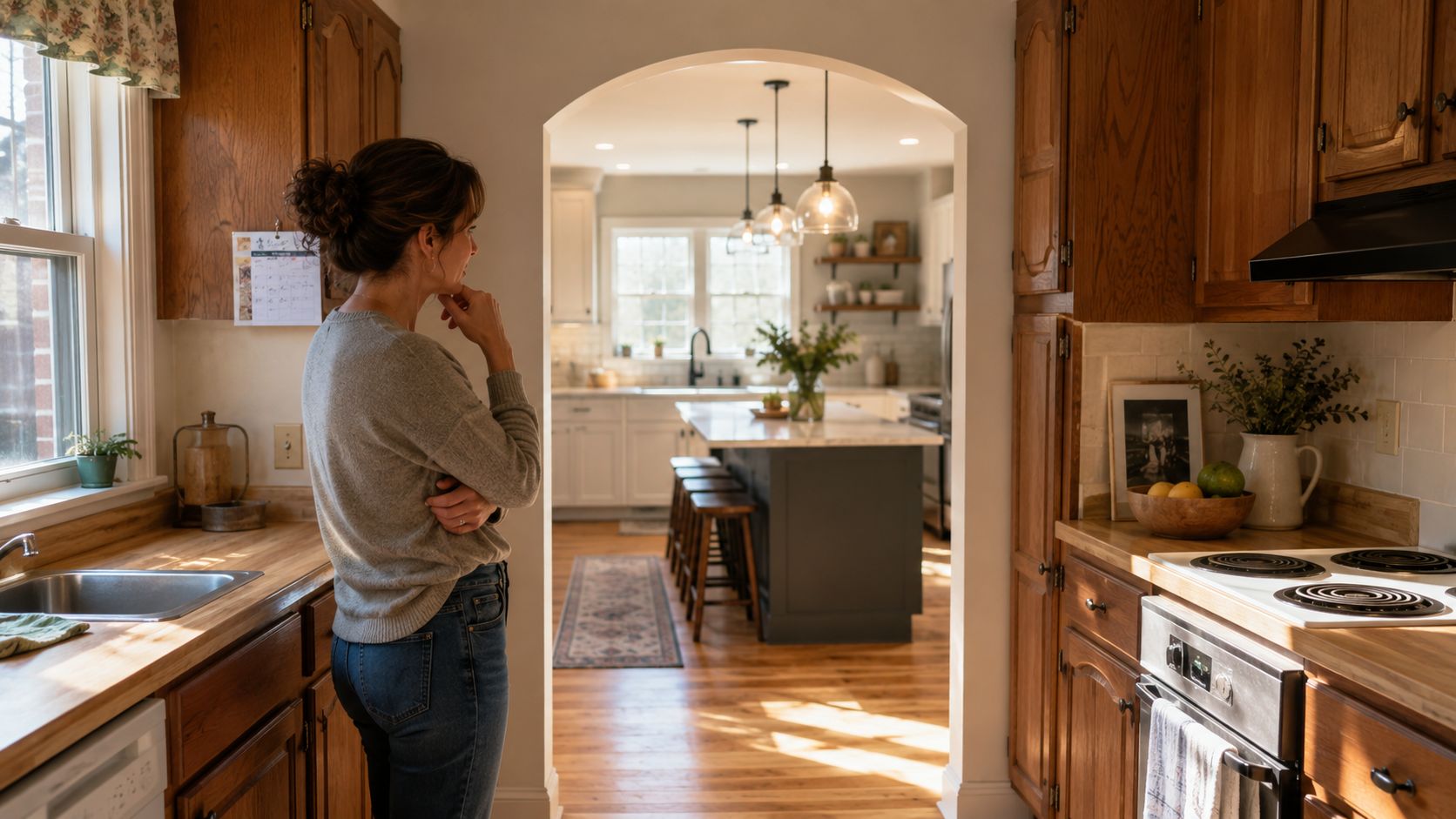
A kitchen remodel is a smart investment when the scope matches the house, the neighborhood, and your timeline. In Greater Boston, that usually means resisting the urge to tear everything out just because the space feels old. If the layout basically works, a focused update often makes more financial sense than a complete rebuild.
We've seen this in Cambridge triple-deckers, Belmont colonials, and Somerville condos. The kitchens that deliver the best return usually solve obvious problems first. Worn cabinet fronts. Poor task lighting. Tired counters. Not enough storage. Mismatched appliances. Those are visible improvements buyers and appraisers understand quickly.
Practical rule: If you can improve function and appearance without moving walls, plumbing, or major electrical runs, you're usually closer to a strong return.
There's also a local code and permit side to this. Once a project moves into structural work, layout changes, or new mechanical locations, the job gets more expensive and more complex. Under the Massachusetts State Building Code, 780 CMR, kitchen remodels that involve framing, plumbing, electrical, or structural changes generally require permits and inspections. In towns like Cambridge, Arlington, and Lexington, that can affect schedule, budget, and how much disruption you live with during construction.
For homeowners comparing kitchen remodeling Arlington, kitchen remodeling Lexington, or a broader kitchen remodel Greater Boston project, the question isn't whether kitchens matter. They do. The question is what kind of kitchen investment makes sense for your house.
Defining Kitchen Remodel ROI Cost Recouped vs. Personal Value
Homeowners use the word ROI in two different ways, and it helps to separate them before making decisions.
Financial ROI
Financial ROI means how much of your remodeling cost is reflected in resale value. That's the number people usually want when they ask whether a kitchen renovation is “worth it.” It matters if you plan to sell in the near future, refinance, or want to protect the value of one of your biggest assets.
In practical terms, financial ROI rewards restraint. Recent market commentary notes that targeted upgrades like keeping the layout, improving storage, upgrading counters or backsplash, and adding layered lighting tend to outperform expensive layout changes because they deliver immediate usability and broad buyer appeal. The best return may come from not fully customizing the kitchen.
That lines up with what we see locally. Buyers usually pay for a kitchen that feels clean, functional, and current. They don't reliably pay extra for every premium decision a homeowner made behind the walls or in boutique finishes.
Personal ROI
Personal ROI is different. It's the value you get from using the space every day.
That can mean better prep space, a cleaner traffic pattern, deeper drawers instead of bad lower cabinets, lighting that works at the counters, or a layout that lets more than one person cook without colliding. If you're staying long term, personal ROI can matter more than resale math.
A homeowner planning to age in place may choose wider clearances, more accessible storage, or easier-to-reach appliances. A family in Medford might prioritize seating, durable surfaces, and stronger workflow over perfect resale efficiency. Those are still smart decisions if they fit how the house is used.
A remodel can be the right move even when it won't produce the highest resale percentage. The mistake is spending for one goal while expecting the results of the other.
The strongest projects balance both. In a kitchen renovation Somerville condo, that might mean preserving the footprint but improving every finish and storage detail. In a custom kitchen Newton project for a long-term homeowner, it may mean accepting a lower financial return in exchange for a much better daily experience.
Minor vs. Major Kitchen Remodels ROI in Greater Boston
The biggest mistake Boston-area homeowners make is assuming more spending means more value. In kitchen remodeling, that usually isn't true.
What the national ROI data actually tells you
The strongest resale economics come from a limited-scope update, not a full gut. The 2025 and 2026 Cost vs. Value data shows that a minor kitchen remodel has a national average cost of $28,458, an estimated resale value of $32,141, and 112.9% cost recouped. By contrast, a midrange major kitchen remodel recoups 51%, and an upscale major kitchen remodel recoups 36%, as outlined in Zillow's kitchen remodel ROI summary.
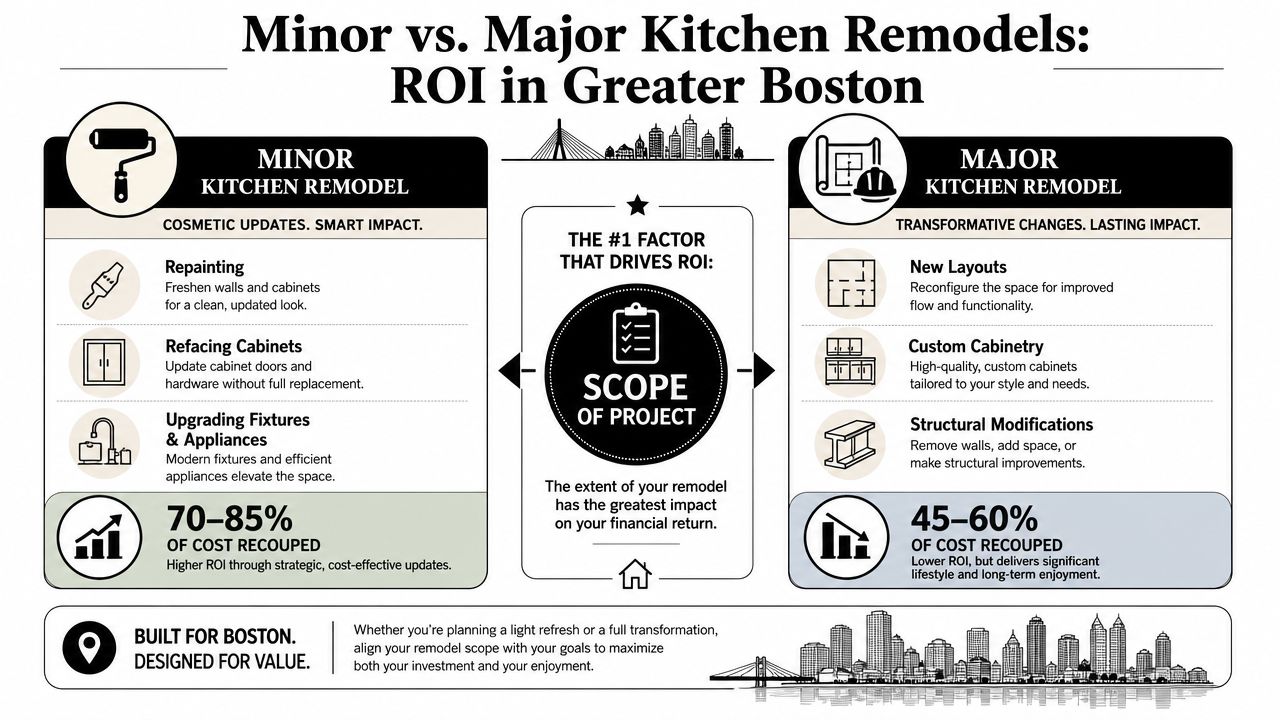
That's the core secret behind a smart roi kitchen remodel. Scope matters more than spend.
Here's the simple comparison:
| Remodel scope | National average cost or return | What drives the result |
|---|---|---|
| Minor kitchen remodel | $28,458 cost, $32,141 resale value, 112.9% recouped | Existing layout stays, visible updates do the work |
| Midrange major kitchen remodel | 51% recouped | Structural and systems costs rise fast |
| Upscale major kitchen remodel | 36% recouped | Customization outpaces what buyers will pay |
What those scopes look like in Greater Boston
Local reality is an important factor. A “minor” remodel in Cambridge, Arlington, or Belmont doesn't feel minor on the check you write. Greater Boston labor rates, older housing stock, parking logistics, permit coordination, and material costs push budgets up fast.
For many homes here, a modest kitchen refresh can still be a serious project. Think cabinet refacing or painting, new hardware, quartz counters, tile backsplash, updated sink and faucet, better lighting, appliance replacement, finish flooring, and trim and paint. That's often the sweet spot for homeowners searching kitchen remodeling Belmont, kitchen remodeling Medford, or kitchen renovation Arlington.
A major remodel is different. Once you start moving walls, relocating drains, revising gas lines, opening ceilings, or replacing all cabinetry with custom millwork, the percentage return usually drops even if the end result looks far better.
In Greater Boston, the financial risk isn't that a major remodel looks bad. It's that the project cost climbs faster than resale value can keep up.
This is especially true in older homes where the kitchen sits in the middle of deeper issues. We open walls and find uneven framing, old wiring, patchwork plumbing, or floor transitions that have to be corrected to meet code and finish cleanly. Under 780 CMR, plus local plumbing and electrical permit requirements, those changes trigger more trade coordination and inspections.
If you're comparing a kitchen remodeling contractor Medford quote to a custom kitchen Wellesley quote, the right question isn't just price. It's whether the scope supports your goal. If you're selling soon, controlled scope usually wins. If you're staying and the current kitchen is seriously deficient, a major remodel can still make sense. Just don't expect the same resale percentage.
Strategies to Maximize Your Kitchen Renovation ROI
The highest-return kitchens aren't the flashiest. They're the ones where every dollar solves a problem buyers can see and homeowners use every day.
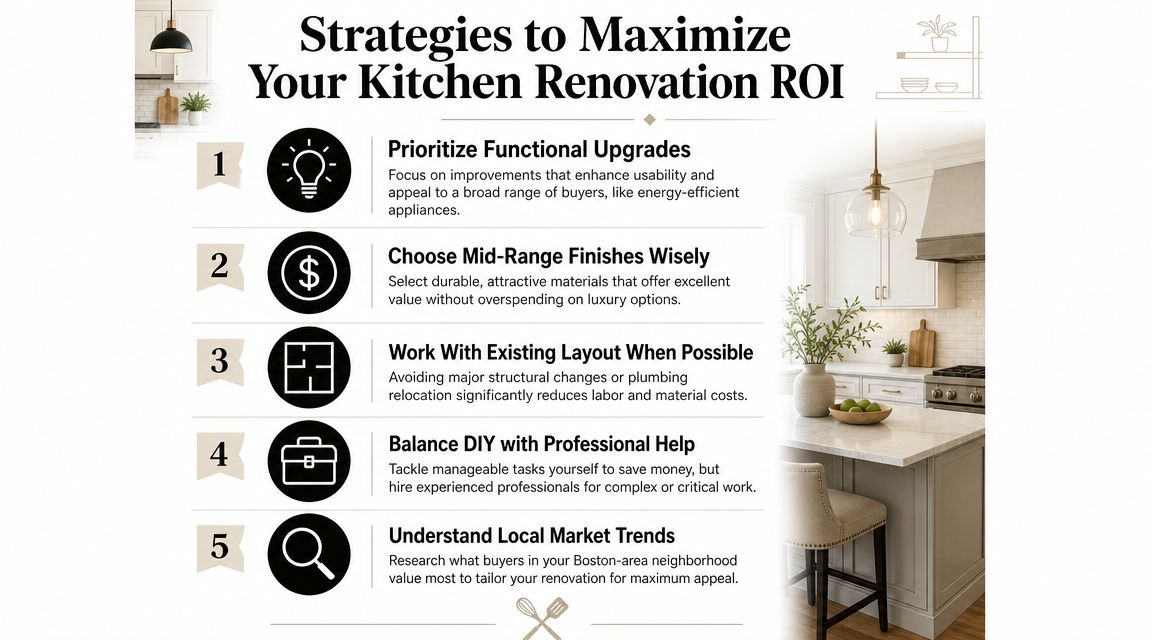
Spend on what buyers notice and use
A good rule is to invest in visible function. Industry guidance notes that the best return usually comes from cabinet refacing or painting, countertop and backsplash replacement, improved task lighting, and storage optimization, not from luxury finishes or layout expansion unless the home's price tier supports it, according to this remodeling ROI guidance.
That's exactly how we value-engineer many kitchen remodeling Somerville and kitchen remodeling Wakefield jobs.
- Keep the footprint if you can. Moving sinks, ranges, or walls adds cost fast. It also increases permit scope, inspection steps, and the chance of uncovering older-house surprises.
- Upgrade cabinet appearance before replacing boxes. If the cabinet boxes are solid and the layout works, painting, refacing, and new hardware can change the whole room.
- Use durable, broadly appealing finishes. Quartz counters, simple tile backsplashes, and practical flooring usually age better than very specific luxury trends.
- Fix lighting properly. Recessed lighting alone isn't enough. Good kitchens need task lighting over prep areas and balanced ambient light.
- Add storage where clutter starts. Drawer bases, pantry organization, tray storage, and trash pull-outs improve daily use immediately.
For a broader homeowner perspective on value-focused upgrades, Buff & Coat's guide to home value is a useful companion read because it looks at kitchen decisions in the context of the whole home.
Later in the planning process, many homeowners also find it helpful to review kitchen upgrades that add style and value before finalizing selections.
Here's a useful walk-through of value-conscious kitchen planning:
Where Boston homeowners usually overspend
We see the same budget traps across Cambridge, Brookline, and Wellesley.
The first is chasing a showroom look that doesn't match the house. A fully loaded luxury kitchen in a modestly scaled home often creates a mismatch. The second is changing the layout for cosmetic reasons instead of real function. The third is over-personalizing with finishes that narrow buyer appeal.
Short version:
| Good spending | Risky spending |
|---|---|
| Better storage | Layout changes without real need |
| Improved lighting | Highly specific designer features |
| Countertops and backsplash | Luxury upgrades in the wrong price tier |
| Cabinet refresh | Full replacement when boxes are fine |
A kitchen remodeling contractor Cambridge or kitchen remodeling near me search will turn up plenty of beautiful portfolios. The smarter question is whether the contractor can separate what adds value from what just adds invoice total. That's where disciplined planning matters.
What to Expect Our Kitchen Remodeling Process in Cambridge, MA
A kitchen project goes better when the process is clear from the start. In Cambridge, Somerville, and nearby towns, that means design, scope control, permits, and inspections all have to line up before demolition starts.
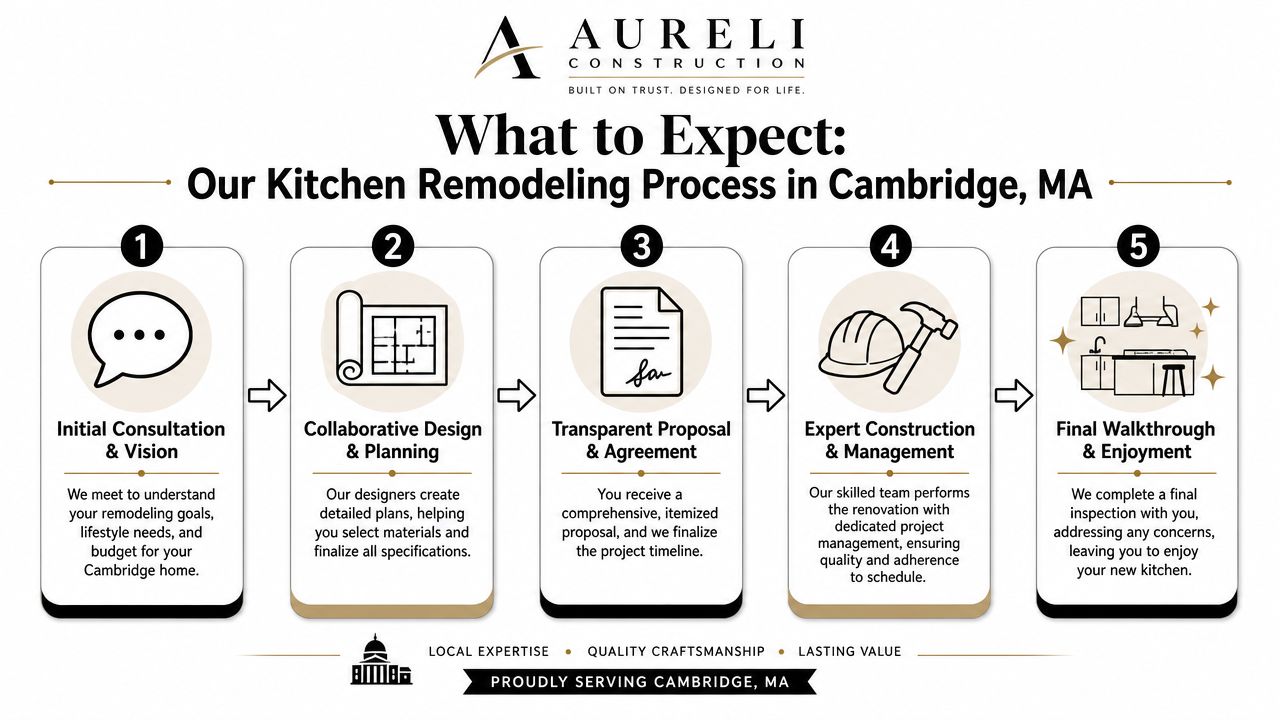
Planning and permits first
We start with the existing kitchen, not the wish list alone. We look at how the room is used, what's salvageable, what's driving cost, and whether the best answer is a refresh, a heavier renovation, or a larger reconfiguration tied to a whole-home plan.
If the project affects structure, electrical, plumbing, or ventilation, we plan around permit requirements from day one. In Massachusetts, kitchen remodels often involve a building permit plus separate plumbing and electrical permits depending on scope. Work must comply with 780 CMR and local department requirements, and rough inspections usually happen before walls are closed.
For homeowners trying to understand how a local design-build approach works, this Cambridge design-build remodeling guide lays out the process in more detail.
If you're living in the house during construction, staging also matters. Clearing the kitchen, protecting adjacent rooms, and deciding what goes into temporary storage can make the job much easier. For larger projects, some homeowners use climate controlled storage in Medford to keep cabinets, furniture, and boxed kitchen contents out of the work zone.
Construction and inspections
Once permits, selections, and scheduling are in place, construction moves in a logical sequence.
- Site protection and demo. We isolate the work area as much as the house allows.
- Framing and rough work. If the scope includes layout changes, framing, plumbing, electrical, and ventilation happen early.
- Inspections. Rough inspections are completed before insulation and wall closure where required.
- Finish installation. Cabinets, counters, tile, flooring, trim, paint, and fixtures go in after the rough phase clears.
- Punch list and final inspection. We walk the project, correct remaining items, and close out the permit process.
A smooth kitchen remodel usually comes from decisions made before demo, not fast decisions made after a wall is open.
When a change order is necessary, we document it. That matters in older Cambridge and Somerville homes, where hidden conditions can appear once demolition starts. Clear paperwork keeps the project manageable and avoids confusion about cost or schedule.
Aureli Construction In Action Two Local Kitchen Remodels
Real projects make the trade-offs easier to understand.
Lexington remodel built around resale
A homeowner in Lexington contacted us because the kitchen looked tired, but the rest of the house showed well. They expected to sell after living there a bit longer, so the goal wasn't a dream kitchen. It was a cleaner, sharper, more marketable one.
The layout stayed put. We focused on cabinet improvement instead of a full custom replacement, updated the counters and backsplash, improved lighting, and tightened the finish package so the room felt cohesive. That kind of scope usually protects budget and supports resale better than a full rebuild.
This is the type of approach that often fits kitchen remodeling Lexington, kitchen makeover services Lexington, and kitchen remodeling near me searches where homeowners want real improvement without crossing into over-investment.
Winchester remodel built around long-term living
A family in Winchester had a different problem. The kitchen was undersized for how they lived, traffic flow was poor, and the house needed the room opened up to function well. This was never going to be a minor remodel.
The project involved a larger footprint, a new layout, full cabinetry, and heavier coordination across trades. Financially, that kind of remodel rarely delivers the strongest resale percentage. Personally, it can be the right move when the family plans to stay and use the space hard for years.
Even in a major project, we still protect value by making disciplined decisions. We avoid spending where the house won't support it, keep the style tied to the architecture, and choose durable finishes over novelty. Homeowners weighing those trade-offs can browse kitchen renovation examples to compare limited-scope updates with full renovations.
The point isn't that one project was right and the other was wrong. The point is that the right kitchen scope depends on your timeline, your house, and what kind of return you want.
Frequently Asked Questions About Kitchen Remodeling in Boston
What kind of kitchen remodel has the best ROI?
A limited-scope remodel usually has the strongest resale math. In Remodeling's 2024 Cost vs. Value data as summarized by Angi, a minor kitchen remodel averaged 96% ROI, while the same summary noted that in 2022 minor kitchen remodels averaged about 71%, showing a meaningful improvement in recoupment over that period, as noted in Angi's review of kitchen remodel value.
In plain terms, the closer you stay to the existing layout, the better your odds of a strong financial return.
How much does a kitchen remodel cost in Greater Boston?
Local costs are higher than national averages, and older homes add complexity. In our market, homeowners should expect a wide range depending on scope, finish level, and whether the layout changes.
A cosmetic-to-moderate kitchen renovation in Greater Boston is often far more manageable than a full gut. A major remodel with structural changes, custom cabinetry, and broad trade involvement can climb quickly. The exact budget depends on the house, but the pattern is consistent. Once walls move and systems relocate, costs rise fast.
Do I need permits for a kitchen remodel in Massachusetts?
Usually, yes, if the work goes beyond simple finish replacement. Building permits are commonly required for framing or structural changes. Plumbing and electrical permits are typically required when licensed trades alter those systems. Work also needs to comply with 780 CMR and pass the required inspections before closeout.
In Cambridge, Arlington, Belmont, Newton, and surrounding towns, local departments may have their own submission and inspection procedures. That's one reason planning matters so much.
Can we live in the house during the remodel?
Usually yes, but it depends on scope and tolerance for disruption. For a smaller update, many families stay put and set up a temporary kitchen in another room. For a major remodel, especially one that affects adjacent spaces, living in the house can get stressful fast.
The two biggest issues are dust and loss of routine. If you work from home or have young kids, it's worth discussing staging and schedule before the job begins.
How do change orders work?
They should be written, priced, and approved before the extra work moves forward. In older Boston-area houses, hidden conditions are common, so a contractor needs a clean way to handle them.
Good change-order practice protects both sides. You know what changed, why it changed, what it costs, and whether it affects the schedule.
How do we compare kitchen remodeling contractors in towns like Medford, Arlington, or Newton?
Look beyond the gallery. Ask how they handle scope control, permits, rough inspections, finish coordination, and documentation. If you're pricing kitchen remodeling Medford, kitchen remodeling Arlington, or kitchen remodeling Newton, the cheapest number on paper may reflect missing detail, not actual savings.
A strong proposal should tell you what is included, what assumptions were made, and what could cause price movement later.
Ready to sort out whether your project should be a focused refresh or a full renovation? Contact Aureli Construction for a free estimate and practical guidance on planning a kitchen remodel in Cambridge, Arlington, Belmont, Lexington, Medford, Newton, Somerville, Wellesley, and across Greater Boston.