
The standard tub drain size in modern residential plumbing is 1.5 inches. But in older Massachusetts homes, that simple answer often isn't enough to buy the right parts or plan a smooth bathroom remodel.
In Cambridge and Brookline, we see this all the time. A homeowner pulls an old stopper, assumes every tub takes the same drain, orders a kit online, and then finds out the opening, overflow, or trap setup doesn't match what is in the house. In Greater Boston's older housing stock, drain sizing is rarely just about the visible hole at the bottom of the tub. It's about the full assembly, the condition of the existing plumbing, and whether the renovation triggers permit and code requirements under 780 CMR and the Massachusetts plumbing rules.
Table of Contents
- The Standard Tub Drain Size Isn't Always Standard in Boston
- Defining the 1.5-Inch Standard and Its Exceptions
- How to Properly Measure Your Existing Tub Drain
- The Full System Waste, Overflow, and P-Trap Compatibility
- Massachusetts Code for Bathroom Renovations in Cambridge
- Tub Drain Replacement Costs and Timelines in Greater Boston
- FAQ About Tub Drains and Bathroom Remodeling
The Standard Tub Drain Size Isn't Always Standard in Boston
In Somerville, a lot of bathroom projects start the same way. The tile is tired, the tub is old, and once the homeowner starts looking at fixtures, the question comes up fast: what's the standard tub drain size?
The practical answer is 1.5 inches, but that number only gets you part of the way. In a newer alcove tub, that may be enough to order the right waste and overflow kit. In a triple-decker bathroom or an older Cambridge condo, it may not.
What matters in the field is compatibility. The tub opening, the stopper type, the shoe under the tub, the overflow alignment, and the trap connection all have to work together. If one part is off, the project slows down. That usually means returns, extra labor, and sometimes opening finished walls or ceilings to fix what looked like a small detail.
Why Boston-area remodels are different
Older homes in Arlington, Brookline, and Medford often carry plumbing from multiple eras. We'll open one wall and find a newer drain kit tied into much older piping. Or we'll see a vintage tub that looks standard from above but takes a non-standard assembly once measured.
Practical rule: Never order a tub drain kit based on appearance alone. Measure the opening and confirm the waste-and-overflow setup before buying parts.
This is one of those details that separates a clean bathroom renovation from a frustrating one. Homeowners searching for bathroom remodeling Somerville or bathroom renovation Cambridge MA usually focus on finishes first. Fair enough. But under the tub, fit matters more than finish.
Defining the 1.5-Inch Standard and Its Exceptions
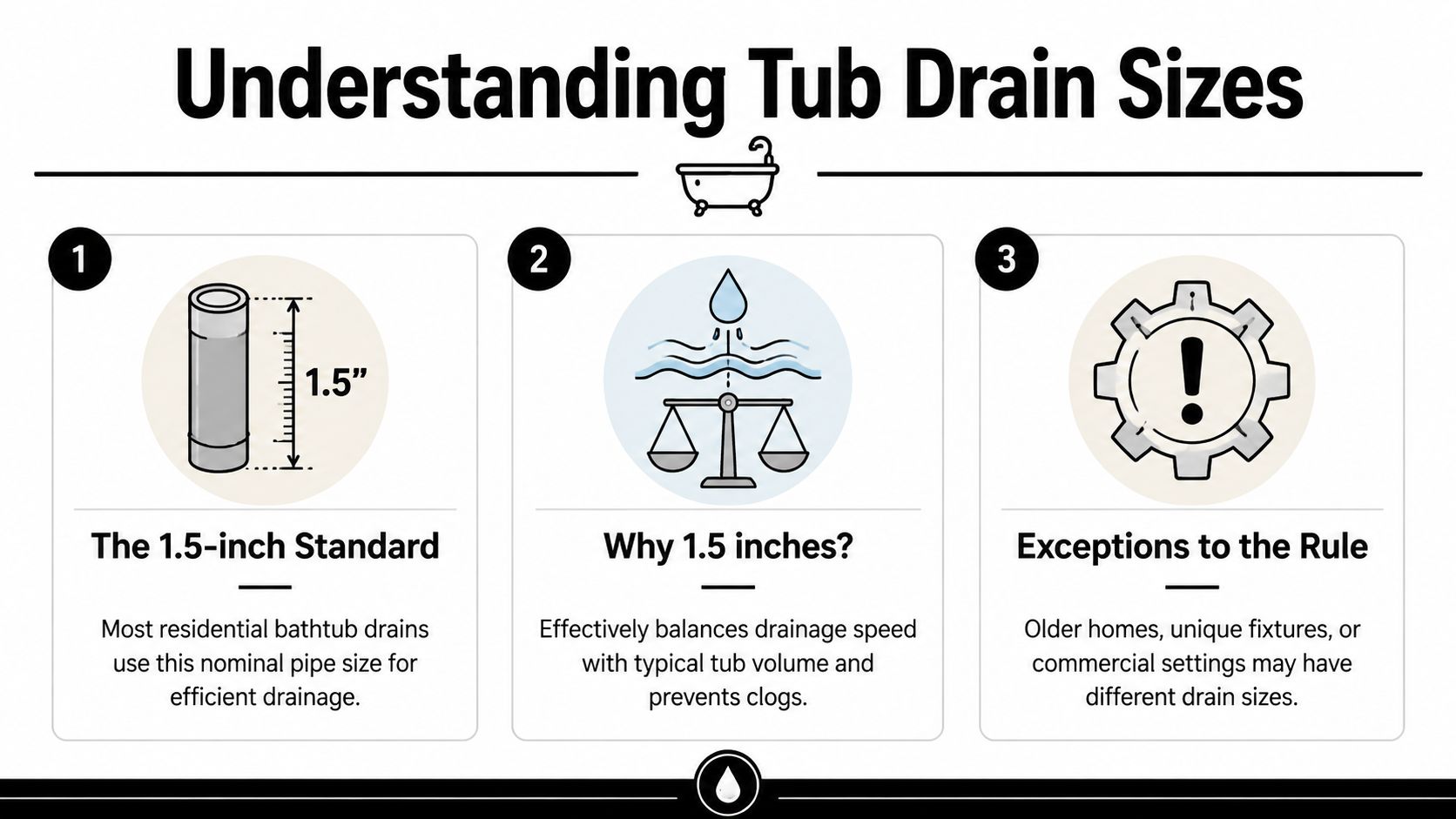
The accepted standard tub drain size for most modern residential tubs is 1.5 inches. Plumbing references also note that tub openings and drain assemblies can range from 1 3/8 inches to 2 inches, with 1 3/8 inches showing up in some antique tubs and 2 inches more common in larger soaking, whirlpool, jetted, or specialty tubs, as explained in this bathtub drain size guide.
What 1.5 inches actually means
That 1.5-inch number is a nominal plumbing size. In practice, it became the common standard because it matches the drain, trap, and waste-and-overflow components used on most residential tubs. For remodel work, that matters because replacement parts are usually built around that benchmark.
If you want a better sense of how nominal pipe sizing works, this primer on understanding pipe sizes and dimensions is useful. Homeowners often compare visible openings to listed pipe sizes and assume they're looking at the same measurement. They usually aren't.
Where we see exceptions in older and newer homes
In Greater Boston, the two exceptions show up often enough that they can't be treated as edge cases.
- Older tubs: Antique and clawfoot tubs can have a 1 3/8-inch opening.
- Large modern tubs: Soaking, jetted, and specialty tubs may use a 2-inch assembly.
- Wrong comparison point: A tub isn't sized the same way as a shower. If you're converting one to the other, that distinction matters.
A drain that looks close enough on paper often isn't close enough once you try to seal it under a finished tub.
Many DIY plans often hit an unexpected snag. Homeowners shopping for bathroom remodeling contractor Medford or bathroom remodel cost Newton are usually budgeting for tile, vanity, and fixtures. The drain assembly feels minor until it holds up the install.
How to Properly Measure Your Existing Tub Drain
Before you buy anything, measure the drain you have. Don't go by the old packaging, and don't trust a listing that says “universal.”
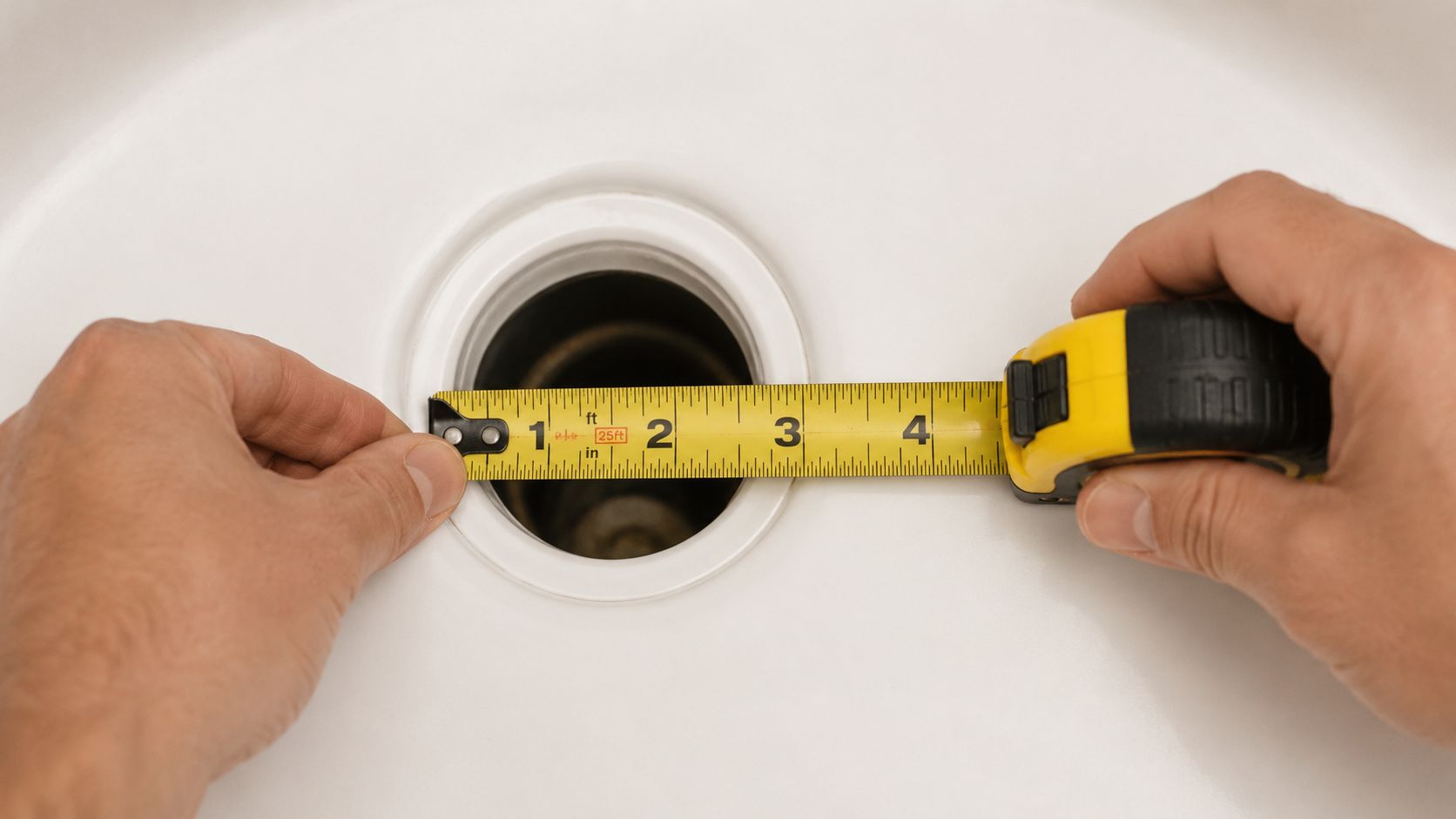
Measure the opening, not the trim
Start with the visible drain at the bottom of the tub.
- Remove the stopper: You need access to the actual opening.
- Ignore the flange: Don't measure the decorative ring at the top.
- Measure straight across the center: Take the inside diameter from edge to edge.
- Write it down immediately: You'll want that number when ordering parts or talking to your contractor.
A lot of homeowners measure the chrome trim, not the actual hole. That's the most common mistake. If you want a more detailed walkthrough, this guide on how to measure tub drain size is a good starting point.
What else to check before ordering parts
If you have access behind the tub or from below, check more than the opening.
- Overflow alignment: The drain and overflow have to match the tub's spacing.
- Existing material: Brass, PVC, ABS, and older mixed-material installs all behave differently during replacement.
- Signs of wear: Corrosion, enamel damage, or an out-of-round opening can affect sealing.
This short visual helps homeowners see what they're looking for before they pull parts apart:
In older Boston-area bathrooms, measurement is the easy part. The trick is confirming that the new kit matches the rest of the system.
The Full System Waste, Overflow, and P-Trap Compatibility
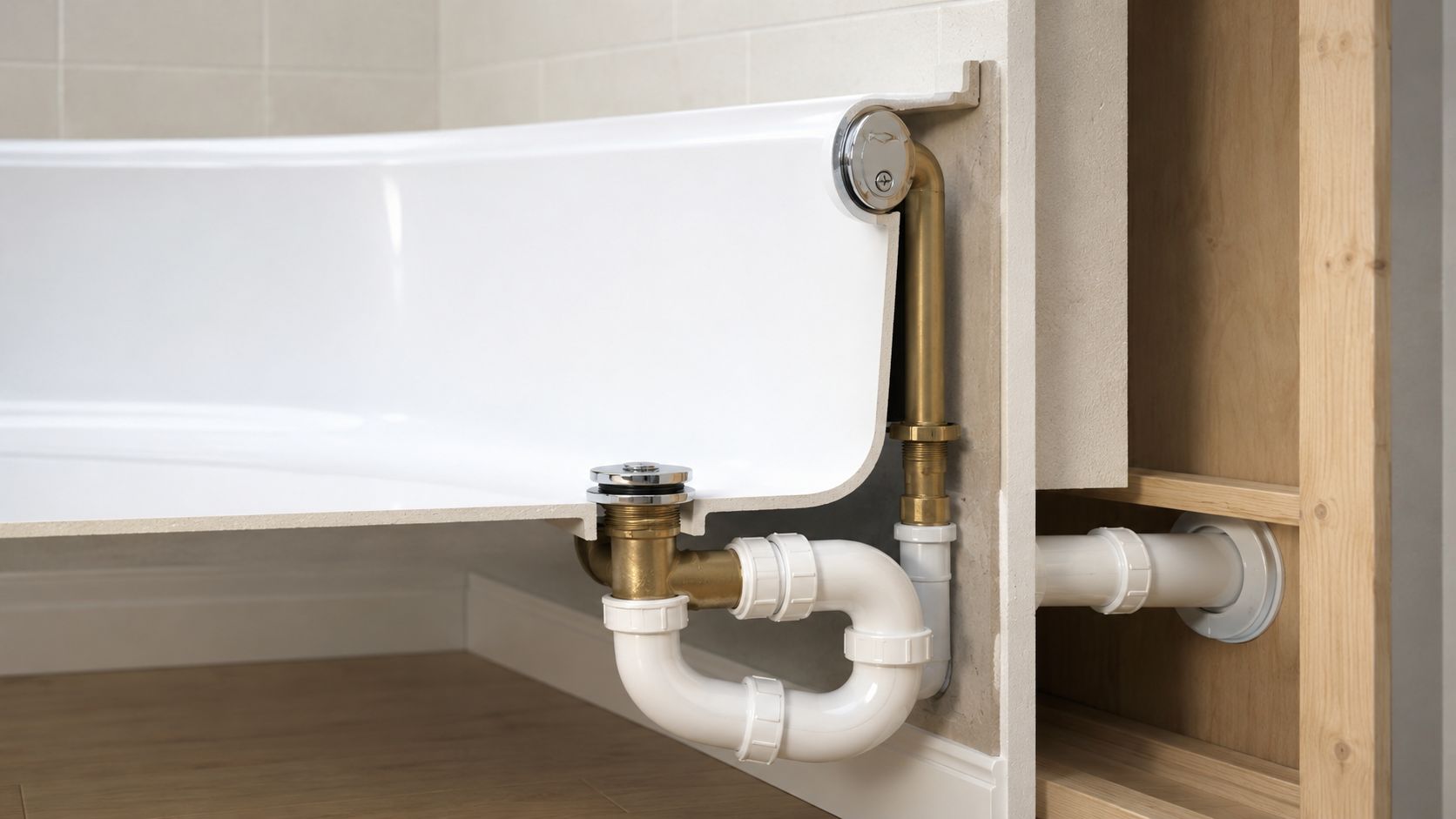
A tub drain isn't a single fitting. It's part of a connected assembly that includes the tub shoe, overflow tube, waste tee, and trap. If those parts don't match, the install may leak, drain poorly, or fail inspection.
The industry standard for a tub drain is typically 1.5 inches, while a shower drain is commonly 2 inches, reflecting different drainage demands and code practice. Many modern tubs also use a 1 1/2-inch overflow drain, as noted in this overview of tub drain size compared with shower drain size.
Why the drain opening is only one piece
From above, homeowners usually see two parts. The drain at the bottom and the overflow plate on the tub wall. Under the tub, those connect to a larger assembly that then ties into the trap.
Here's what has to line up:
| Component | Why it matters |
|---|---|
| Tub opening | The visible drain has to seal correctly to the tub itself |
| Tub shoe | This fitting under the tub must match the opening and drain kit |
| Overflow assembly | Height and alignment have to fit the tub body |
| P-trap | The connection size and layout have to work with the assembly |
What usually goes wrong in retrofit work
We see the same problems repeatedly in older homes.
- Mismatched kits: A homeowner buys a kit that fits the opening but not the overflow spacing.
- Improvised reducers: Someone tries to force parts from different sizes into one assembly.
- Tub-to-shower confusion: A remodel keeps the old tub drain layout when the fixture type has changed.
If you're planning a conversion, the distinction between tub and shower sizing matters a lot. This page on standard shower drain size is worth reviewing before design decisions get locked in.
The visible drain is the part people shop for. The hidden connections are the part that determines whether the job actually works.
Massachusetts Code for Bathroom Renovations in Cambridge
In Cambridge, changing tub plumbing isn't just a product-selection issue. It's also a code and permit issue.
Massachusetts bathroom work typically falls under the state building code, 780 CMR, along with the plumbing code, 248 CMR. Once a project involves altering the drain, trap, venting, or plumbing connections behind finished surfaces, it moves beyond a simple cosmetic update. That means permits, inspections, and licensed trade coordination matter.

When a tub drain change becomes permitted work
A homeowner can swap some exposed trim parts without touching the rough plumbing. But once the work involves opening walls, replacing the trap, moving piping, or changing fixture connections, permit requirements usually come into play.
For homeowners trying to understand the broader compliance side, this guide for building regulations is a useful general read. For Massachusetts-specific planning, the local process is what counts. This overview of the permitting process in Massachusetts gives the bigger picture.
Older Greater Boston homes create code surprises
Cambridge, Brookline, Belmont, and Arlington homes often hide plumbing that wouldn't be installed that way today. Once a bathroom is opened up, the inspector may require parts of the system to be brought up to current standards before the project can close out.
That's especially common when we find:
- Older trap configurations: Some existing setups aren't appropriate to reuse during a full renovation.
- Corroded lines: Rusted or deteriorated drain connections don't belong behind new finishes.
- Mixed repair history: Previous patchwork can create fitting and inspection problems once walls are open.
That's why code-smart planning matters up front. It's much easier to budget for corrections before tile and fixtures are selected than after demolition starts.
Tub Drain Replacement Costs and Timelines in Greater Boston
In Greater Boston, tub drain pricing depends less on the drain itself and more on access, condition, and scope. The part may be simple. The work often isn't.
A basic trim-level replacement is one thing. A full waste-and-overflow replacement in an older house is another. If the plumbing is exposed and the assembly is straightforward, the job is more controlled. If the team has to open a ceiling below, work around old cast or mixed piping, or rebuild finishes after the plumber is done, the cost changes fast.
What affects price most
The biggest variables are usually these:
- Access: Easy access behind the tub or from below keeps labor down.
- Existing condition: Corrosion, old repairs, or damaged tubs make replacement harder.
- Scope of renovation: If the bathroom is already being gutted, drain work is simpler to coordinate.
- Inspection requirements: Permitted plumbing work adds process, but it also protects the homeowner.
For many homeowners comparing bathroom remodel cost Medford, how much does a bathroom remodel cost Somerville, or bathroom renovation Newton, in such scenarios, estimates can look far apart. One quote may assume a simple drain swap. Another may assume the assembly, trap, and surrounding finishes all need attention.
What homeowners should expect during scheduling
Timeline depends on the same factors. A clean replacement with access can move quickly. A drain issue discovered during demolition can extend the plumbing phase because the right fix has to come before waterproofing, wall closure, and finish work.
If the tub drain is being addressed during a full remodel, the smartest time to solve hidden plumbing problems is while the walls are already open.
That approach usually leads to fewer surprises later, especially in older homes where “existing conditions” rarely mean simple conditions.
FAQ About Tub Drains and Bathroom Remodeling
Can I replace a tub drain myself
Sometimes, but only in a narrow set of situations. If you're changing a stopper or visible trim and you're not altering any concealed plumbing, that may be manageable for a handy homeowner. Once the work involves the waste-and-overflow assembly, the trap, piping behind walls, or any leak diagnosis below the tub, it's no longer a casual DIY job.
Why does an old Boston-area tub drain replacement turn into a bigger project
Because the visible drain is rarely the full story. In older homes, we often find worn connections, past repairs, odd spacing, and plumbing that doesn't match modern replacement kits. The finish work around the plumbing can also drive scope. A drain tucked behind plaster, tile, or a finished ceiling below takes more coordination than a drain with open access.
Is a tub drain the same size as a shower drain
No. The standard benchmark is different. That's one reason tub-to-shower conversions need careful rough plumbing review before construction starts. Keeping the old tub drain arrangement for a new shower is one of the easiest ways to create drainage and inspection problems.
Do I need a permit for tub drain work in Massachusetts
If the work alters plumbing behind finished surfaces or changes the rough plumbing, you should expect permit and inspection requirements to apply. Massachusetts code and local building departments matter here. Cosmetic changes are one thing. Plumbing modifications are another.
What should I have ready before asking for a quote
Have a few basics ready:
- Photos of the tub and overflow: Wide and close-up shots both help.
- Access information: Is there a panel, basement access, or finished ceiling below?
- Tub type: Alcove, freestanding, clawfoot, soaking, or jetted.
- Project intent: Simple repair, tub replacement, or full bathroom renovation.
Homeowners searching for a bathroom remodeling contractor Medford, bathroom remodeling Somerville, or a full kitchen remodel Greater Boston often underestimate how much this kind of prep speeds up the estimating process. The clearer the existing conditions, the more accurate the scope discussion.
Ready to get started? Contact Aureli Construction for a free estimate at homeadditionma.com.