Investing in a home addition in Greater Boston is no longer just about extra square footage; it’s a strategic financial move in a market where median home prices in towns like Newton have climbed over 12 percent in the last 24 months. You’ve likely realized that Massachusetts presents a unique set of challenges, from some of the highest labor costs in the country to the complex zoning bylaws found in historic areas like Winchester or Lexington. It’s common to feel a sense of hesitation when the potential for budget overruns looms over such a significant investment.
We’ve developed this guide to provide a transparent, expert-driven breakdown of home addition prices for 2026, ensuring you can plan your project with total confidence. You’ll learn exactly how to balance high-end craftsmanship with fiscal responsibility while securing a high return on investment for your property. We’ll explore specific cost ranges for common additions, detail the permit process for local municipalities, and show you how a professional partner manages every detail from start to finish.
Key Takeaways
- Learn why Greater Boston construction costs significantly exceed national averages and how to evaluate the financial benefits of building versus moving in high-value towns.
- Identify the critical structural and utility factors, such as foundation integrity and HVAC modernization, that determine the technical feasibility of your expansion.
- Access an expert-driven breakdown of home addition prices for specific luxury projects, including master suites, kitchen expansions, and accessory dwelling units.
- Navigate the complexities of local zoning boards and permit fees in towns like Cambridge and Arlington to protect your project from unexpected regulatory costs.
- Discover how the design-build model provides transparent, fixed-price contracts that eliminate the gap between your architectural vision and the final construction reality.
Estimating Home Addition Prices in the Greater Boston Area (2026)
Deciding to expand your living space is a significant milestone for any Massachusetts family. In high-value towns like Newton and Winchester, where median home prices remained well above $1.5 million throughout 2024 and 2025, the “Move vs. Build” debate has a clear financial winner. Selling your current home often involves high commissions, aggressive bidding wars, and the stress of relocation. Investing in your current property allows you to maintain your community ties while building immediate equity through a custom-tailored expansion.
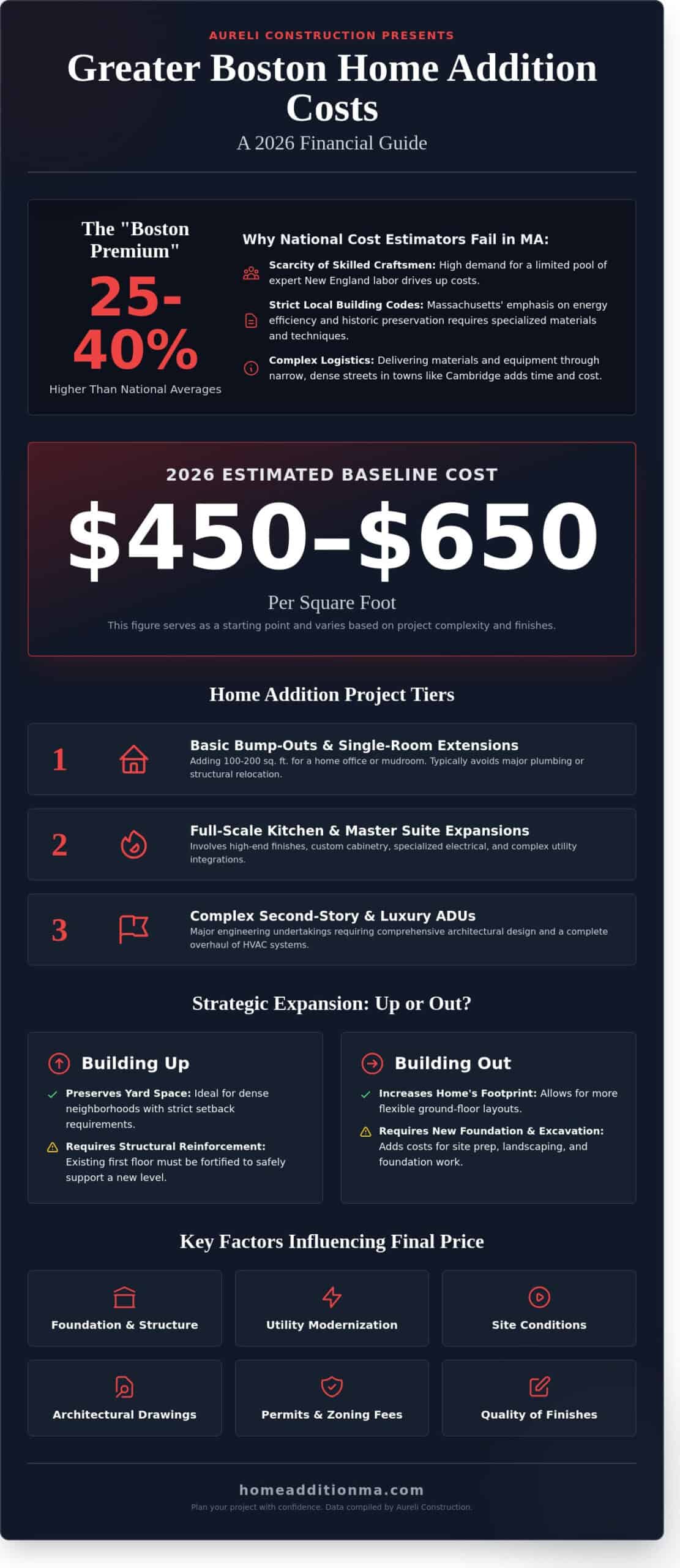
Understanding home addition prices requires a look at the physical footprint and structural demands of your property. “Building Out” involves new foundation work and excavation, which adds costs for site preparation and landscaping. Conversely, “Building Up” preserves your yard space but requires meticulous structural reinforcement of the existing first floor to safely support a second story. Most 2026 projects in the region begin with a baseline of $450 to $650 per square foot. This figure fluctuates based on the complexity of the home improvement and the specific zoning requirements of your municipality.
The 2026 Project Tier System for MA Homeowners
- Tier 1: Basic bump-outs and single-room extensions. These projects typically add 100 to 200 square feet for a home office or mudroom without relocating major plumbing lines.
- Tier 2: Full-scale kitchen or master suite expansions. These involve high-end custom cabinetry, specialized electrical work, and complex utility integration to create seamless, functional living areas.
- Tier 3: Complex second-story additions and luxury ADUs. These are major engineering undertakings that require comprehensive architectural design and often involve a total rethink of the home’s heating and cooling systems.
Why National Averages Don’t Apply in Middlesex County
Generic cost estimators found on national websites often provide misleading data for the Massachusetts market. Our region faces unique challenges, from the scarcity of skilled New England craftsmen to strict local building codes that prioritize energy efficiency. Logistics also play a major role in pricing. Delivering materials to a job site in the narrow, densely populated streets of Cambridge or Somerville requires more time and specialized equipment than a project in a rural area. These factors contribute to a higher cost of doing business that national sites simply don’t track. The “Boston Premium” is a 25-40% increase over national construction averages.
Our team treats every project with the gravity it deserves, ensuring that your investment results in a home that’s both beautiful and structurally sound. We’re here to help you navigate these initial estimates and turn your vision into a concrete plan.
Key Factors Influencing the Final Price of Your MA Home Expansion
Determining home addition prices in Greater Boston requires a detailed look at your property’s existing bones. A 1920s Colonial in Lexington has different structural needs than a mid-century ranch in Arlington. Before the first board is nailed, we must assess your foundation’s capacity. If you plan to add a second level, your current footings might need reinforcement to carry the new weight. Utility modernization is another primary driver of cost. Expanding your square footage often necessitates a 200-amp electrical service upgrade or a high-efficiency HVAC zone to meet 2026 energy standards.
Site conditions in Massachusetts present unique challenges like subterranean ledge or complex drainage patterns. Excavating granite in a tight Belmont backyard is more labor-intensive than digging in sandy soil. You also need to account for “invisible costs” such as architectural drawings and structural engineering. Navigating the Massachusetts building permit application process is a critical step that requires precise documentation to avoid municipal delays. These planning phases ensure the project is safe; they also provide the roadmap for a predictable construction timeline.
Building Up vs. Building Out in Dense Neighborhoods
In dense areas like Newton, property lines and strict setback requirements often dictate your expansion strategy. Building out increases your home’s footprint but may require variances if you’re close to a neighbor’s lot. Building up is a frequent solution for maximizing space without losing yard area. This path requires specialized shoring to protect the lower level during construction. You can find more technical details on this process through our guide for Second Story Addition Contractors in Newton & Greater Boston.
Luxury vs. Standard Finishes
Material choices significantly influence home addition prices. In high-end markets like Melrose, selecting custom inset cabinetry and natural stone countertops can increase a kitchen budget by $50,000 or more compared to stock options. Massachusetts stretch codes also mandate high-performance windows and specific R-value insulation. These requirements ensure long-term energy savings but require a higher initial investment. Balancing these premium finishes with neighborhood resale values ensures your project remains a sound financial decision. If you’re ready to explore these options, consulting with a local expert can help clarify your vision.
Price Breakdown by Project Type: Master Suites to ADUs
Understanding home addition prices requires a look at the specific utility of the new space. A simple bedroom expansion involves basic framing and finishes, while a kitchen or master suite requires intricate plumbing, electrical, and HVAC integration. These technical requirements drive the total project cost more than the square footage itself. Space is a premium in Massachusetts. When you decide to expand your footprint, the specific function of that room dictates the complexity of the engineering and the final investment required.
Master Suite and Kitchen Addition Costs
A luxury master wing typically spans approximately 400 square feet. This project often includes a walk-in closet and a high-end bathroom with custom tile work and double vanities. According to 2025 regional construction data, these additions remain a top priority for homeowners seeking to increase property value. For families looking to create a private retreat that addresses the cramped layouts common in historic Massachusetts homes, master suite additions in Greater Boston offer both luxury and long-term functionality. The integration of kitchen remodeling into a larger structural addition adds another layer of complexity. Relocating gas lines and main drain stacks represents a significant portion of the budget. To manage costs, we recommend placing “wet rooms” like bathrooms or laundry areas adjacent to existing plumbing lines. This strategic layout reduces the need for extensive trenching or wall demolition in the original structure.
Garage and Sunroom Price Ranges
The regulatory landscape in Massachusetts changed significantly with the passage of the Affordable Homes Act in August 2024. This law now allows Accessory Dwelling Units (ADUs) by right on single-family lots across the state. While this simplifies the zoning process, ADUs require independent utility connections and kitchen facilities. This makes them more expensive than standard room additions. For homeowners in suburban towns like Wakefield, Garage Additions in Greater Boston offer a different value proposition. An attached garage provides convenience and easier climate control integration, whereas a detached unit might offer more flexibility for a workshop or studio space.
If your goal is to connect with the outdoors, sunrooms provide a versatile solution. A three-season room uses single-pane glass and lacks permanent heating, which makes it a cost-effective choice for seasonal enjoyment. However, a four-season sunroom requires full insulation and a connection to your home’s HVAC system. This ensures the room remains comfortable during a freezing January in New England. While the initial home addition prices for a four-season room are higher, the year-round utility often justifies the investment for growing families. We focus on ensuring these structures feel like a natural extension of your home rather than an afterthought.
Navigating Hidden Costs: Permits, Zoning, and Local Regulations
The sticker price of a project involves more than just lumber and labor. In Greater Boston, the regulatory environment is complex and varies significantly from one street to the next. Understanding these “soft costs” is essential for an accurate budget. These expenses often determine the final home addition prices before the first nail is driven into a frame.
Local Permitting and Zoning Hurdles
Filing for a building permit in Middlesex County typically requires a timeline of four to eight weeks for standard reviews. Fees are rarely uniform. In Cambridge, permit costs are often calculated as a percentage of the total construction value, frequently landing around 1.5 percent. Conversely, towns like Arlington may use a tiered system based on square footage. If your project exceeds local lot coverage limits or height restrictions, you must petition the Zoning Board of Appeals (ZBA).
Zoning variances can add $5,000 to $15,000 in “soft costs” before a shovel hits the ground. These costs cover land surveys, architectural renderings for hearings, and professional representation. Having an expert present your case at town hall meetings is vital. It ensures your project respects local ordinances while protecting your investment. Historical Commission reviews add another layer of scrutiny in towns like Lexington or Concord. These boards often mandate specific materials, such as wood windows instead of vinyl, which can increase exterior material costs by 20 percent or more.
Site Preparation and Demolition
Older New England homes require a specialized approach to demolition. Because many local houses were built before 1978, testing for lead paint and asbestos is a standard safety protocol. Professional remediation ensures your family stays safe, but it requires specialized contractors and disposal methods. Site logistics also impact the budget, especially in dense areas like Somerville. Tight urban lots may require special permits for street occupancy or crane placement during the framing phase.
The Massachusetts Stretch Energy Code, updated in 2023, now influences home addition prices through stricter insulation and HVAC requirements. In municipalities that have adopted the Specialized Code, such as Newton or Brookline, additions must often be “all-electric ready.” This might necessitate an electrical panel upgrade or the installation of high-efficiency heat pumps. Finally, heavy machinery used during excavation can impact your yard. We recommend budgeting for landscaping restoration to ensure your new space looks seamless from the outside in.
Ready to see how local regulations affect your specific project? Schedule a consultation with our local experts to get a clear picture of your project’s requirements.
The Aureli Advantage: Transparent Pricing Through Design-Build
Choosing a contractor is a significant decision for any homeowner. Many families worry about fluctuating home addition prices once the sledgehammers start swinging. Aureli Construction uses a design-build model to eliminate this uncertainty. We bridge the gap between architectural vision and construction reality by keeping every phase of the project under one roof. This integrated approach ensures your project stays on track and within the agreed budget from start to finish.
Low-ball bids are a common trap in the Greater Boston construction market. Some contractors provide a purposefully low estimate to win the job, only to bury the homeowner in change orders later. We believe in fixed-price contracts. This model offers better security for your investment. By finalizing the costs before construction begins, we provide a foundation of trust and stability that traditional bidding often lacks.
Design-Build vs. Traditional Bidding
The traditional “Architect-then-Contractor” route often leads to 20% budget overruns. This happens because architects may design beautiful spaces without considering the current costs of labor and materials. In our design-build model, our builders work alongside designers from the first day. We identify structural costs and potential site challenges during the design phase rather than discovering them after the walls are open. You can learn more about this integrated process in our guide on Home Addition Contractors in Massachusetts.
Aureli Construction brings a 30-year history of navigating the unique challenges of the Massachusetts landscape. We understand the specific zoning laws in Newton and the complex historical preservation requirements in Cambridge. This regional expertise allows us to provide accurate home addition prices that reflect the reality of building in Greater Boston. High-quality craftsmanship is a strategic investment. In our local market, a well-executed addition preserves and increases home value over decades, providing a long-term ROI that cheaper, rushed work cannot match.
Your Next Steps with Aureli Construction
Your journey begins with a feasibility consultation. During this meeting, we analyze your property and discuss your specific goals for the space. We don’t believe in guesswork. Our team provides detailed, itemized pricing before any construction starts. This ensures you have a clear financial roadmap for your project. We take the responsibility of altering your home with the utmost gravity, prioritizing structural integrity and seamless aesthetics.
If you are a homeowner in Newton, Cambridge, or the surrounding Greater Boston towns, it’s time to turn your vision into a reality. We offer a stress-free experience that focuses on your peace of mind. Contact Aureli Construction today to schedule your consultation and see how our design-build expertise can transform your home.
Invest in Your Greater Boston Home’s Future
Navigating home addition prices in 2026 requires a strategic balance of realistic budgeting and local expertise. You’ve seen how Massachusetts zoning laws and high-value material selections influence your total investment. By opting for a design-build approach, you consolidate architecture and construction into one seamless workflow. This method protects your budget from the common pitfalls often found in fragmented project management.
Aureli Construction brings 30+ years of local experience to every project. We specialize in high-value MA suburbs, ensuring your expansion respects the architectural integrity of your neighborhood while maximizing your property’s long-term value. Our turnkey process means we handle every detail from the initial permit application to the final walkthrough. You don’t have to navigate the complexities of local regulations alone. We’re here to provide the stability and craftsmanship your family deserves.
Ready to transform your living space? Request Your Custom Home Addition Quote from Aureli Construction and take the first step toward a more functional home. We look forward to building your vision into a reality.
Frequently Asked Questions
How much does a 500 sq ft addition cost in Massachusetts?
A 500 square foot addition in Massachusetts typically costs between $225,000 and $375,000 depending on the room type and finish quality. According to the 2024 Cost vs. Value report for the Boston area, mid-range primary suite additions average $185,000, while high-end versions frequently exceed $360,000. These figures reflect the high cost of skilled labor and premium materials required by the local climate.
Is it cheaper to build a second story or a ground-floor addition in Boston?
Building a second story is generally 15% to 20% more expensive than a ground-floor addition because of the extensive structural reinforcement required. You’ll need to upgrade the existing foundation and first-floor wall studs to support the new weight. While ground-floor projects require new excavation and foundation work, they avoid the complex structural retrofitting that drives up costs in vertical expansions.
How long does a typical home addition project take from planning to completion?
A typical home addition project takes between 7 and 12 months from the initial design phase to the final walkthrough. You’ll spend the first 3 to 5 months on architectural drawings, structural engineering, and securing municipal permits. The physical construction phase usually lasts 4 to 7 months, though winter weather in New England can occasionally extend this timeline by several weeks.
Do home additions in towns like Newton require a zoning variance?
Home additions in Newton require a zoning variance if the project exceeds the 30% lot coverage limit or violates established setback requirements. According to the Newton Zoning Ordinance, most projects that stay within these “by-right” parameters only need a standard building permit. If your design requires a Special Permit, expect the pre-construction phase to increase by 4 to 6 months.
What is the average ROI for a home addition in the Greater Boston market?
The average ROI for a home addition in the Greater Boston market ranges from 55% to 65% of the total project cost. Master suite additions currently yield a 62% return according to 2024 regional real estate data. While home addition prices are a significant investment, the added square footage provides substantial equity growth in high-demand neighborhoods like Brookline, Cambridge, and Wellesley.
Can I live in my house during a major second-story addition?
It’s strongly recommended that you relocate for 3 to 5 months during a major second-story addition. The construction process involves removing the entire roof, which leaves your home’s interior vulnerable to the elements and creates significant safety hazards. Most families find the noise, dust, and utility interruptions make the home uninhabitable until the new structure is fully enclosed and weather-tight.
How do Massachusetts energy codes (Stretch Code) affect my addition budget?
The Massachusetts Stretch Code increases addition budgets by 5% to 10% because of stricter insulation and airtightness requirements. Since the 2023 updates, new additions must meet specific HERS rating targets or prescriptive R-values for all exterior walls and ceilings. These requirements raise initial home addition prices, but they result in a 20% reduction in annual energy consumption for the new space.
What is the difference between a bump-out and a full home addition?
A bump-out is a small-scale expansion that extends a room by 2 to 10 feet without needing a full foundation. These projects are often cantilevered off the existing floor joists to create space for a kitchen island or a walk-in closet. A full home addition is a complete room or multi-story wing that requires its own foundation, roofing, and dedicated HVAC system integration.