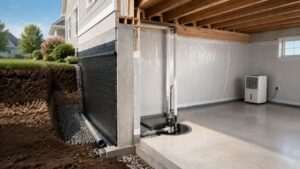
In Cambridge, MA, a homeowner can finish a basement, paint the walls, and still miss the moisture problem developing behind them. We've opened renovated walls in older Greater Boston homes and found damp insulation, stained sheathing, and mold growth where a leak, condensation issue, or poorly managed foundation had been covered instead of corrected. Effective mold prevention strategies start before drywall goes up and continue through every season.
For homeowners planning a kitchen remodel, bathroom renovation, basement finishing project, addition, or ADU, moisture control should be part of the construction plan. Aureli Construction is a Massachusetts licensed general contractor serving Belmont, Brighton, Brookline, Burlington, Cambridge, Lexington, Medford, Melrose, Newburyport, Newton, Arlington, Reading, Somerville, Stoneham, Wakefield, and Wellesley, MA. Our team coordinates design, construction, permits, and inspections with local building departments, with attention to the details that keep finished spaces dry.
Table of Contents
- Why Mold Is a Persistent Problem in Greater Boston Homes
- Controlling Indoor Humidity to Stop Mold Before It Starts
- Room-by-Room Ventilation and Moisture Management
- Mold-Resistant Materials and Building Code Considerations
- Seasonal Maintenance Routines and When to Call a Professional
- Frequently Asked Questions About Mold Prevention
Why Mold Is a Persistent Problem in Greater Boston Homes
A homeowner in a 1920s Cambridge colonial recently discovered black mold behind freshly painted drywall during a basement finishing project. The paint looked clean from the room side, but the wall assembly had been holding moisture against cold masonry. The problem wasn't a dirty surface. It was a building-envelope failure hidden by a finish material.
Greater Boston homes face repeated moisture stress from humid summers, freezing winters, coastal air, snowmelt, and wind-driven rain. Older houses often have stone or fieldstone foundations, limited drainage, aging gutters, and additions that were tied into the original structure without modern flashing or air-sealing details. A basement can feel merely musty while moisture continues moving through masonry, framing, insulation, and flooring.
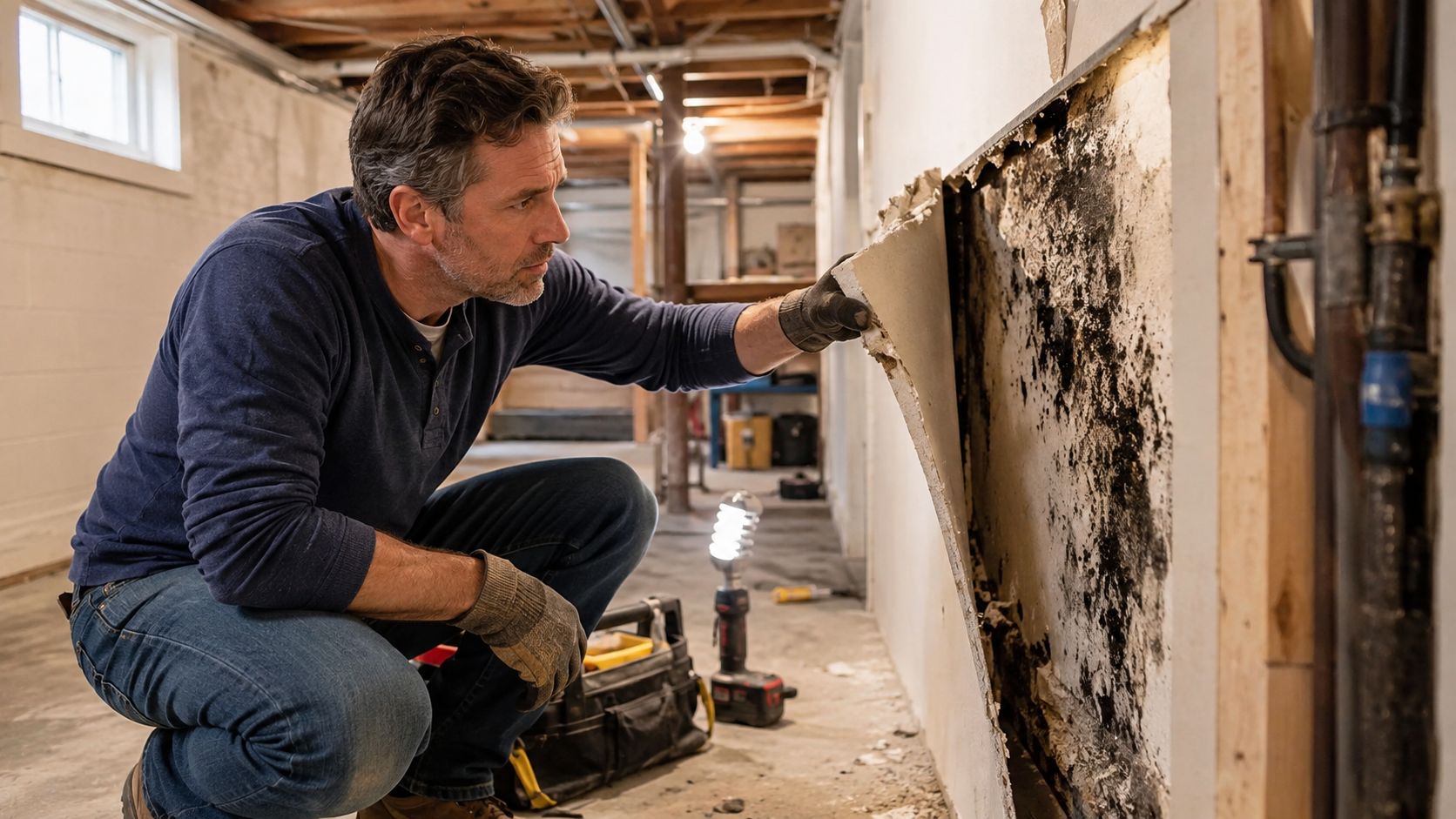
Moisture is the real failure
Mold is a symptom. The cause may be bulk water entering through a foundation, a plumbing leak inside a wall, condensation on an uninsulated surface, or indoor humidity that remains too high. Cleaning the visible growth without correcting that source usually leaves the conditions in place for recurrence.
The EPA's mold course guidance identifies indoor humidity control as a foundational prevention measure. Homeowners researching older foundations can also compare practical Canadian basement mold prevention tips with local basement conditions, particularly where masonry and winter temperature swings are involved.
Reactive remediation can become far more disruptive than prevention because it may involve demolition, drying, disposal of porous materials, rebuilding, and investigation of concealed leaks. In a renovation, we'd rather spend the planning effort on drainage, ventilation, insulation, and flashing than reopen a completed wall.
Rainwater management belongs in that same conversation. Gutters, downspouts, grading, foundation drainage, and properly detailed roof edges all influence whether water reaches the structure. Our guide to rainwater management for Massachusetts homeowners explains why exterior water control should be addressed before interior finishes.
Controlling Indoor Humidity to Stop Mold Before It Starts
The most useful starting point is a hygrometer. Put a digital unit in the basement, another near the bathroom, and a third in a laundry or kitchen area if those spaces have a history of condensation. Record readings at different times instead of relying on how the air feels. A room can feel comfortable while surfaces inside a wall, behind a vanity, or around a basement rim joist remain damp.
The EPA recommends keeping indoor humidity below 60%, ideally between 30% and 50%. That range gives homeowners a practical operating target, while the upper threshold signals conditions that can support mold growth. The EPA's homeowner guide also makes the central point clearly through its moisture-control approach: drying the room temporarily isn't enough if the leak, condensation, or ventilation failure remains.
| Humidity Range | Mold Risk Level | Recommended Action |
|---|---|---|
| 30% to 50% | Preferred operating range | Monitor routinely and maintain ventilation |
| Above 50% and below 60% | Increasing concern | Investigate moisture sources and improve dehumidification |
| Above 60% | Conditions may support mold growth | Reduce humidity promptly, repair leaks, and increase ventilation |
Match the equipment to the space
A portable dehumidifier can work well in a contained basement or during a short-term moisture problem, provided the tank, filter, drain hose, and condensate discharge are maintained. A whole-house unit is more appropriate when several rooms experience high humidity or the HVAC system needs coordinated moisture control. Equipment selection should account for the building's size, air leakage, foundation type, occupancy, and moisture load, not just the label on the machine.
Air conditioning removes some moisture while it operates, but a system that is oversized, poorly balanced, or shut off in humid weather may not dehumidify effectively. In winter, heating dries indoor air, but that doesn't solve a basement leak or eliminate condensation on cold foundation surfaces.
For practical HVAC ideas, homeowners can review this guide to reducing indoor humidity in a home. During a remodel, we also inspect insulation and air-sealing details. Better energy-efficient insulation materials can raise surface temperatures and reduce condensation when installed as part of a properly designed wall assembly.
Practical rule: Measure first, identify the moisture source second, then choose dehumidification and ventilation equipment that can maintain the target consistently.
Room-by-Room Ventilation and Moisture Management
Bathrooms, kitchens, and basements need different controls. A fan alone won't correct a plumbing leak, and a dehumidifier won't replace a properly ducted bath exhaust system.
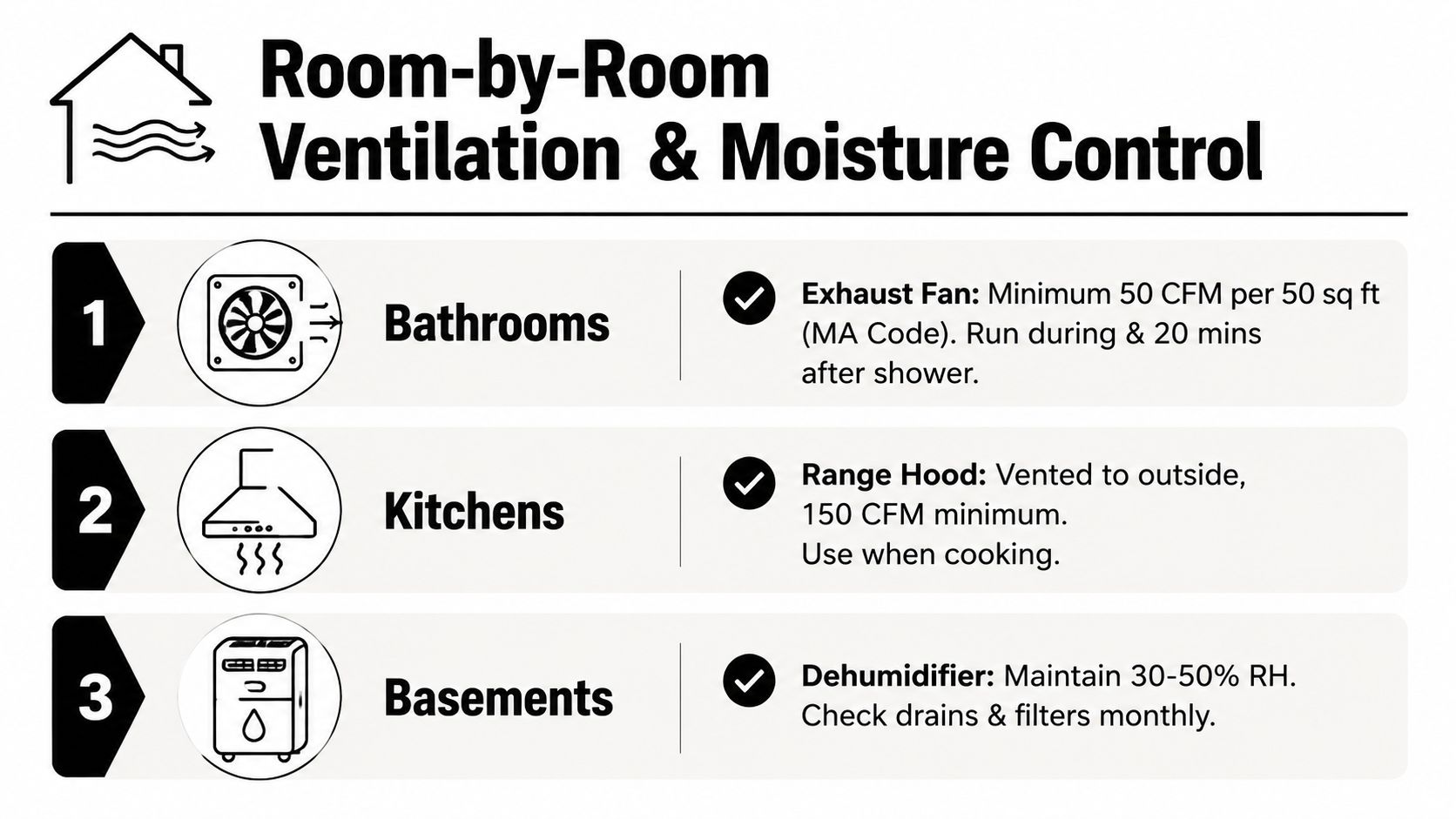
Bathrooms need direct exhaust
Massachusetts sanitary code requires habitable rooms and rooms with toilets, bathtubs, or showers to have openings totaling at least 4% of the floor area, or mechanical ventilation exhausting outdoors, according to the Massachusetts homeowner guide on mold cleanup and excessive moisture control. Local enforcement can require mechanical ventilation where natural ventilation doesn't remove excess moisture.
In practice, we verify that the fan discharges through a sealed duct to the exterior, not into an attic. The fan should run during bathing and for a period afterward. Inspect the grille for dust, check whether the exterior damper opens, and look for staining around recessed lights, ceiling penetrations, and the shower enclosure. Recessed fixtures in a cold ceiling can create condensation points when insulation and air sealing are incomplete.
Kitchens produce more moisture than homeowners expect
Use a range hood that exhausts outdoors, particularly during boiling, steaming, and gas cooking. Recirculating hoods filter odors but return moisture to the room. Check dishwasher supply and drain connections, refrigerator water lines, sink shutoffs, and the cabinet floor beneath them. A small leak can soak particleboard long before it reaches the room below.
Basements need water control and humidity control
A basement finishing plan should address exterior grading, downspouts, bulkhead doors, foundation cracks, sump equipment, and interior drainage where appropriate. Waterproofing and damp-proofing aren't interchangeable. Damp-proofing limits moisture movement through masonry, while waterproofing systems are designed to manage more substantial water intrusion.
Keep the sump discharge clear, inspect the pump and backup arrangement, and make sure bulkhead doors shed water away from the foundation. A finished basement should also have a deliberate drying strategy, not just new flooring over an old moisture problem.
Here is a useful visual reference for how Clean Space SA cleans homes when comparing general cleaning with moisture-related remediation.
Mold-Resistant Materials and Building Code Considerations
Materials don't prevent mold by themselves. They reduce vulnerability when the contractor has already controlled water, air leakage, vapor movement, and indoor humidity. Standard paper-faced drywall can absorb moisture and provide an organic surface for growth, while cement-based or paperless products tolerate damp conditions more effectively in the right applications.
During a renovation, we look at the complete wall assembly. A bathroom may need cement board at wet-area surfaces, a paperless gypsum product in other moisture-prone locations, carefully sealed penetrations, and a properly exhausted fan. A below-grade wall may need drainage, insulation, vapor control, and a finish system that doesn't trap moisture against masonry.
| Material Type | Standard Option | Mold-Resistant Alternative | Best Application |
|---|---|---|---|
| Wall board | Paper-faced drywall | Paperless gypsum board | Basement and bathroom walls |
| Wet-area backing | Standard drywall | Cement board | Shower and tub surrounds |
| Insulation | Fiberglass installed against damp masonry | Properly detailed closed-cell spray foam or another designed assembly | Below-grade walls and rim joists |
| Framing protection | Untreated lumber in vulnerable areas | Moisture-resistant or treated framing where specified | Areas exposed to recurring dampness |
| Exterior water control | Basic sealant alone | Integrated flashing, drainage, and rain-screen details | Additions, roofs, windows, and cladding transitions |
Code compliance still depends on assembly design
Massachusetts projects fall under the MA State Building Code, including 780 CMR. Vapor retarder placement, insulation, air sealing, ventilation, structural work, plumbing, electrical systems, and fire separation all interact with moisture performance. A vapor retarder installed on the wrong side of a wall can trap moisture inside the cavity instead of allowing the assembly to dry in a planned direction.
Additions and major remodels may require building permits, electrical and plumbing permits, zoning review, or a special permit or variance depending on the scope and town. Basement projects also require attention to emergency escape and rescue openings where bedrooms are created. Rough framing, electrical, and plumbing inspections happen before walls are closed, followed by final inspections and closeout.
A contractor's moisture plan should identify water management, insulation, vapor control, ventilation, material locations, and drying procedures. Aureli Construction handles permitting and coordination with building departments across Greater Boston, including projects in Cambridge, Newton, Arlington, Belmont, and surrounding communities.
Seasonal Maintenance Routines and When to Call a Professional
Greater Boston homes need maintenance that follows the weather. Spring snowmelt can expose drainage failures. Summer humidity tests basement dehumidifiers and air-conditioning condensate systems. Fall is the time to prepare ventilation and exterior drainage before the house stays closed through winter.
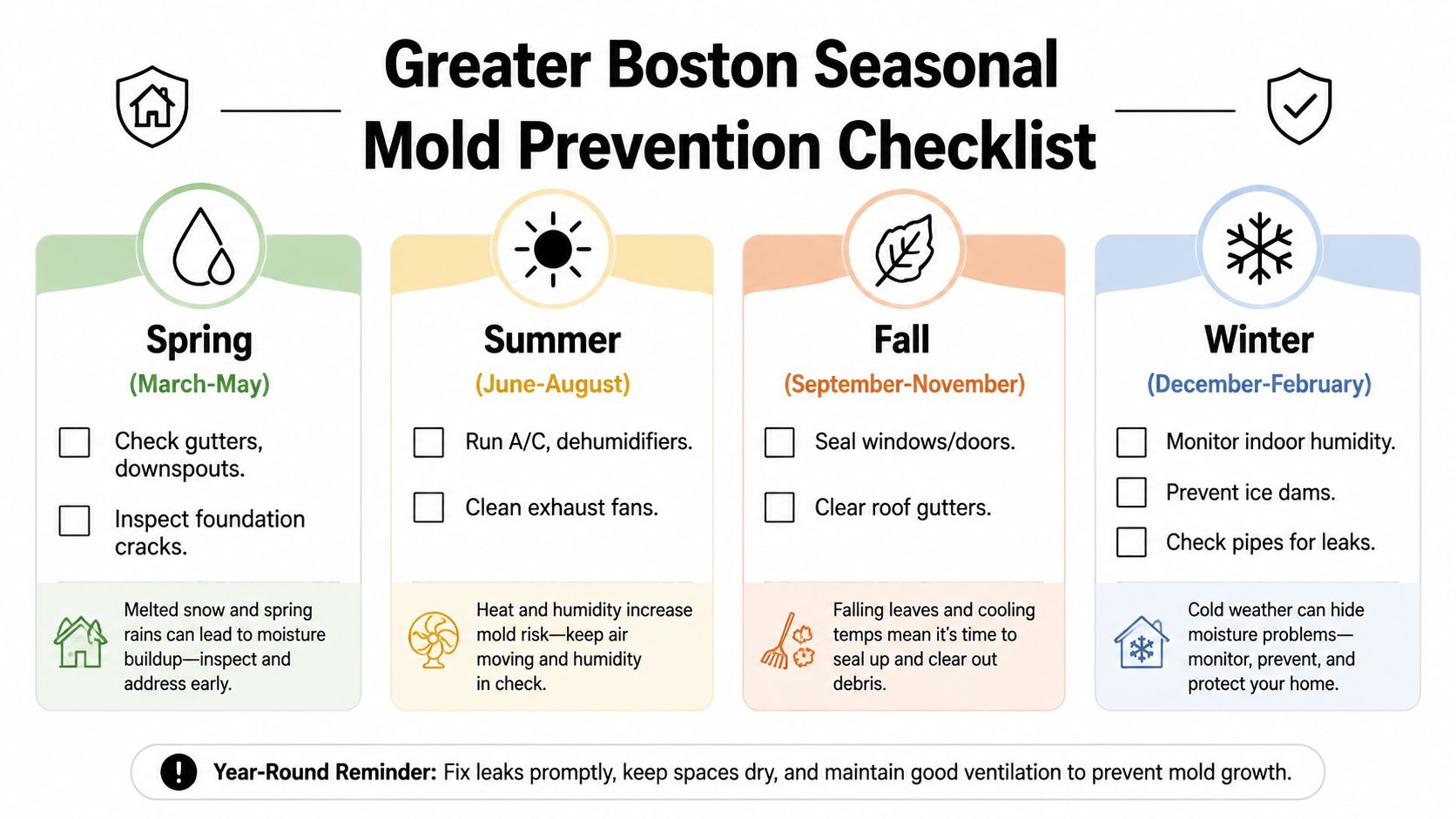
A practical seasonal routine
- Spring: Clean gutters, confirm downspouts discharge away from the foundation, and inspect cracks or staining after snowmelt. Persistent dampness or efflorescence on masonry deserves more than surface cleaning.
- Summer: Check dehumidifier filters and drains, inspect air-conditioning condensate lines, and monitor basement humidity. A unit that runs constantly may be treating a drainage or envelope problem rather than solving it.
- Fall: Test bathroom and kitchen exhaust fans, seal obvious air leaks around windows and doors, and clear roof gutters before heavy weather. Confirm that bath and dryer ducts terminate outdoors.
- Winter: Watch for ice dams, frozen pipes, condensation on windows, and unusually damp basement surfaces. Warm indoor air leaking into cold attic areas can create hidden moisture even when living spaces appear dry.
Our basement waterproofing methods for Greater Boston homes are relevant when maintenance reveals recurring seepage, hydrostatic pressure, or drainage limitations.
Know when the problem exceeds routine maintenance
Call for professional evaluation when a musty smell persists after humidity has been controlled, water stains return, or materials inside a wall may still be wet. The CDC advises drying wet materials and surfaces within 24 to 48 hours after flooding or bulk water events. Porous materials that remain wet beyond that window may need removal when thorough cleaning and drying aren't possible.
Professional assessment should focus on the moisture source, affected materials, containment needs, drying, and safe removal. Ask remediation contractors about their process and whether their work follows recognized industry practices such as IICRC S520. Don't hire a contractor who promises a chemical spray will solve an active leak.
Frequently Asked Questions About Mold Prevention
How much does proactive mold prevention add to a renovation?
The cost depends on the existing condition and project scope. Adding drainage, ventilation, insulation, flashing, or moisture-resistant finishes during planned construction is usually less disruptive than opening completed walls later. We price those measures as defined scope items rather than hiding them inside a vague allowance.
Can a 100-year-old home with a fieldstone foundation be protected?
Yes, but the approach must respect the foundation. Interior drainage, vapor-permeable coatings, controlled humidity, careful insulation, and conditioned crawlspaces may be more suitable than sealing every surface with an impermeable coating. The right solution starts with identifying how water enters and where the assembly can dry.
How quickly can mold develop after a water event?
Wet materials and surfaces should be fully dried within 24 to 48 hours, a response window repeated in CDC mold guidance. Remove standing water, increase air movement, run fans and dehumidifiers, and evaluate porous materials immediately.
Should I get a mold inspection before buying an older home?
A standard home inspection may identify visible staining, odors, or obvious moisture, but a dedicated mold assessment focuses more closely on damp areas, concealed conditions, and the likely source. Buyers considering an older Cambridge, Somerville, Medford, or Brookline property should understand what the inspection includes before relying on a visual walkthrough.
What should a remodeling contractor address?
Ask for a written moisture-management plan covering drainage, ventilation, insulation, vapor control, material selection, permits, rough inspections, and final closeout. A finished basement, bathroom, kitchen, addition, or ADU should be dry by design, not painted after construction.
Aureli Construction helps Greater Boston homeowners address moisture risks during basement finishing, kitchen remodeling, bathroom renovations, additions, and ADU construction. We coordinate the building scope, Massachusetts permits, inspections, ventilation, waterproofing, and finish materials so mold prevention is built into the project rather than handled after damage appears. Visit Aureli Construction to request a free estimate.